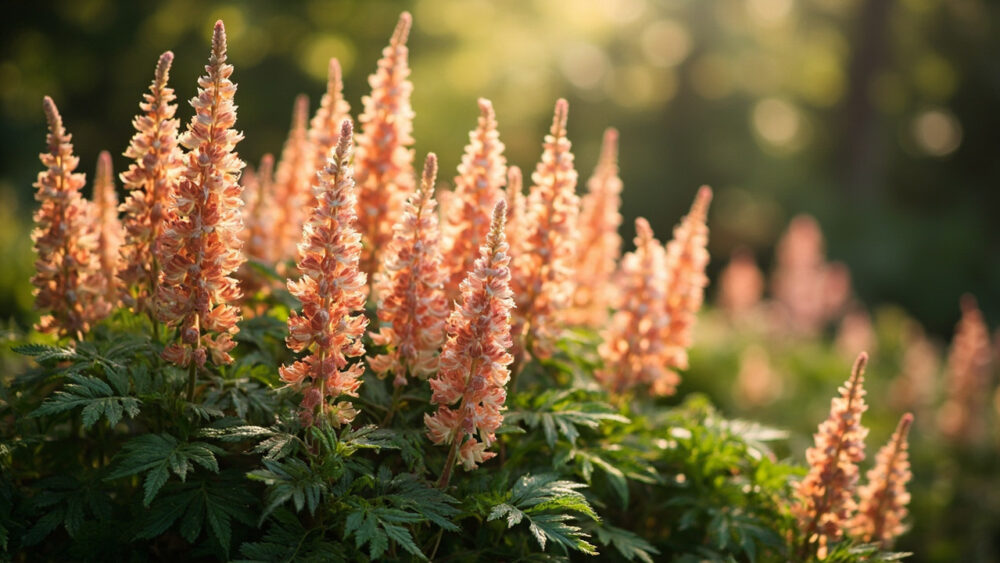
Astilbe blooms in early to late summer, with most varieties putting up their feathery plumes sometime between late June and August depending on the cultivar and your climate. Each plant typically stays in bloom for three to four weeks. Some gardeners stretch that show out to two full months by planting early, mid, and late season varieties together.
But the exact window shifts more than most people expect. Shade, soil moisture, and even where you cut your first frost date all nudge the answer around, and a plant that bloomed in July last year can bloom two weeks earlier or later this year with no obvious reason.
There is also a very common reason astilbe skips its bloom entirely, and it is almost never the cause gardeners guess first. Stick with this, because the quick-reference card at the bottom will give you the bloom window by season type, plus the aftercare tricks that get you the longest possible show.
The Bloom Window and How Long It Actually Lasts
Astilbe is sorted into early, mid, and late season bloomers, and that label matters more than the calendar month. Early varieties tend to flower in late spring to early summer, mid season types hit their peak in mid summer, and late bloomers carry the show into late summer, sometimes into early fall in cooler zones.
A single plant’s individual bloom lasts three to four weeks before the plumes fade from vivid color to a dried, tan-brown husk. Those spent plumes are not worthless, they hold their shape well into winter and many gardeners leave them standing for texture in the fall and winter garden.
If you want blooms from June through September, that is not one astilbe doing all the work, it is three different bloom-time varieties planted together.
What Actually Controls the Timing
Astilbe is a woodland plant by nature, so it takes its cues from the same things that control a forest floor bloom. Soil temperature and light exposure matter more than the date on your wall.
Shadier spots delay bloom slightly compared to plants getting a few hours of morning sun, sometimes by a week or two. Cooler spring temperatures push the whole window later, and a warm early spring can pull it forward.
Moisture matters just as much. Astilbe is not drought tolerant, and a plant that dries out repeatedly in the weeks before bloom will flower later, smaller, and shorter than one that stayed consistently moist.
None of this is random, it is your specific yard talking, and the next section tells you how to actually use that information.
How to Get More Flowers, or Make Them Last Longer
If you assumed more sun means more flowers, that guess backfires with astilbe. Full sun, especially in warmer zones, stresses the plant and shortens bloom rather than extending it. Part shade with morning sun and afternoon relief is the sweet spot almost everywhere except the coolest climates, where more sun is tolerable.
Consistent moisture is the real lever. Astilbe roots are shallow and thirsty. A two to three inch layer of mulch and regular watering through bud formation, roughly the four to six weeks before bloom, produces fuller plumes that hold their color longer.
Feeding matters too. A balanced, slow release fertilizer applied in early spring as new growth emerges gives the plant the energy to push a strong bloom instead of a sparse one.
Dividing overcrowded clumps every three to four years also keeps bloom quality up, since a congested crown produces smaller, shorter-lived flowers.
Get the moisture and light right and you are already most of the way to the fullest bloom that variety can produce.
Why Your Astilbe Might Not Be Blooming At All
The most common cause is not disease or pests, it is simply too much sun combined with dry soil. That combination stresses the plant into survival mode, where it holds onto its leaves and skips flowering rather than risk everything on a bloom it cannot support.
A second, quieter cause is age and crowding. A clump left undivided for five or more years often blooms less each year as the center of the crown weakens, even in good conditions.
Too much fertilizer, especially high nitrogen formulas, can also push lush leaf growth at the expense of flowers.
Finally, a plant moved or divided within the last year may skip a bloom cycle entirely while it rebuilds its root system, and that is normal, not a failure.
If your plant looks healthy but flowerless, the fix usually comes down to shade, water, or a little patience, and the aftercare section below covers how to protect next year’s bloom either way.
Deadheading and Aftercare That Stretch the Show
Astilbe plumes fade from color to brown over several weeks, and cutting spent plumes right when they brown will not bring on a second bloom, astilbe does not rebloom the way some perennials do.
What deadheading does do is redirect the plant’s energy into root and crown development instead of seed production, which pays off as a stronger bloom the following year.
Many gardeners leave the dried plumes standing through fall and winter for their structure and texture, then cut the whole plant back to the ground in late winter or very early spring before new growth starts.
Keep the soil consistently moist after bloom finishes too, since this is when the plant is quietly building next year’s flower buds underground.
That underground work is invisible right now, but it is exactly what the quick-reference card below is built to help you plan around.
Astilbe: Quick Reference
- Bloom window: early varieties late spring to early summer, mid season varieties mid summer, late varieties late summer into early fall.
- Bloom length per plant: three to four weeks of color before plumes fade to brown.
- Best light: part shade with morning sun in most zones, more sun tolerable only in cooler climates.
- Water needs: consistently moist soil, especially the four to six weeks before bloom, mulch two to three inches deep.
- Common no-bloom causes: too much sun paired with dry soil, an overcrowded clump past three to four years old, or a recent division still re-rooting.
- Aftercare for next year: deadhead or leave plumes for winter texture, cut back in late winter, keep soil moist through late summer to build next season’s buds.
Astilbe rewards patience more than fuss. Get the shade and moisture right, and the plumes take care of themselves.