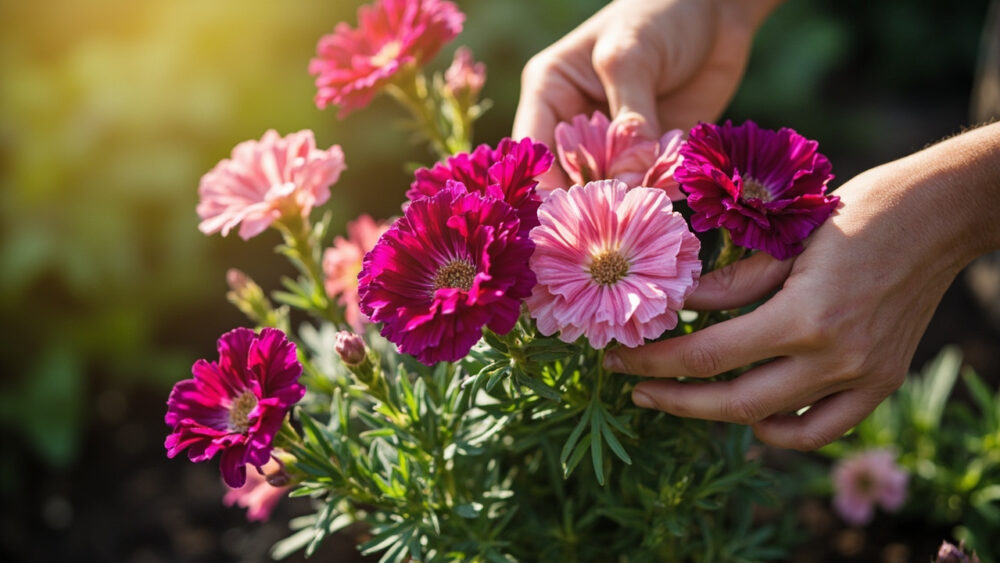
Dianthus wants full sun, well-drained soil on the lean side, and water only when the top inch or two dries out. Care for dianthus comes down to those three things plus a hard stop on soggy roots, which is what kills more plants than cold ever does. Get the drainage right and this plant will bloom on and off from spring through fall with barely any fuss.
There’s one mistake that wipes out most dianthus within the first month, and it has nothing to do with sun or fertilizer. There’s also a sign of stress almost everyone reads backwards, treating it with exactly the wrong fix. And there’s a question you’re probably about to ask right after this one, about whether to cut it back, that has a more specific answer than “sometimes.”
All of that is coming, and at the very bottom you’ll find a save-able Dianthus at a Glance card with the numbers pulled into one place so you don’t have to hunt for them again.
Light, Placement, and Temperature
Dianthus needs at least 6 hours of direct sun a day, and it flowers harder with 8 or more. In hot southern climates, a little afternoon shade keeps the foliage from scorching, but in most regions more sun means more blooms, not less.
Temperature-wisethis is a cool-season lover pretending to be tough in summer. It thrives in the 60 to 75°F range and will slow its flowering hard once nights stay above 75°F for weeks on end. Most garden dianthus are hardy in USDA zones 5 through 9, and a few types push into zone 3 with winter mulch.
Give it a spot with morning sun, decent airflow, and soil that doesn’t hold water after rain.
Watering: How Much, How Often, and the Mistake That Ends Most Attempts
Here’s the mistake that kills most dianthus in the first few weeks: watering on a schedule instead of checking the soil. This plant would rather go a little dry than sit wet, and it will rot from the crown up if the soil stays damp for days at a stretch.
Water only when the top 1 to 2 inches of soil feel dry to a finger poked in. That’s usually once or twice a week for established in-ground plants, and every 2 to 3 days for containers in hot weather, but the finger test beats any calendar.
New transplants need more consistent moisture for the first 2 to 3 weeks while roots establish, then you back off. Established plants are genuinely drought-tolerant once settled in.
Get the water right and the next thing to nail down is what you’re pouring it into.
Soil, Potting Mix, and Feeding
Dianthus wants a soil pH on the neutral to slightly alkaline side, roughly 6.5 to 7.5, and it does not want rich, heavy dirt. Amend clay soil with coarse sand or fine gravel until water visibly drains through within a few seconds of watering, not minutes.
In containers, use a standard potting mix cut with 20 to 30 percent perlite or coarse sand. Skip the enriched, moisture-retentive mixes made for tropicals; they hold too much water for this plant’s roots.
Feed lightly. A balanced fertilizer at half strength every 4 to 6 weeks during the growing season is plenty. Heavy feeding pushes soft, floppy growth and fewer flowers, not more.
Once the soil and feeding routine are dialed in, the maintenance side is almost embarrassingly simple.
Pruning, Deadheading, and the Real Answer About Cutting It Back
Deadhead spent blooms by snipping the flower stem down to the foliage, and do it as soon as flowers fade rather than waiting for a big cleanup day. This is the fastest way to trigger a second and third flush of blooms through the season.
Here’s the honest answer to the question you’re probably about to ask: yes, cut it back, but not all the way and not on a schedule. After the main flush fades, shear the whole plant back by about a third, leaving the low mounding foliage intact.
Never cut it to bare stems or down to the crown. Dianthus foliage stays semi-evergreen in mild climates, and that low mat of leaves is what carries the plant through winter.
Repot container dianthus every 2 to 3 years, or sooner if roots are circling the pot’s edge, moving up only one pot size at a time.
That covers the routine work, but even well-tended dianthus runs into a short list of predictable problems.
The Problems Most Likely to Strike, and the Sign Everyone Misreads
Yellowing lower leaves on dianthus almost always get blamed on lack of water, and gardeners respond by watering more. That’s backwards. Yellowing combined with soft, mushy stems near the soil line is a root or crown rot signalcaused by soil that stays wet too long, and more water makes it worse, not better.
The real fix is improving drainage, pulling back on watering frequency, and in containers, checking that the pot actually has a drainage hole doing its job.
Rust and other fungal leaf spots show up as orange or brown blotches, usually from overhead watering and poor airflow. Water at the soil line instead of the leaves, space plants 8 to 12 inches apart for airflow, and remove badly affected foliage.
Aphids occasionally cluster on new growth; a strong water spray or insecticidal soap handles light infestations, and any stronger product should be used exactly per its label. Dianthus is considered mildly toxic to dogs and cats if ingested in quantity. Watch for drooling or stomach upset and call your veterinarian if you suspect a pet has eaten a significant amount.
Once you’ve ruled those out, the next question is simpler: how do you know it’s actually happy?
Signs Your Dianthus Is Genuinely Thriving
A thriving dianthus has tight, compact growth with foliage that stays blue-green and slightly stiff, almost grassy in texture, never limp or yellowed at the base. New flower buds should be forming continuously through the growing season, not just once in spring.
The classic clove-like scent from the blooms is actually a decent health indicator. Strongly scented flowers usually mean the plant is getting enough sun. Weak or absent scent often points to too much shade.
Healthy plants also bounce back fast after shearing, pushing new buds within 2 to 3 weeks. If yours sits bare and sulky for a month after a cutback, check the soil drainage before blaming anything else.
With the plant thriving, here’s everything worth keeping for next time you’re standing in front of it.
Dianthus at a Glance
- When to plant: after your last frost in spring, or in early fall while soil is still warm, giving roots 6 to 8 weeks to establish before cold sets in.
- Light: full sun, 6 to 8 hours minimum, with light afternoon shade in hot southern climates.
- Watering: only when the top 1 to 2 inches of soil are dry, roughly once or twice weekly in ground, more often in containers during heat.
- Soil: well-drained, slightly sandy or gritty, pH 6.5 to 7.5, never rich or moisture-retentive.
- Spacing: 8 to 12 inches apart for airflow and disease prevention.
- Feeding: balanced fertilizer at half strength every 4 to 6 weeks during active growth.
- Maintenance: deadhead spent blooms immediately, shear back by a third after the main flush, never cut to bare stems.
If you remember one thing, remember this: dianthus fails from too much water far more often than too little.
Keep the roots on the dry side of comfortable and this plant will outwork almost anything else in the bed.