You grow petunias by setting them out after your last frost, in full sun, in soil that drains fast, and then deadheading and feeding hard all summer since they bloom nonstop rather than once. That last part is the trick almost nobody explains: petunias are not a plant-it-and-forget-it flower, they are a plant-it-and-feed-it-forever flower. How to grow petunias well for a full season comes down to sun, drainage, and how disciplined you are about cutting them back before they ask you to.
There is one mistake that wrecks more petunia beds than bad weather ever does, and it is not underwatering. There is also a sign everyone reads backwards when their petunias go leggy and bare in the middle of summer, and the fix is not more fertilizer.
Stick with me through the planting and care details below, and save the Petunias at a Glance card at the very bottom for the numbers you will actually want pulled up on your phone at the nursery.
When to Plant Petunias
Petunias are tender annuals with zero frost tolerance, so wait until night temperatures reliably stay above 40 to 45 F and the danger of frost has passed. That is usually two to four weeks after your last spring frost date, depending on your region. Soil temperature matters more than the calendar: petunias want soil that has warmed to at least 60 F, which you can check with a simple soil thermometer pushed two inches down.
If you plant into cold, wet soil, the plants sulk, sit there yellow and stalled, and often rot at the crown before they ever take off. Gardeners in zones 9 through 11 can treat petunias as short-lived perennials or plant in fall for cool-season color, but everywhere else this is a spring-after-frost flower.
Getting the timing right sets up everything else, but the spot you choose matters just as much.
Choosing the Spot and Prepping the Soil
Petunias want full sunmeaning six or more hours of direct light a day. In partial shade they get leggy, stretch toward the light, and bloom thin. They also demand drainage that never leaves them sitting wet.
Work compost into the top 6 to 8 inches of bed soil, and if your soil is heavy clay, raise the bed or go with containers instead of fighting it. In pots, use a quality potting mix, never garden soil straight from the yard, since it compacts and drowns roots in containers.
A slightly acidic to neutral pH, around 5.8 to 6.5, is ideal. Petunias are not fussy about exact pH, but they are absolutely fussy about wet feet.
Good soil sets the stage, but how you actually get the plant into the ground decides whether it stalls or takes off.
Planting Petunias Step by Step
1. Space them right for the type you bought
Spreading and trailing petunias (the wave and cascade types) need 10 to 12 inches between plants since they will fill in and run. Upright bedding petunias can go 8 to 10 inches apart. Crowd them and you get mildew problems by midsummer from poor airflow.
2. Set the depth at the root ball, not deeper
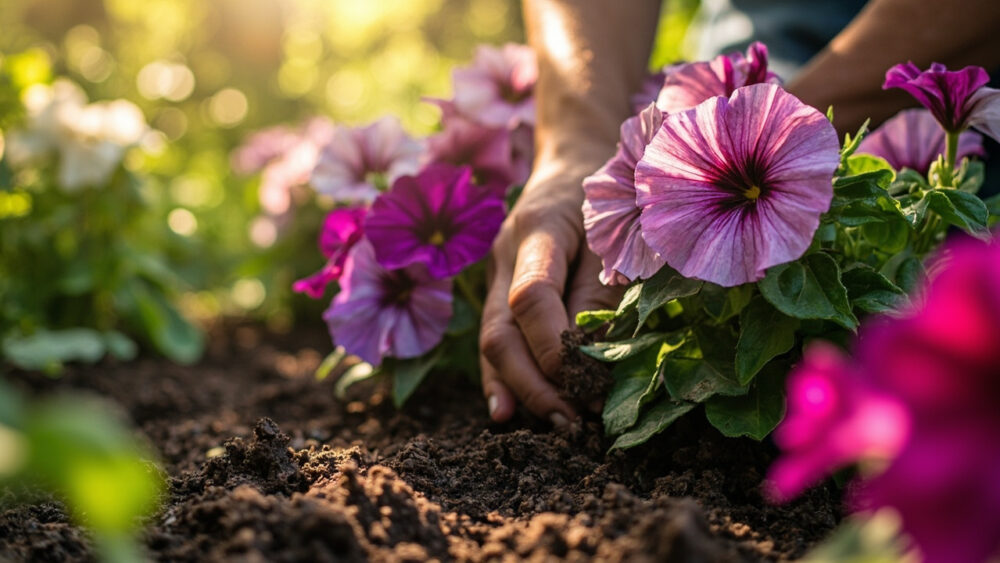
Dig a hole the same depth as the nursery pot and just as wide. Planting deeper than the root ball invites stem rot; petunias do not root well from a buried stem the way tomatoes do.
3. Loosen the roots before they go in
If the plant is rootbound, with roots circling tight at the bottom of the pot, tease them apart gently with your fingers. Skip this and those roots may keep circling instead of spreading into your soil.
4. Water in immediately
Give each new plant a slow soak right after planting to settle soil around the roots and knock out air pockets. Then hold off on the next watering until the top inch of soil feels dry.
Once they are in the ground, the real work of the season is keeping them fed and blooming, not just watered.
Watering and Feeding Through the Season
Here is where the guessable answer goes wrong. If you assumed petunias just need regular watering and occasional fertilizer like most annuals, that is only half true, and it is the half that leads to sparse, tired-looking plants by July.
Petunias are heavy feeders. They bloom so continuously that they burn through nutrients fast, especially the wave and spreading types. Feed every one to two weeks with a balanced liquid fertilizer, or use a slow-release granular at planting and supplement with liquid feed through summer.
Water deeply when the top inch of soil is dry, rather than on a fixed schedule. In containers, that can mean daily watering in hot weather since pots dry out fast. In the ground, once or twice a week is common depending on rainfall and heat.
Skip the fertilizer for a few weeks and you will see it before you can name it: fewer new buds, smaller flowers, a plant that looks like it is coasting.
The Midseason Slump, and the Mistake That Causes It
By midsummer, most petunia beds hit a stretch where the centers go bare, stems get long and woody, and blooms cluster only at the tips. The instinct is to blame heat or bugs. Usually the real cause is simpler: nobody deadheaded or cut them back.
Spent blooms left on the plant push it to make seed instead of more flowers. Pinch or snip off faded flowers regularly, and when plants get stringy and thin in the middle, do not be afraid to shear the whole plant back by a third. It looks brutal for about a week and then rewards you with a fuller, denser flush than you had in June.
Many modern wave-type petunias are bred to be more self-cleaning and need less deadheading, but even those benefit from a hard midsummer trim.
That trim also happens to be your best defense against the pests and diseases that love a dense, tired plant.
Problems to Watch For
Botrytis and stem rot show up as gray, fuzzy mold or blackened stems, almost always from crowding, poor airflow, or wet foliage sitting overnight. Space plants properly and water the soil, not the leaves.
Aphids and budworms are the two pests that actually cost you flowers. Aphids cluster on new growth and buds; budworms chew holes straight through unopened buds and leave dark droppings behind. Check the undersides of leaves and the base of buds weekly during warm months.
- Aphids: knock them off with a strong water spray or use an insecticidal soap, following the product label.
- Budworms: handpick if the infestation is light, or use a labeled caterpillar control if it is not.
- Root rot: almost always overwatering or poor drainage, not disease pressure alone. Let soil dry between waterings.
Petunias are mildly toxic to pets if eaten in quantity. If your dog or cat gets into a bed of them and shows vomiting, drooling, or lethargy, call your veterinarian rather than waiting it out.
Handle those two threats early and there is nothing standing between you and a long bloom season.
When Petunias Bloom and How Long They Last
Petunias typically start blooming 8 to 10 weeks after seed, but almost everyone plants nursery starts already in bud, so expect color within a week or two of planting. From there, with regular feeding and deadheading, they will bloom continuously from late spring until the first hard frost in fall.
There is no harvest moment with petunias the way there is with a vegetable. The closest thing is your ongoing deadheading and cutting, which is less a harvest and more the maintenance that keeps the whole show running for months instead of weeks.
If you want cut flowers for a vase, petunias are a poor choice since the blooms wilt fast once cut, so enjoy them where they grow.
That long bloom window is the whole payoff for the feeding and trimming, and here is everything worth saving before you go.
Petunias at a Glance
- When to plant: after your last frost, once night temps stay above 40 to 45 F and soil hits at least 60 F.
- Sun and soil: full sun, six or more hours daily, in well-drained soil with pH around 5.8 to 6.5.
- Spacing: 8 to 10 inches for upright types, 10 to 12 inches for trailing or wave types.
- Planting depth: even with the root ball, never buried deeper than the nursery pot.
- Watering: deeply when the top inch of soil is dry, more often for containers in heat.
- Feeding: every one to two weeks with liquid fertilizer, or slow-release at planting plus liquid boosts.
- Maintenance: deadhead regularly and shear leggy plants back by a third midsummer for a fresh flush.
Feed them, trim them, and give them sun, and petunias will outbloom nearly anything else in your yard.
Skip the trim and the feeding, and you will spend August wondering where all the flowers went.