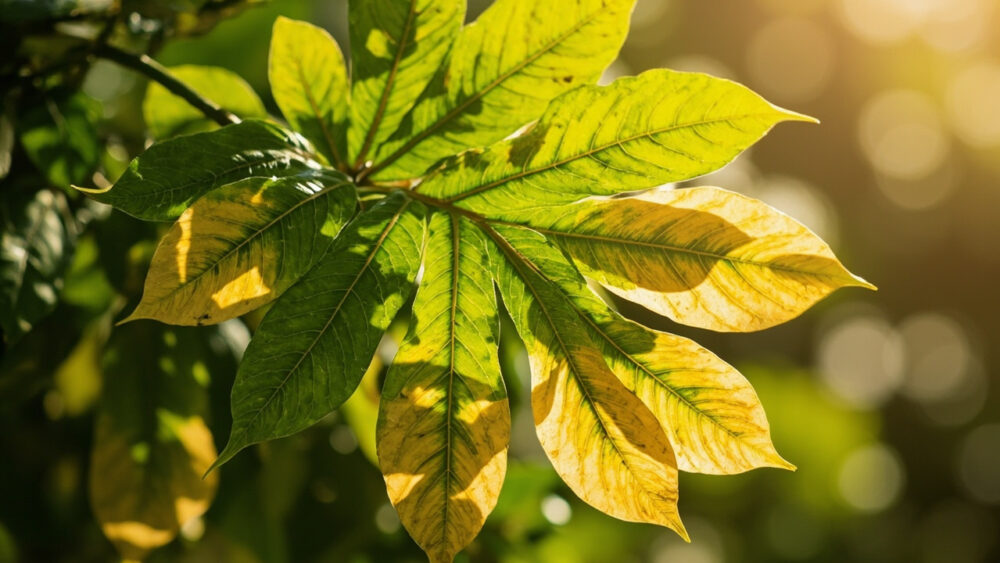
Yellow leaves on a money tree almost always mean overwatering. The soil is staying wet too long between drinks, the roots are struggling to breathe, and the plant is dropping leaves to cope. The fix is usually simple: let the pot dry out further before the next watering and check that the drainage is actually working.
That said, overwatering is also the cause everyone jumps to, and sometimes it is the wrong call. Underwatering, low light, and even a completely normal aging process can produce the same yellow leaf. The trick is figuring out which one is happening to your plant, and the plant itself will tell you if you know where to look.
Below is every real cause ranked by likelihood, a side-by-side guide for telling them apart, an honest recovery outlook, and prevention that actually works. The two-minute diagnosis checklist you can run right now is at the very bottom, save it before you go.
Most Likely Causes, Ranked
1. Overwatering and poor drainage
Confirm it: stick a finger 2 inches into the soil. If it feels damp or cool and the pot feels heavy, this is your problem. Check the drainage hole too. If the pot has no hole, or the nursery pot is sitting in a cachepot collecting water at the bottom, that confirms it further.
Yellowing from overwatering usually shows up on lower and inner leaves first, often with a slightly mushy or translucent look rather than crisp and dry.
Fix it: let the soil dry out until the top 2 to 3 inches are dry before watering again. Dump any standing water out of the cachepot immediately after every watering. If the pot has been soggy for weeks, unpot it and check the roots for brown, mushy sections, that is root rot and needs trimming with clean shears before you repot into fresh, fast-draining soil.
Get the watering rhythm right and most of the yellowing stops within a few weeks, but there is another culprit that mimics it almost exactly.
2. Underwatering
Confirm it: the same finger test, but this time the soil feels bone dry more than an inch down, the pot feels notably light, and the leaves may look slightly curled or crispy at the edges before they yellow.
Underwatering tends to hit whichever leaves are oldest and thinnest first, and the yellow often comes with a dry, papery texture instead of the soft look overwatering causes.
Fix it: water thoroughly until it runs from the drainage hole, then go back to checking the soil weekly rather than watering on a fixed schedule. Money trees like a proper soak followed by a real dry-down, not a sip every few days.
Texture is the giveaway here, and it is the detail most people miss when they blame water at all.
3. Too little light
Confirm it: think about where the plant has actually been sitting the last month. Money trees want bright, indirect light. If yours is more than a few feet from a window, or behind a sheer curtain in a dim room, low light is a real contender, especially if new growth also looks sparse or stretched.
Light-related yellowing tends to be uniform and gradual across the whole plant rather than concentrated on one section.
Fix it: move it to a spot with bright, indirect light for most of the day, an east or west window works well. Avoid deep, direct summer sun on the leaves, which can scorch rather than just yellow them.
If the soil moisture checks out fine and the spot is dim, light is worth ruling in before you touch the watering can again.
4. Normal aging and natural leaf drop
Confirm it: is it just one or two of the oldest, lowest leaves, with everything else on the plant looking healthy and green? Money trees, like most houseplants, shed their oldest leaves periodically as part of normal growth.
This is the cause that gets misread most often, usually blamed on water or fertilizer when nothing is actually wrong.
Fix it: nothing. Let the leaf yellow fully and drop, then remove it if it is hanging on. No change to your care routine is needed if this is isolated to one or two old leaves and new growth keeps coming.
If more than that is turning at once, keep reading, because the next cause is easy to overlook.
5. Nutrient deficiency or a buildup of salts
Confirm it: check when you last fed the plant and when you last repotted or flushed the soil. If it has been more than a year in the same soil with no feeding, or you fertilize heavily without ever flushing the pot, look for yellowing between leaf veins, a slightly bleached look on newer leaves, or a white crust on the soil surface or pot rim.
Fix it: flush the pot with plain water until it drains freely from the bottom a few times, which clears excess salts. Then resume a light, balanced houseplant fertilizer during spring and summer only, at half the label strength if you have been overdoing it.
This one is slower to show and slower to fix, but it rarely happens alone.
6. Cold drafts or sudden temperature swings
Confirm it: is the plant near an exterior door, a drafty window, an air conditioning vent, or a heater? Money trees dislike temperatures below about 55°F and dislike hot, dry blasts of forced air just as much.
Fix it: move the plant away from the draft source, at least a few feet from doors and vents. Yellowing from cold stress usually stops progressing once the plant is relocated, though already-damaged leaves will not turn green again.
Once you have ruled that in or out, the next step is putting all these clues side by side.
How to Tell the Causes Apart
Where the yellowing starts matters most. Lower and inner leaves first usually points to overwatering or normal aging. Whole-plant, even yellowing points to light or long-term nutrient issues. Yellowing near a specific side of the plant, closest to a door or vent, points to cold drafts.
Texture is the second clue. Soft, slightly translucent yellow leaves mean too much water. Dry, crisp, curling yellow leaves mean too little.
Speed tells you the rest. One leaf over weeks is aging. Several leaves in days is water or temperature shock. A slow fade over months across new growth points to light or nutrients.
Once you have matched the pattern to a cause, the next honest question is what happens to the leaves you have already lost.
Will It Recover?
Yellow leaves themselves do not turn green again. Whatever cause you find, the damaged leaves are done, and the real question is whether the plant stops losing more of them.
Overwatering has a good outlook if caught before root rot sets in, usually bouncing back within a few weeks of a corrected watering routine. If the roots are already black and mushy throughout, recovery is harder and sometimes the plant does not make it, that is the honest edge case worth naming plainly.
Underwatering and light issues recover reliably and fairly fast once corrected, often showing healthier new growth within a month. Draft damage stops once moved but existing leaves stay yellow. Nutrient issues take the longest, sometimes a full growing season to fully resolve.
Normal aging never needed fixing in the first place.
Getting it to stop happening again comes down to a few habits, not a complicated routine.
How to Keep It From Happening Again
Water by feel, not by schedule. Check the top few inches of soil before every watering and only water when it is dry there, not just on the surface.
Make sure the pot has drainage and never let it sit in collected water. Keep the plant in bright, indirect light, and keep it away from vents, radiators, and drafty doors. Feed lightly during the growing season and flush the soil occasionally to prevent salt buildup.
Repot every 2 years or so into fresh, well-draining soil, sized just one pot size up.
Get those basics consistent and yellowing becomes the rare exception instead of a recurring problem, which brings you to the checklist worth running today.
Diagnosis Checklist
- Check the soil 2 inches down: if damp and heavy, suspect overwatering, if dry and light, suspect underwatering.
- Check the drainage hole and cachepot for trapped water: empty it if found, and note whether this has been ongoing.
- Look at which leaves are yellow: lower and inner leaves suggest aging or overwatering, whole-plant even yellowing suggests light or nutrients.
- Feel the yellow leaf: soft and translucent means too much water, dry and crisp means too little.
- Count how many leaves are affected: one or two old leaves with healthy new growth means normal aging, no action needed.
- Note the plant’s location: within a few feet of a vent, heater, or drafty door points to temperature stress.
- Recall your last feeding and repotting date: over a year with no flush or feed points to nutrient buildup or deficiency.
- If soil has been soggy for weeks, unpot and inspect roots: brown, mushy roots confirm rot and require trimming and fresh soil.
- Match your findings to the cause above and apply that fix only, resist changing watering, light, and feeding all at once.
Most money trees recover once you find the one thing actually causing it, not the three things you fixed just in case.
Give it the right water rhythm and steady light, and the yellowing you’re staring at today should be the last round you deal with for a while.