Here is how to care for bird of paradise in one breath: give it your brightest window with at least a few hours of direct sun, water only when the top 2 to 3 inches of soil dry out, keep it above 55°F, and feed it during the growing season, not through winter. Get those four things right and the rest is patience, because a bird of paradise that’s happy will still take a year or two to reward you with anything close to a flower.
Most people who bring one home make the same mistake in the first month, and it’s not what you’d expect. It usually isn’t watering too much or too little, it’s placement, and the fix is not intuitive.
There’s also a sign of stress almost everyone misreads as a sign of health, and I’ll walk you through what’s actually happening on that leaf before you make it worse. Stick around to the end for the save-able Bird of Paradise at a Glance card, it’s the thing you’ll want pulled up on your phone the next time you’re standing in front of this plant wondering what to do.
Light, Placement, and Temperature
Bird of paradise wants light the way a tomato plant wants light, this is not a low-light houseplant no matter what the tag says. Give it the brightest spot you have, ideally a south or west-facing window where it gets several hours of direct sun daily. Filtered bright light will keep it alive, but it will not produce new leaves quickly and it will never flower indoors without real sun.
Here’s the placement mistake almost everyone makes: they find the perfect bright window and then never move the plant again. Bird of paradise leaves grow toward the light source, and a plant left in one spot for months develops a lopsided, one-sided lean that gets worse over time. Rotate the pot a quarter turn every week or two.
Keep it between 65 and 85°F during the day, and no colder than 55°F at night. Cold drafts near a door or an air conditioner vent will brown the leaf edges faster than almost anything else.
Get the light wrong and no amount of careful watering will save you, so that’s the next thing to nail down.
Watering: How Much, How Often, and How to Check
Water when the top 2 to 3 inches of soil are dry to the touch, then water thoroughly until it runs out the drainage holes. Depending on pot size, light, and season, that usually lands somewhere between once a week and once every 10 to 14 days. In winter, when growth slows, stretch it further and check the soil rather than the calendar.
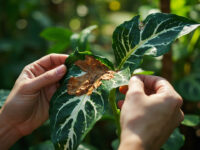
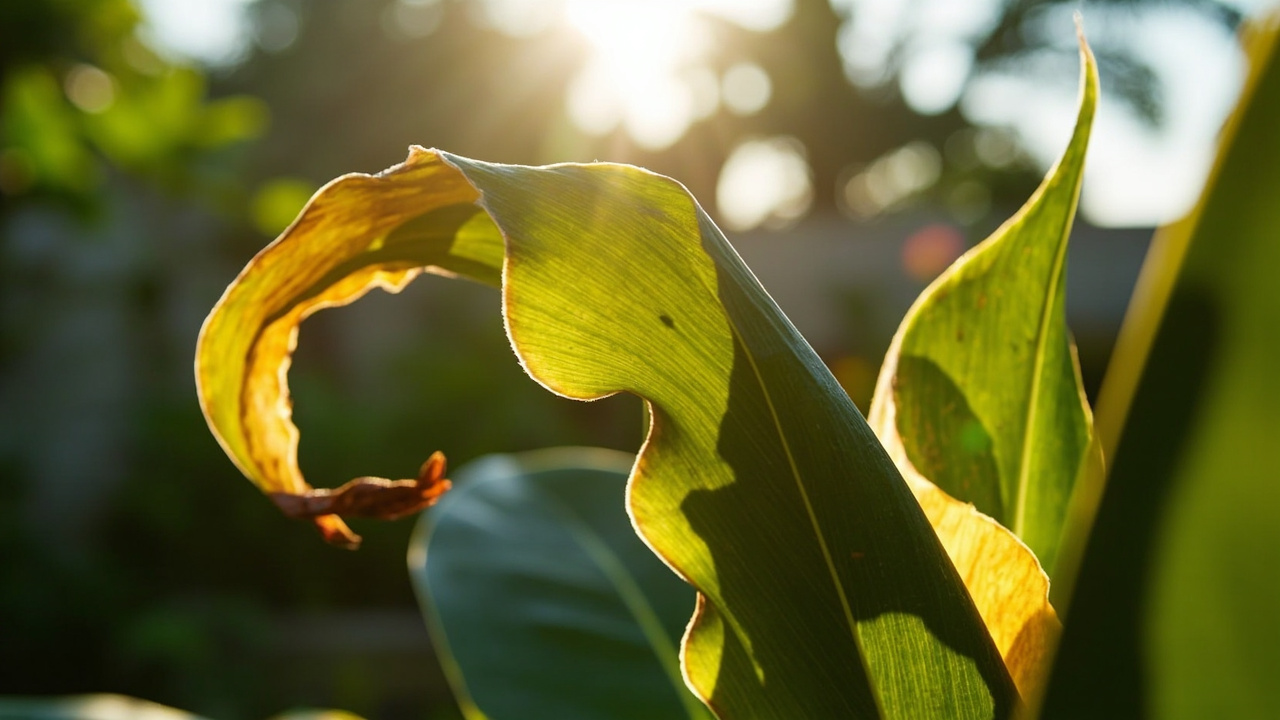
The honest answer to the question you’re probably about to ask: yes, those brown, crispy leaf edges probably are underwatering or low humidity, but that’s not the whole story. Bird of paradise is also sensitive to fluoride and salts that build up from tap water and fertilizer, and that shows up as the exact same brown, crisping edge. If you’ve been watering consistently and still see it, flush the pot with plain water until it runs freely from the bottom every couple of months, and consider switching to distilled or rainwater if your tap is heavily treated.
Never let the pot sit in a saucer full of standing water. Root rot from soggy soil kills far more of these plants than drought ever does.
Soil is the other half of that equation, and most bagged potting mixes get it wrong from the start.
Soil, Potting Mix, and Feeding
Use a well-draining, rich potting mix, a standard indoor potting soil cut with perlite or orchid bark works well. The goal is soil that holds moisture without staying soggy, bird of paradise wants consistent dampness at the root, not a swamp.
Always use a pot with drainage holes. This plant will not forgive a decorative pot with no way for excess water to escape.
Feed it during spring and summer only, with a balanced liquid houseplant fertilizer at half to full strength every 3 to 4 weeks while it’s actively growing. Stop feeding in fall and winter entirely, the plant is resting and fertilizer salts have nowhere to go when growth has slowed, which just adds to that leaf-edge burn problem.
Good soil and the right feeding schedule set up everything else, including how often you’ll need to repot.
Pruning, Repotting, and Cleaning: The Routine Tasks
Bird of paradise doesn’t need much routine maintenance, but a few tasks matter on a schedule. Prune only what’s dead or damaged, cut yellowed or browned leaves off at the base with clean shears. Don’t cut healthy green leaves just to shape the plant, each leaf is feeding the plant and future growth.
Repot every 2 to 3 years, or when you see roots circling tightly at the pot’s edge or emerging from the drainage holes. Go up only one pot size at a time, roughly 2 inches larger in diameter. Oversized pots hold excess water the roots can’t use, which invites rot.
Wipe the broad leaves down with a damp cloth every few weeks. This isn’t cosmetic, dust blocks light absorption on a plant that’s already fighting for every bit of light it can get indoors.
Do all of this and you’ve covered the routine, but there’s still the question of what actually goes wrong.
The Problems Most Likely to Strike
Now here’s the sign almost everyone misreads. New leaves emerge tightly rolled, dark, almost purplish, and looking half-dead. People panic and assume disease or a dying plant. That’s not damage, that’s completely normal, it’s simply how a new leaf unfurls, and it will green up and open within a week or two.
The real problems to watch for:
- Spider mites and scale: fine webbing or small bumps on stems and leaf undersides, treat with insecticidal soap or neem oil, following the product label exactly, and isolate the plant while treating.
- Root rot: mushy brown stems at the soil line and a sour smell, caused by overwatering or poor drainage, requires unpotting, trimming affected roots, and repotting into fresh dry mix.
- Leaf edges browning: underwatering, low humidity, or mineral buildup, covered above, fixed with consistent watering and an occasional flush.
- No new growth for months: almost always insufficient light, move it closer to the brightest window you have.
Bird of paradise is mildly toxic to dogs, cats, and humans if chewed or eaten, and can cause mouth irritation, drooling, or vomiting. If you suspect your pet has eaten any part of it, call your veterinarian rather than waiting to see what happens.
Once you’ve ruled out the real problems, the question becomes what a genuinely healthy plant actually looks like.
How to Tell It’s Actually Thriving
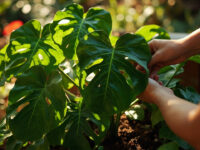
A thriving bird of paradise pushes out a new leaf every 4 to 6 weeks during spring and summer, each one larger than the last. The stalks stand upright and sturdy rather than leaning or flopping, and the leaf color is a deep, even green with no yellowing at the base.
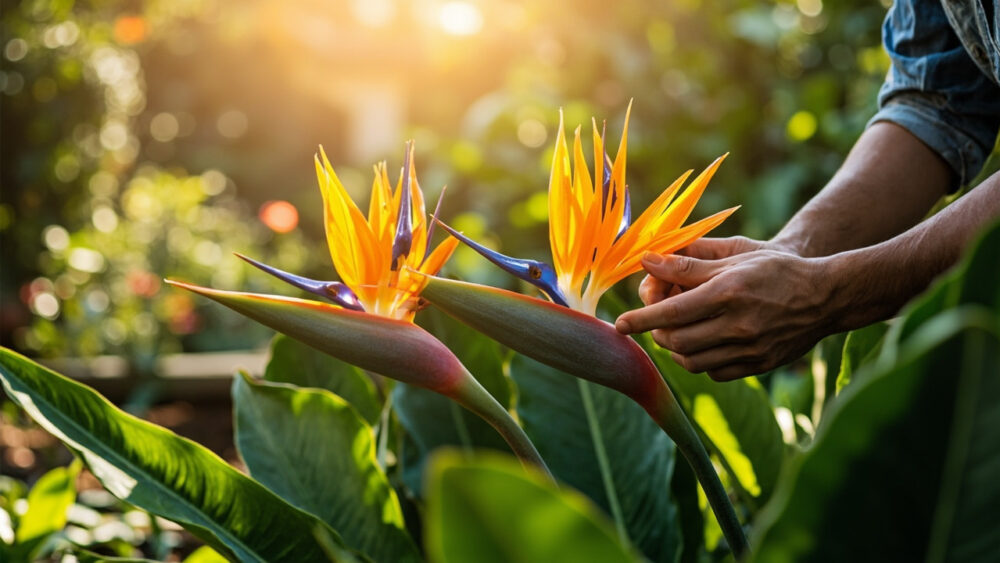
Flowering indoors is possible but genuinely uncommon, and it usually takes a mature plant, several years old, with strong direct sun for most of the day. Don’t judge your plant’s health by whether it blooms, judge it by leaf growth and color.
If your plant is putting out new leaves and holding its color through a full growing season, you’re doing this right.
Bird of Paradise at a Glance
- Light: the brightest spot available, ideally several hours of direct sun from a south or west-facing window, rotated a quarter turn weekly.
- Water: when the top 2 to 3 inches of soil are dry, roughly every 7 to 14 days, always with drainage and never in standing water.
- Temperature: 65 to 85°F by day, never below 55°F, kept away from cold drafts and AC vents.
- Soil: rich, well-draining potting mix cut with perlite or bark, in a pot with drainage holes.
- Feeding: balanced liquid fertilizer every 3 to 4 weeks in spring and summer, none in fall or winter.
- Repotting: every 2 to 3 years, one pot size up, once roots crowd the container.
- Normal but alarming: new leaves emerge dark, rolled, and droopy before unfurling green over 1 to 2 weeks.
Light is what makes or breaks this plant, everything else is just maintenance around that one decision.
Get the window right, and a bird of paradise will forgive almost every other mistake you make.