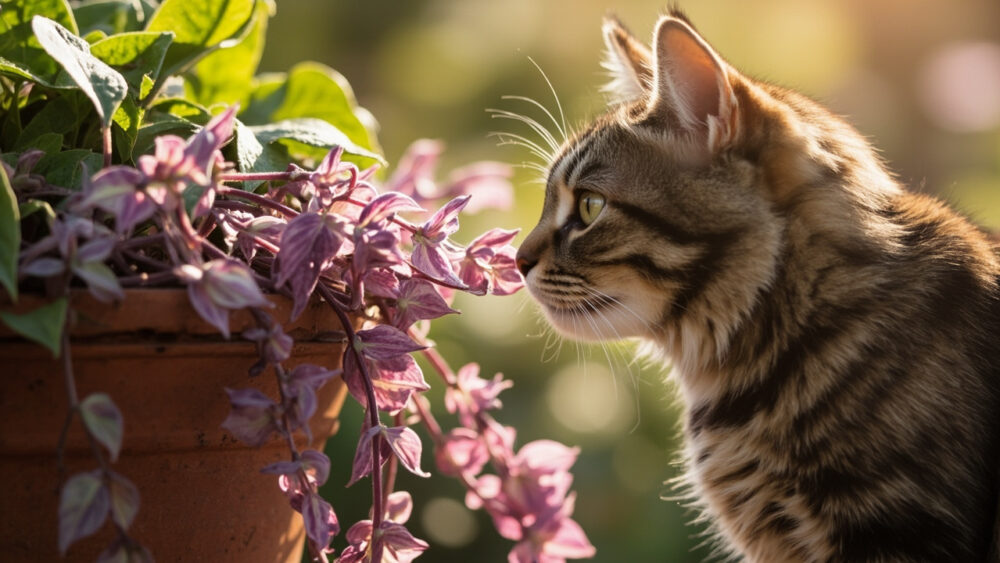
Yes, tradescantia is considered toxic to cats. It is not usually life-threatening, but it can cause real skin and mouth irritation, drooling, and stomach upset. The good news is that most cases are mild if you catch them early and get your cat away from the plant.
But “mildly toxic” is not the whole story, and the sap itself is the part most owners never think to check. There is also a specific way tradescantia irritates cats that is different from most houseplant toxins, and it changes how you should react if you see your cat chewing on it.
Stick around for the quick-reference card at the bottom of this page. It is built to save or screenshot, so you have the key facts on hand the next time your cat gets curious about the vine on your shelf.
So, Is Tradescantia Actually Toxic to Cats?
Tradescantia, which includes the common trailing houseplants sold as inch plant, wandering dude, and various purple or variegated cultivars, is classified as toxic to cats and dogs. The irritation comes from calcium oxalate crystals and irritating sap compounds in the leaves and stems, not a single poison that shuts down organs.
This is a mechanical and chemical irritant, not a systemic poison. That distinction matters because it means the danger is real but usually limited to the mouth, skin, and gut rather than the heart, liver, or kidneys.
Guessing it is “probably fine because it’s just a common houseplant” is the mistake that gets a lot of cats a very itchy, drooly afternoon.
Which Parts Are the Problem, and How Much Exposure Actually Matters
Every part of the plant carries the irritating sap, but the concentration is highest where the plant is actively growing or has been damaged. A cat that nibbles one leaf tip usually gets a mild reaction. A cat that chews through several stems, or gets sap directly rubbed into skin or eyes, gets a much stronger one.
Broken stems are the real risk. The sap that oozes out when a stem snaps is more concentrated than what sits in an intact leaf, so a cat that bats a cutting around and gets sap on its paws, then licks its paws clean, can end up with a worse reaction than the one that just chewed a leaf.
Trimmed cuttings left sitting in a jar of water on the counter are just as risky as the potted plant itself.
The Signs to Watch For
Most reactions show up within minutes to a couple of hours of contact or chewing. Watch for:
- Drooling or foaming at the mouth
- Pawing at the face or mouth
- Redness or swelling of the lips, gums, or tongue
- Vomiting or a decreased appetite
- Skin redness, itching, or hives where sap contacted bare skin
Skin contact without eating anything can still cause a reaction. A cat that walked through broken stems and got sap on its belly or paws can show irritation there even if it never took a bite.
If you spot any of this, the next step is not to wait and see.
What to Do If Your Cat Ate Tradescantia
Call your veterinarian or an animal poison control line right away if you know or suspect your cat chewed on or swallowed tradescantia. Do this even if your cat seems fine in the moment, because mouth and throat irritation can take a little time to become obvious.
Bring information, not home remedies. Note roughly how much of the plant is missing or damaged, what time you noticed it, and any symptoms you have seen so far. If you can, snap a photo of the plant so the vet can confirm exactly what species you have.
Do not try to induce vomiting, give milk, or apply any home treatment on your own. Let the vet or poison control line guide the next step based on your cat’s specific symptoms and history.
Removing the plant from reach matters just as much as the phone call.
Safer Look-Alikes If You Want the Same Look Without the Risk
If you love the trailing, colorful look of tradescantia but want something genuinely non-toxic for a cat household, you have solid options. Spider plant gives you the same cascading habit and is considered non-toxic, though cats sometimes chew it just because they like the texture.
Purple heart’s cousins are not automatically safer. Most other members of the Tradescantia and closely related Commelinaceae family share the same sap irritation, so swapping to a different color or leaf pattern in the same plant family will not solve the problem.
Look instead to non-toxic trailers like Peperomia varieties, hoya, or a non-toxic pothos alternative such as a true fern for hanging baskets.
Once you know what to plant instead, the last thing worth doing is keeping the core facts in one place.
Tradescantia: Quick Reference
- Toxic to cats: yes, considered toxic, causes irritation rather than organ failure in typical exposures
- Toxic parts: all parts, sap concentration highest in broken or actively growing stems
- Cause: calcium oxalate crystals and irritating sap compounds, a mechanical and chemical irritant
- Signs: drooling, pawing at the mouth, mouth or gum redness, vomiting, skin redness where sap contacts bare skin
- If ingested: call your veterinarian or animal poison control immediately, note the amount and time, do not attempt home treatment
- Safer swaps: spider plant, most Peperomia, hoya, non-toxic ferns for hanging baskets
Keep tradescantia up high, out of paw’s reach, and check cuttings just as carefully as the potted plant.
When in doubt about anything your cat chewed, your vet is always the right call, not a guess.