Water a money tree about every 7 to 14 days during spring and summer, and every 2 to 3 weeks in fall and winter, but that number only matters after the soil tells you it’s ready. How often to water a money tree isn’t really a calendar question, it’s a soil question wearing a calendar costume. Get that backwards and you’ll join the huge number of money tree owners who kill this plant not through neglect, but through love applied on a schedule.
Here’s what’s coming: the one habit that kills more money trees than drought ever does, the leaf and trunk signals almost everyone misreads as “needs water” when they mean the opposite, and the honest answer to the question you’re about to ask next, which is why your money tree’s leaves are turning yellow even though you’ve been watering it faithfully.
Stick around for the save-able Money Tree at a Glance card at the bottom. It’s the version you screenshot and check against next time you’re standing over the pot wondering if today’s the day.
The Honest Schedule, and What Actually Changes It
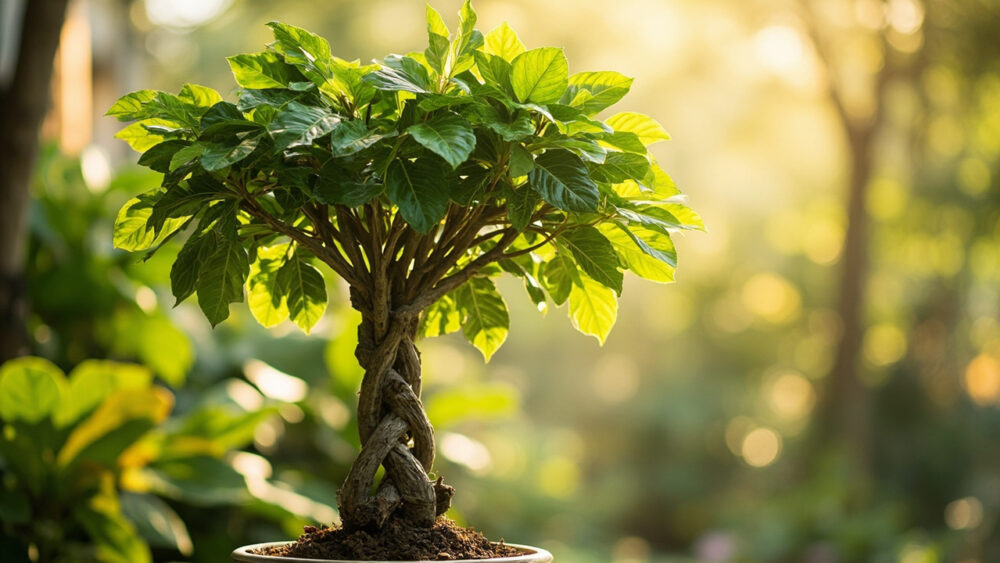
A money tree (Pachira aquatica) stores water in its thick, braided trunk, which is exactly why it tolerates drying out between waterings better than most houseplants. That trunk is a built-in reservoirand ignoring that fact is the single mistake that kills most money trees, people water it like a fern when it wants to be treated more like a mild succulent.
In bright, indirect light and a warm room, expect to water every 7 to 10 days. In lower light or a cooler room, stretch that to 2, sometimes 3 weeks.
Pot size and material shift this too. A money tree in a small plastic pot dries faster than one in a large terracotta pot, since terracotta wicks moisture out through its walls.
None of these numbers replace a real check on the actual plant in front of you.
How to Check Instead of Guessing
If you assumed the finger test alone tells you everything, it doesn’t, because topsoil dries first and fastest while the root zone below stays wet for days longer. Push a finger 2 to 3 inches into the soilnot just the surface. If it’s dry at that depth, water. If it’s still cool and moist, wait.
Pot weight is the underrated second check. Lift the pot right after a full watering so you know what “full” feels like, then lift it again before you’re about to water again. A money tree that’s ready for water feels noticeably lighter than one that’s fine for another few days.
Leaves lend a hand too, but only as a tiebreaker. Slightly soft, slightly drooping leaves that perk back up within a day of watering mean you were right on time. Leaves that stay droopy after watering are usually telling you something has gone wrong at the roots, not that they needed more water sooner.
The finger test and the pot lift agree most of the time, but when they don’t, trust the depth check.
How to Water It Properly Once You’ve Decided To
Water slowly and thoroughly until it runs from the drainage holes, then let the pot fully drain before it goes back on a saucer or into a decorative sleeve. A quick splash on top of dry soil does almost nothingit wets the surface and leaves the root ball bone dry underneath, which trains you to water more often for no real benefit.
Never let a money tree sit in standing water in a saucer or cachepot. That’s the single fastest way to rot roots even if your watering frequency is otherwise perfect.
Room-temperature water is fine; cold tap water straight from the fridge can shock the roots over time, though it won’t kill the plant outright on one occasion.
Getting the technique right matters just as much as getting the timing right, and mixing them up is where the next two problems come from.
Overwatering vs. Underwatering: Telling Them Apart
Both problems show up as yellow, droopy, or dropping leaves, which is exactly why so many people water a struggling money tree more and make it worse. The tell is in the soil and the trunk, not just the leaves.
- Overwatered: soil stays wet for a week or longer, trunk feels soft or mushy near the base, leaves yellow and drop while still somewhat pliable, sometimes a sour or musty smell from the soil.
- Underwatered: soil is dry several inches down, trunk stays firm, leaves turn brown and crispy at the edges before dropping, whole plant looks deflated rather than discolored.
Root rot from overwatering is the harder problem to fix. Mild cases recover if you stop watering, let the soil dry fully, and improve drainage; advanced cases with a mushy, blackened trunk base usually mean the plant is not coming back, and starting over is the honest call.
Underwatering, by contrast, is almost always fixable within a week or two of correcting course.
Knowing which one you’re looking at changes everything about what you do next, including how the seasons should change your habits.
Adjusting for Season Without Overthinking It
Money trees slow down growth in fall and winter as light drops, and a slower plant drinks less. Cut your watering frequency by roughly a third to a half once daylight shortens and heating kicks on, even if the plant looks otherwise unchanged.
Indoor heating dries air but not necessarily soil any faster, so don’t assume winter means more water just because the room feels drier. Check the soil, don’t guess from the thermostat.
Spring and summer growth means more frequent drinking and more frequent light feeding, roughly once a month with a diluted balanced houseplant fertilizer during active growth, none in winter.
Get the seasonal shift right and you’ll rarely see the yellow-leaf scare that sends most people searching for help in the first place.
Money Tree at a Glance
- Watering frequency: every 7 to 14 days in spring and summer, every 2 to 3 weeks in fall and winter, always based on soil check rather than the calendar.
- How to check: push a finger 2 to 3 inches into the soil, water only when dry at that depth, confirm with a pot-weight lift if unsure.
- How to water: water slowly until it drains from the bottom, then empty the saucer completely, never let the pot sit in standing water.
- Light needs: bright, indirect light. Direct hot sun can scorch leaves, low light slows growth and stretches out the watering interval.
- Overwatering signs: soft or mushy trunk base, yellow leaves that drop while still pliable, sour smell from wet soil.
- Underwatering signs: dry soil several inches down, firm trunk, crispy brown leaf edges, an overall deflated look.
- Toxicity: money tree is considered non-toxic to cats and dogs by common houseplant toxicity references, but if a pet eats a large amount and shows vomiting, drooling, or lethargy, call your veterinarian.
Check the soil before you check the calendar, every single time.
Do that consistently and the money tree mostly takes care of itself.