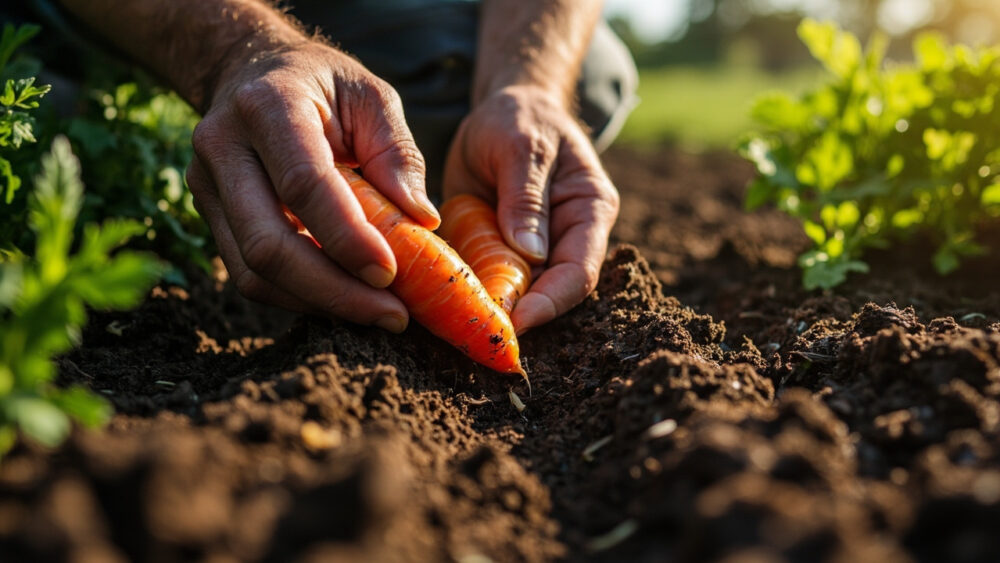
The real answer: in most of Michigan, plant carrots outdoors from mid-April through early May for a spring crop, then again in mid to late July for a fall crop that often turns out sweeter. Carrot seed germinates in soil as cool as 40°F, but it comes up faster and more evenly once the soil hits 50 to 60°F. That single soil temperature number matters more than any date on a calendar.
Here is where most Michigan gardeners lose the season before it starts. They wait for the seed rack to show up at the garden center, which is usually weeks after the soil was already workable, and they plant a full month later than they needed to. Carrots are one of the few crops where earlier really is better, within reason, because they need a long, cool stretch to size up before summer heat makes the roots go bitter and woody.
There is also a mistake almost everyone makes with germination itself, and it has nothing to do with timing. I will get to it. Stick around for the part on watering during the first two weeks, because that is the actual make-or-break moment, and for the save-able Carrots at a Glance card at the very bottom with every number in one place.
The Michigan Planting Window, Anchored to Frost and Soil
Michigan spans a wide range of last-frost dates. Southern Michigan, around zones 6a, typically clears frost by late April to early May. Mid-Michigan and the west coast lakeshore, mostly zone 6a to 5b, often run one to two weeks behind that. The Upper Peninsula and far northern Lower Peninsula, zone 4b to 5a in many spots, can hold frost into late May.
Carrots do not wait for your last frost date the way tomatoes do. The tops are frost-tolerant once they germinate, and the seed itself does not care about frost at all. What it cares about is soil temperature. You can plant three to four weeks before your last expected frost, as soon as the soil has warmed past 40°F and dried out enough to rake into a fine bed.
For most of the Lower Peninsula that lands somewhere in the last half of March through April. For the northern tier and the U.P., think mid to late April into early May.
Next question: how do you check that soil is actually ready, instead of guessing from the date on your phone.
Reading Your Own Yard Instead of a Calendar
Two checks tell you everything a calendar cannot. First, grab a handful of soil from where you plan to plant. If it forms a wet, shiny ball and stays balled up, it is too wet and too cold still. If it crumbles apart loosely, you are close.
Second, use an actual soil thermometer pushed 2 to 3 inches down, checked in the morning before the sun warms the surface. Anything consistently at or above 45°F is workable for carrots, though germination speeds up a lot once you cross 55°F.
Raised beds and sandy soil warm up a week or more ahead of dense clay or low-lying ground, which matters a lot in places like the Saginaw Valley or the clay belts around Detroit’s outer suburbs. If your soil is heavy clay, do not fight it by planting early into a cold, gummy bed. Wait the extra week. It pays you back.
Once the ball test and the thermometer agree, the real risk shifts from cold soil to something almost nobody thinks to check.
Plant Too Early or Too Late, and Here Is What Actually Happens
If you assumed planting too early means frost kills the seedlings, that guess is wrong for carrots and it is not the real danger. The actual problem with planting too early is a cold, wet bed that crusts over before the seed can push through, or seed that simply sits and rots in soil under 40°F without ever germinating.
Plant too late, on the other hand, and the damage is real but different. Carrots seeded after soil temperatures climb past 75°F in the heat of June germinate poorly and the resulting roots often split, fork, or turn bitter once summer heat hits them mid-growth. A spring crop planted in June in southern Michigan is racing a clock it usually loses.
The fix for late planting is not to force it. Shift to a fall crop instead, seeded mid-July to early August, timed so the roots mature as days cool in September and October. Fall carrots pulled after a light frost or two are often the sweetest of the year, because cold triggers the roots to convert starch to sugar.
That fall window is worth planning for now, and the prep for either window starts before you ever open a seed packet.
The Prep That Decides Everything Before You Plant a Seed
Carrots grow straight and long only in loose, stone-free soil worked at least 8 to 10 inches deep. Rocky or compacted soil is the single biggest cause of stubby, forked, or twisted roots, and no amount of good timing fixes it after the fact.
Work in a couple inches of compost, but skip fresh manure or heavy nitrogen fertilizer. Rich, high-nitrogen soil pushes lush tops at the expense of the root, and fresh manure is a classic cause of hairy, forked carrots.
Rake the bed to a fine, crumbly texture with no clumps bigger than a marble. Carrot seed is tiny and has no strength to push past a crust or a clod.
Sow seed about a quarter inch deep, rows 12 to 18 inches apart, and expect to thin seedlings to 2 to 3 inches apart once they show their first true leaves. Crowded carrots stay skinny and compete themselves into nothing.
Now for the germination mistake I mentioned up top, because it sinks more Michigan carrot beds than frost ever does.
The Watering Mistake That Ruins More Plantings Than Cold Soil Does
Carrot seed takes 10 to 21 days to germinate, longer in cool early spring soil. During that entire stretch the top half inch of soil has to stay consistently damp, not soaked, not dry.
Most people water once, walk away, and let the surface dry into a crust within a day or two, especially on windy Michigan spring days. That crust is often stronger than a carrot seedling can break through, and the seed simply dies underground having never had a real chance.
The fix is a light daily misting or sprinkle, sometimes twice a day in dry, windy weather, until you see the thread-thin first leaves emerge. Some gardeners lay a board or damp burlap over the row for the first week to hold moisture, checking underneath every day or two and pulling the cover the moment sprouts appear.
Once seedlings are up and growing, you can ease off to regular watering, about an inch a week, adjusted for rain.
With timing, soil prep, and germination moisture handled, the last piece is knowing how your part of Michigan shifts all of this.
Zone and Region Notes Across Michigan
Southern Michigan, zone 6a, generally the earliest and most forgiving window in the state. Spring planting from late March into April, fall planting through mid-August.
Mid-Michigan and the lakeshore counties, mostly zone 5b to 6a, push spring planting into mid-April and pull the fall cutoff to early August, since the growing season closes sooner.
Northern Lower Peninsula and the Upper Peninsula, zone 4b to 5a, run a shorter season on both ends. Spring planting often waits until late April into May, and fall seeding needs to happen by mid to late July to give roots enough time before hard frost ends the season for good.
Lake effect areas near Lake Michigan and Lake Superior see slightly milder, later springs and longer falls than inland spots at the same latitude, which can buy you an extra week on either end.
Here is everything from every section, boiled down to what you actually need to remember.
Carrots at a Glance
- When to plant: mid-April through early May for spring in most of Michigan, mid-July to early August for a fall crop, adjusted a week or two earlier or later by region.
- Soil temperature target: at least 40°F to germinate, ideally 50 to 60°F for fast, even sprouting.
- Depth and spacing: sow about a quarter inch deep, rows 12 to 18 inches apart, thin seedlings to 2 to 3 inches apart.
- Soil prep: loosen 8 to 10 inches deep, remove rocks and clumps, work in compost, skip fresh manure and heavy nitrogen.
- Germination watering: keep the top half inch damp with light daily watering for 10 to 21 days until seedlings emerge.
- Zone notes: southern Michigan zone 6a plants earliest, the U.P. and far north zone 4b to 5a plant later in spring and finish fall crops by mid to late July.
- Biggest mistakes to avoid: planting into cold wet clay, letting the soil crust over during germination, and skipping thinning.
Get the soil temperature and moisture right and the calendar mostly takes care of itself. Everything else on this list is just backup for the two weeks that actually decide the crop.