North Florida plants watermelon from mid-March through April, Central Florida from late February through April, and South Florida can start as early as late January and often squeezes in a second planting in August for a fall crop. The real trigger is not the calendar, it is soil temperature holding at 65 F or warmer and nighttime lows staying reliably above 60 F. Get that part wrong and you can do everything else right and still lose the season.
Here is what almost nobody tells you before they put seed in the ground. There is a mistake tied directly to Florida’s warm spring that ruins more watermelon patches than frost ever does, and it happens weeks after planting, not on planting day. There is also a sign on the vine itself that convinces gardeners they are behind schedule when they are actually right on time.
And if you are already picturing rows of melons and wondering what actually goes wrong between now and harvest, that answer is coming too. Stick with this through to the end, because the Watermelon at a Glance card at the bottom is built to save to your phone and check against on planting day.
The Real Planting Window for Florida Watermelon
Florida spans three rough climate bands for this purpose: North Florida (zones 8b to 9a, think Tallahassee, Jacksonville), Central Florida (zones 9b to 10a, Orlando, Tampa), and South Florida (zones 10b to 11, Miami, Fort Myers). Each has a different last frost date and a different window.
North Florida’s average last frost lands mid to late March, so direct-seed or transplant watermelon from mid-March into April, once nights are reliably above 55 F. Central Florida sees last frost in February, opening a window from late February through April. South Florida rarely frosts at all, which lets growers start in late January and plant again in August for a fall harvest before winter cool slows things down.
Watermelon needs 70 to 90 days from seed to harvest depending on variety, and it wants heat the entire time, not just at planting.
Knowing your zone tells you the earliest safe date, but your actual yard tells you the real one.
How to Find Your Actual Window, Not Just Your Zone’s
Zone maps are averages. Your yard is not average, it is a specific patch of dirt with its own microclimate. That is the honest answer to the question you are probably about to ask: why does the extension office date feel off for my yard?
Soil temperature is the real gatekeeper. Push a soil thermometer 2 to 4 inches deep, check it at the same time for three or four mornings in a row. Watermelon seed wants that reading at 65 F minimum, ideally 70 to 95 F, for reliable germination.
Cold, low-lying yards and shaded corners lag weeks behind a raised bed in full sun on the south side of a house. Sandy Florida soil actually helps here, it warms fast, but it also cools fast on a cold front, so check again after any cool snap passes through.
If you assumed your zone’s average last frost date was your green light, that guess is close but not exact, your own thermometer overrules the map every time.
The Mistake That Actually Ruins Florida Watermelon Season
Planting too early into cold soil gets blamed for most failures, and it does stunt or rot seed. But in Florida’s warm spring, the bigger silent killer shows up weeks later: vines that grow fast and lush in the heat but never set fruit because blossoms dropped in a stretch of excessive heat or humidity, or because pollinators were scarce during the short window each flower is open.
Plant too early into 55 F soil and seed simply sits and rots before it germinates, or seedlings emerge weak and stall. That part is guessable and true.
The less obvious failure comes from planting so late that flowering and fruit set land during Florida’s peak summer heat and humidity, when pollen viability drops and bees are less active during the cooler morning hours flowers need them. You get vigorous green vines and few or no melons.
Planting too late also means fruit ripening during hurricane season’s heaviest rain, which splits melons and dilutes their sugar right before harvest.
The fix for both problems is the same discipline: hit the window, do not stretch it in either direction.
Prep to Finish Before the Window Opens
Watermelon roots hate being disturbed, so most of your prep work has to happen before seed goes in the ground, not after.
- Build the bed: mound rows 12 inches high and 3 feet across, watermelon wants soil that drains fast and warms fast, and Florida’s sandy soil drains well but needs organic matter worked in to hold moisture.
- Space generously: vining types need 4 to 6 feet between plants and 6 to 8 feet between rows, bush types can go tighter at 3 to 4 feet.
- Test and amend pH: watermelon wants 6.0 to 6.8, Florida sand often runs more acidic or more alkaline depending on your specific area, a simple soil test tells you which way to correct.
- Pre-warm the soil: black plastic mulch laid two weeks before planting can push soil temperature up several degrees on a slow spring.
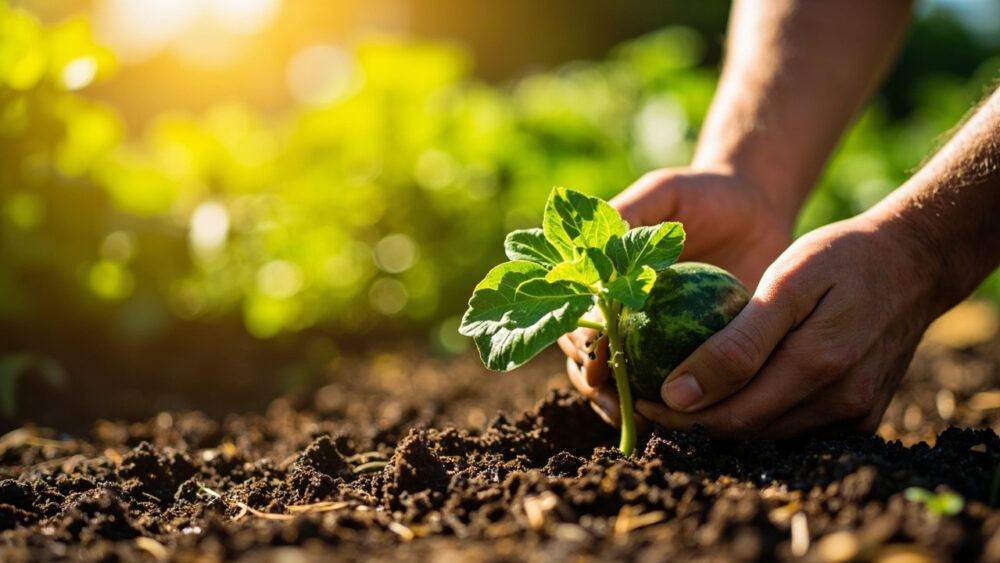
Seed goes in 1 inch deep, transplants go in at the same depth they sat in the pot, roots undisturbed.
Do that work now and the actual planting day takes ten minutes.
Zone Notes That Change Your Exact Dates
North Florida gardeners should watch for a late cold front even in April, a rogue frost after a warm week is not rare, and it can still nip young seedlings. Wait for two consecutive weeks of settled warmth before you commit.
Central Florida’s long warm season is forgiving, but the same length invites a second planting. Many growers there seed again in early summer for a fall crop, timed so fruit finishes before the worst of hurricane season rain.
South Florida’s advantage is also its trap. Frost is nearly a non-issue, but summer heat arrives early and hard, so the practical window closes sooner than the frost date alone would suggest, aim for that late January to March slot rather than pushing into May.
Whichever band you garden in, the window is real and it is narrower than the zone map implies.
Watermelon at a Glance
- When to plant: North Florida mid-March to April, Central Florida late February to April, South Florida late January to March, with an optional August planting for a fall crop.
- Soil temperature target: 65 F minimum at 2 to 4 inches deep, ideally 70 to 95 F for fast, even germination.
- Seed depth: 1 inch deep, direct-seeded or as transplants at the same depth they grew in the pot.
- Spacing: 4 to 6 feet between vining plants, 6 to 8 feet between rows, 3 to 4 feet for bush types.
- Days to harvest: 70 to 90 days from seed depending on variety.
- Biggest risk: flowering and fruit set landing during peak summer heat and humidity, which drops blossoms and cuts pollination success.
- Soil pH target: 6.0 to 6.8, test Florida sand before planting since it varies by region.
Hit the soil temperature, not the calendar, and Florida’s long warm season does most of the work for you.
Everything else, spacing, mounding, pH, is just making sure that window does not go to waste.