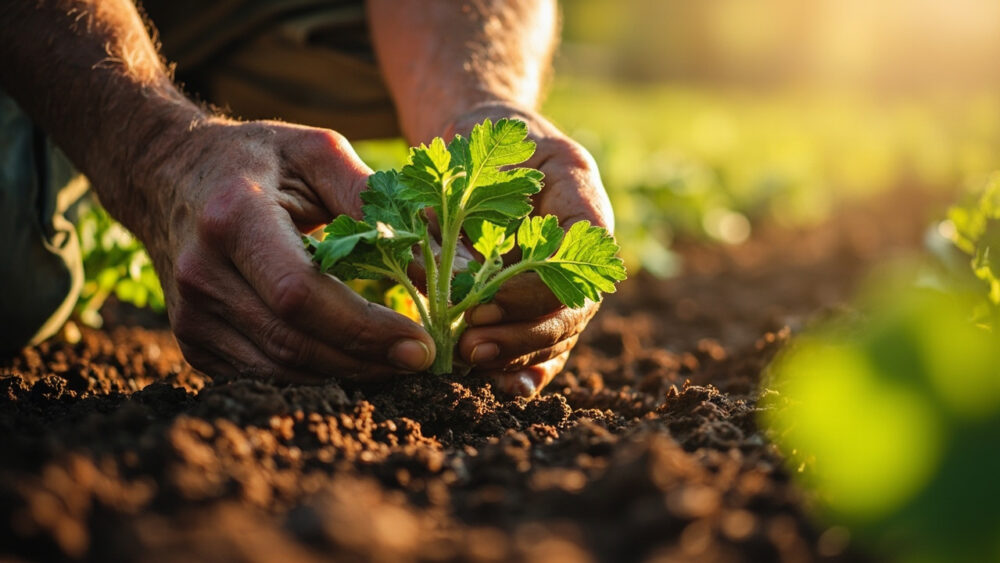
The real window for planting watermelon in most of Georgia runs from late April through late May, once soil temperatures hold at 70°F or warmer and the danger of a lingering cool spell has passed. South Georgia growers can often push into mid April, while north Georgia and the mountains usually need to wait until early May. Get this window wrong in either direction and you either stall the plant for weeks or lose it outright.
Most people miss this window for one of two reasons, and both are avoidable once you know what to check. There’s also a soil test more useful than any calendar date, a transplant mistake that quietly costs three weeks of growth, and an honest answer about second plantings if your first try fails.
Stick with this to the end and you’ll find a save-able Watermelon at a Glance card with the exact numbers for spacing, depth, and timing across Georgia’s growing regions.
The Actual Planting Window, Region by Region
Watermelon wants warm soil, warm nights, and no chance of frost. In Georgia that means anchoring your date to your local average last frost, not a fixed day on the calendar.
South Georgia (roughly zones 8b to 9a, think Valdosta, Albany, Tifton) typically clears its last frost by mid to late March, and growers there often direct-seed or transplant from mid April through early May.
Middle Georgia (zone 8a, Macon, Columbus, Augusta) usually has a last frost in early to mid April, pushing planting to late April through mid May.
North Georgia and the mountains (zone 7a to 7b, Atlanta up through Blue Ridge and Dahlonega) often see frost risk linger into mid to late April, so early to late May is the safer call.
Your zip code gets you close, but your own yard tells the real story.
How to Tell Your Actual Window, Not the Calendar’s
If you assumed the safe move is just waiting an extra week past your average frost date, that guess only solves half the problem. Frost is not what kills most watermelon starts in Georgia. Cold, wet soil is.
Soil temperature is the number that matters. Push a soil thermometer four inches deep in the bed you plan to plant, check it in the morning for a few consecutive days. You want a steady 70°F, not a single warm afternoon reading.
Watermelon seed germinates poorly and slowly below 65°F, and transplants set into cold soil just sit there, sulking, vulnerable to root rot, while weeds around them take off. A patch of bare dirt in full sun warms faster than shaded or heavy clay ground, so two spots ten feet apart on your property can be a full week apart in readiness.
Once that soil holds 70°F for several days running and nighttime air temps stay above 55°F, you’re in your real window.
What Happens If You Plant Too Early, or Too Late
Here’s the part everyone gets wrong: they think an early planting just means a slower start. It usually means a dead or stunted plant instead.
Too early and cold, damp soil rots the seed before it germinates, or a transplant’s roots stall and the whole plant turns a dull yellow-green and refuses to grow even once warm weather arrives. A late cold snap, even one that doesn’t reach frost, can set watermelon back two to three weeks in growth it never fully recovers.
Too late is the quieter mistake. Watermelon needs 70 to 90 days from transplant to harvest depending on variety, and Georgia’s brutal late summer heat stresses pollination and fruit set once nights stay above 75°F for long stretches.
Plant much past early June in the north, or mid June in the south, and you’re racing an oppressive August that can abort blooms before they ever set fruit.
That narrow middle ground is exactly why prep before the window matters more than people expect.
The Prep That Actually Buys You Time
Most of what determines success happens before you ever drop a seed. This is the honest answer to the question you’re about to ask: can I just wait until it feels right and skip prep. You can, but you’ll plant later than growers who prepped, and later means more heat stress at harvest.
Warm the soil early by laying black plastic mulch over your bed two to three weeks before your target date. It can push soil temperature up several degrees faster than bare ground alone, buying you real days.
Work in two to three inches of compost or aged manure ahead of time, since watermelon is a heavy feeder and hates being amended after the vines start running.
Start seed indoors three to four weeks before transplant if you want a jump on the season, using biodegradable pots since watermelon roots resent disturbance. Harden off transplants over four to five days before they go in the ground.
Get this groundwork done and the window opens on schedule instead of you chasing it.
Spacing, Depth, and the Mistake That Costs You a Row
Direct-seed watermelon about 1 inch deep, three to four seeds per hill, thinning to the strongest one or two seedlings once they have true leaves. Transplants go in at the same depth they were growing in the pot, no deeper.
Space hills 4 to 6 feet apart in rows 6 to 8 feet apart for standard vining types. Bush or compact varieties can go tighter, around 3 to 4 feet.
The mistake that costs people a whole row: planting too deep, or burying the stem when transplanting to “protect” it from wind. Watermelon stems rot fast if soil sits against them, and a buried crown often looks fine for a week before it collapses.
Give the vines the room they’re asking for, because a crowded patch breeds powdery mildew and poor pollination by midsummer.
If Your First Planting Fails, Can You Replant
Yes, in most of Georgia, and this is worth knowing before disaster strikes rather than after. If a late cold spell or a rot problem takes out an April or early May planting, you generally have until early to mid June in south and middle Georgia to try again and still reach harvest before the heaviest heat.
North Georgia’s window for a redo is tighter, closing by late May to keep the 80 to 90 day varieties on track.
Choose a shorter-season variety for a second attempt, something closer to 70 to 75 days to maturity, to give yourself more margin.
That flexibility is real, but it’s also exactly why getting the first planting date right matters more than people assume.
Watermelon at a Glance
- When to plant: mid April to early May in south Georgia, late April to mid May in middle Georgia, early to late May in north Georgia, once soil hits a steady 70°F.
- Soil temperature target: 70°F at four inches deep, checked over several consecutive mornings, not just one warm afternoon.
- Seed depth: about 1 inch deep for direct seeding, three to four seeds per hill, thinned to one or two strong seedlings.
- Spacing: 4 to 6 feet between hills, 6 to 8 feet between rows for vining types, 3 to 4 feet for bush varieties.
- Days to maturity: 70 to 90 days depending on variety, plan your planting date backward from your region’s heavy heat arrival.
- Last safe planting date: early to mid June in south and middle Georgia, late May in north Georgia, sooner if using a longer-season variety.
- Biggest mistake to avoid: planting into cold, wet soil or burying the stem crown when transplanting.
Watch the soil, not the calendar, and give the vines the room they’re asking for.
Get those two things right and everything else about growing watermelon in Georgia takes care of itself.