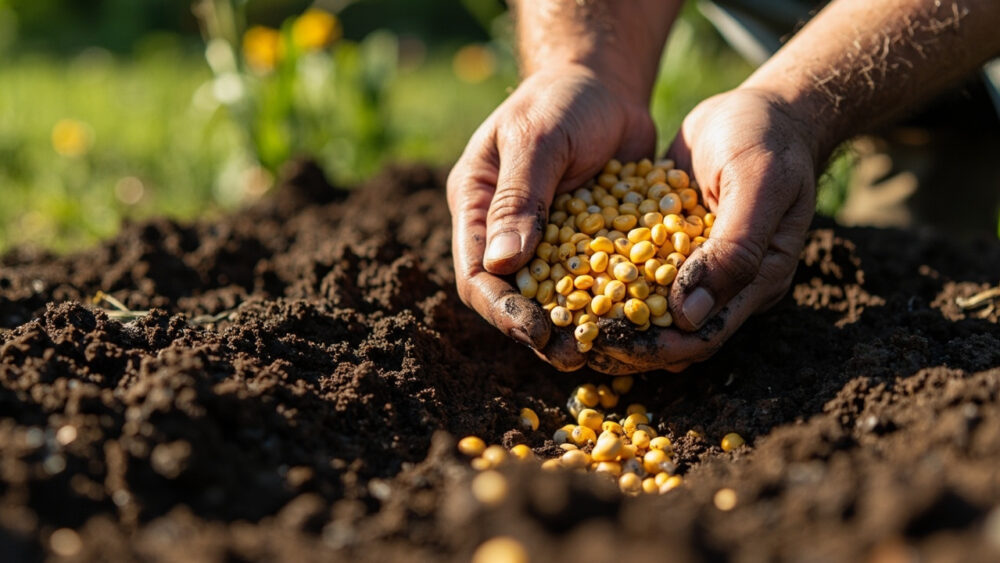
The real window for planting corn in Michigan runs from mid-May to early June for most of the state, once soil temperature holds at 50°F or warmer and the danger of frost has passed. Southern Michigan (Zone 6a) can often push into the first week of May in a warm spring. Up in the northern Lower Peninsula and the U.P. (Zone 4b to 5a), you’re realistically waiting until late May or even the first week of June.
That sounds simple enough, but here’s what trips people up every single year: soil temperature and air temperature are not the same thing, and corn only cares about one of them. There’s also a second window mistake that costs gardeners three weeks of growing season without them ever realizing it happened.
Stick with me through this and you’ll know exactly how to read your own yard instead of a calendar, what happens to corn planted too early (it’s not what most people think), and there’s a save-able Corn at a Glance card at the bottom with every number in one place.
The Actual Planting Window for Michigan
Corn seed needs soil temperature at a sustained 50°F minimum to germinate at all, and it germinates far more reliably at 55 to 60°F. Air temperature can feel warm on a 65°F April afternoon while the soil six inches down is still sitting in the low 40s from winter.
Last frost dates matter here too, since a frost after emergence can kill young corn seedlings outright. Southern Michigan typically sees its last frost between late April and mid-May. Central and northern parts of the state often run two to three weeks later than that.
Combine those two facts and you get the real window: mid-May to early June across most of the state, with far southern counties sometimes able to start the first week of May.
Soil temperature is the number that actually decides your planting day.
How to Find Your Actual Window, Not the Average One
Averages are for the state. Your yard is not the state. A south-facing garden bed with sandy soil can be planting-ready a full two weeks before a shaded, clay-heavy plot fifteen miles away.
Check soil temperature directly with a simple soil thermometer, pushed about 3 to 4 inches deep, checked in the morning for several days running. If it reads 50°F or better for at least three to four consecutive days with no cold snap forecast, you’re close.
Feel the soil too. It should crumble rather than clump, and it should not stick to your boots in a heavy paste. Wet, cold, sticky soil is a clear sign to wait, no matter what the date says.
Watch your local frost forecast for the next 10 to 14 days, not just the next 3.
Your soil thermometer will tell you the truth days before your calendar will.
Plant Too Early, and Here’s What Actually Happens
Most gardeners assume planting corn early just means slower germination. That’s the guessable answer, and it’s not the expensive part.
The real damage from cold, wet soil is rot. Corn seed sitting in soil below 50°F for more than a week often doesn’t just germinate slowly, it absorbs cold moisture, swells, and rots before it ever sprouts. You won’t know until two or three weeks later when you’re staring at bare, empty rows and wondering if you planted at all.
Seed that does survive cold soil frequently comes up stunted, pale, and uneven, with some plants noticeably behind their neighbors for the entire season. That unevenness rarely corrects itself.
Planting too late has its own cost: shorter stalks, smaller ears, and a real risk of not finishing pollination or maturity before your first fall frost, especially with longer-season varieties.
Both mistakes are avoidable, and both come down to the same fix waiting in the next section.
The Prep That Actually Buys You Time
You can’t force soil to warm up faster by wishing, but you can help it along by a few real days.
Black plastic mulch or a simple row cover laid over your corn bed for a week or two before planting can raise soil temperature several degrees, sometimes enough to move your start date up meaningfully. Remove it right before planting.
Raised beds and hilled rows warm faster than flat ground because they drain better and catch more sun. If you’re on heavy clay, this alone can be worth a week.
Work in compost or aged manure the fall before if you can, not in the same week you plan to plant, since fresh amendments and cold, disturbed soil don’t help germination.
Choose a shorter-season variety, 65 to 75 days to maturity, if you’re in the northern part of the state or you got a late start.
None of this changes when frost risk ends, but it can change when your soil is finally ready.
Zone and Region Notes Worth Knowing
Michigan spans roughly Zone 4b in the far north to Zone 6a in the southeast corner near Lake Erie and the Ohio border, and that range matters more for corn than almost any other common vegetable.
Lake effect complicates things further. Areas close to Lake Michigan often have a milder, later spring than inland areas at the same latitude, because the lake delays warming. Southwest Michigan’s fruit belt counties can lag a week or two behind inland farmland just fifty miles east.
If you’re in the Upper Peninsula or the far northern Lower Peninsula, don’t fight the shorter season. Choose an early variety and accept a late-May to early-June start as normal, not a delay.
Wherever you garden in the state, the same core rule applies underneath all these regional differences.
Corn at a Glance
- When to plant: mid-May to early June for most of Michigan, first week of May possible in far southern Zone 6a areas in a warm spring.
- Soil temperature needed: 50°F minimum, 55 to 60°F for reliable, even germination.
- Frost rule: plant after your local last frost date has passed, and after no frost is forecast in the next 10 to 14 days.
- Planting depth: 1 to 1.5 inches deep in cool spring soil, up to 2 inches once soil is warm and dry.
- Spacing: seeds 8 to 12 inches apart in rows spaced 30 to 36 inches apart, thinned to the strongest seedlings.
- Zones covered: USDA Zone 4b in the north to Zone 6a in the far southeast, with lake effect areas running a week or two cooler in spring.
- Days to maturity: choose 65 to 75 day varieties for northern Michigan, 80 to 90 day varieties are fine for southern counties with a longer season.
Soil temperature beats the calendar every time, so check it yourself before you plant.
Get that one number right and the rest of the season takes care of itself.