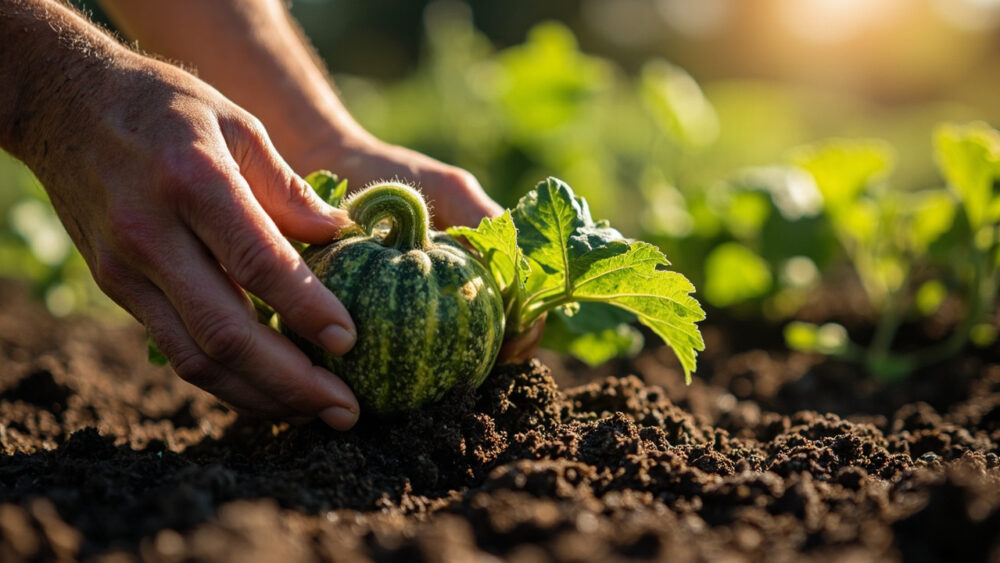
The real window for planting pumpkins in North Carolina runs from late May through late June, depending on where in the state you garden and what date you want them ripe for. That timing is built backward from October, not forward from spring fever. Pumpkins need 90 to 120 days to mature depending on variety, and if you plant them too early or too late for your target harvest, you get vines full of green fruit and no pie.
Most people blow this window in one of two directions. Either they plant in April because the soil finally feels workable, or they wait until July because life got busy and figure pumpkins are tough enough to catch up. Both mistakes are recoverable if caught early, and neither is what you’d guess.
Stick around for the part almost nobody accounts for, the exact soil temperature check that beats any calendar date, and the save-able Pumpkins at a Glance card at the bottom with everything worth screenshotting before you head out to the garden.
The Actual Planting Window, Counted Backward From Halloween
North Carolina spans three USDA zones for practical gardening purposes: zone 7 in the mountains and northern Piedmont, zone 7b to 8a through the central Piedmont and Sandhills, and zone 8 along the coast. Last frost typically falls mid to late April in the mountains, early to mid April in the Piedmont, and late March to early April along the coast.
But frost date is the wrong anchor for pumpkins. Work backward from when you want ripe fruit. For a late October harvest, count back 90 to 120 days depending on your variety, and that lands most North Carolina gardeners squarely in late May through late June for planting.
Plant much earlier than that and your pumpkins ripen in August, sitting in the field getting soft and attracting rot and pests before Halloween ever shows up.
Get the calendar math right, but the soil still has the final vote.
The Soil Check That Matters More Than the Date on Your Phone
Pumpkin seed will rot in cold, wet soil before it ever germinates. You want soil temperature at 65 to 70 degrees Fahrenheit at a 2-inch depth, checked with a simple soil thermometer pushed into the bed where you plan to sow.
In most of North Carolina that threshold arrives sometime in May, earlier on the coast, later in the mountains. Air temperature lies to you here. A warm 75-degree afternoon in early May can still sit over soil that’s barely 55 degrees a few inches down, especially in clay-heavy Piedmont ground that holds cold.
If you assumed the safe move is planting as soon as frost risk passes, that guess is exactly what leaves gardeners with seed that never sprouts or seedlings that stall for two weeks doing nothing. Check the soil, not just the sky.
Once soil temperature holds steady in that range for a few consecutive days, you’re clear to plant.
Too Early, Too Late: What Each Mistake Actually Costs You
Plant too early into cold, damp soil and seeds either rot outright or germinate weak, with pale, slow seedlings that never catch up to a properly timed planting. Powdery mildew and squash vine borer pressure both increase for stressed early plants later in the season, because a weak start means a weak plant all year.
Plant too late and the math simply runs out. A pumpkin sown in mid July needs warm weather clear into November to finish, and North Carolina’s first fall frost lands mid October in the mountains, late October to early November in the Piedmont and coast. Miss that window and you’re left with vines full of green pumpkins when frost kills the foliage.
There’s no rescuing a pumpkin that runs out of season. That’s the honest part, and it’s why the window matters more than most vegetables you grow.
Prep to Finish Before You Ever Drop a Seed
Pumpkins are heavy feeders growing in vines that can run 10 to 15 feet, so bed prep before the window opens saves you scrambling later. Work 2 to 3 inches of finished compost into the planting area, and form mounds or hills about 4 to 6 feet apart if you’re growing standard vining varieties.
Full sun is non-negotiable, at least 6 to 8 hours a day, and good airflow around the planting site cuts down on the powdery mildew that thrives in North Carolina’s humid summers.
If you’re growing pumpkins for a specific fall event, weigh backward from that date now, not the week before you plant. That’s the single best way to land squarely inside your real window instead of guessing.
With beds ready and your date targeted, the only thing left is watching your own yard, not a generic calendar.
Reading Your Own Yard, Not Just the Regional Average
Regional averages get you close, but your yard has its own microclimate. A south-facing bed against a house wall in Charlotte warms up a full one to two weeks earlier than an open field nearby. A low spot that collects cold air or morning shade from trees can run just as far behind.
Mountain gardeners in zone 7 should lean toward the earlier end of the June window and choose faster varieties, 90 to 100 days, since your growing season closes sooner. Coastal and southeastern Piedmont gardeners in zone 8 have more flexibility and can push planting into late June for an October harvest, or even try a second, smaller planting for pumpkins timed to ripen right before Halloween.
Trust the soil thermometer and your own frost history over any statewide rule of thumb.
Pumpkins at a Glance
- When to plant: late May through late June across most of North Carolina, timed 90 to 120 days before your target harvest date.
- Soil temperature to check for: a steady 65 to 70 degrees Fahrenheit at 2 inches deep before sowing seed.
- Planting depth: 1 inch deep in most soils, up to 1.5 inches in sandy coastal soil that dries fast.
- Spacing: hills or mounds spaced 4 to 6 feet apart for vining varieties, 2 to 3 feet for bush types.
- Zone notes: mountain zone 7 gardeners plant on the early side with faster 90 to 100 day varieties, coastal zone 8 gardeners have room to plant into late June.
- First frost to plan around: mid October in the mountains, late October to early November in the Piedmont and coast.
- Sun requirement: 6 to 8 hours of full sun daily, with good airflow to limit powdery mildew.
Get the soil temperature right and count backward from your harvest date, and the calendar takes care of itself.
Everything else about growing pumpkins well in North Carolina is easier once that window is locked in.