Texas has two real pumpkin windows, not one, and picking the wrong one is the single biggest reason Texas pumpkin patches fail. For a fall harvest around Halloween, you plant in mid to late June through mid July, timed so the vines mature in the shorter, cooler days of autumn. For a summer harvest instead, you plant in early spring once the soil warms, about two to three weeks after your last frost.
Most people planting pumpkins in Texas think spring is the only option, because that is when every other vegetable goes in the ground. It is not, and treating pumpkins like tomatoes is the mistake that costs most Texas growers their crop.
There is also a sign almost everyone misreads: a pumpkin vine that looks huge and healthy by August with no fruit setting yet. That is not a fertility problem, and the fix is not more nitrogen. We will get to what it actually means, and I will give you the save-able Pumpkins at a Glance card at the bottom with every date, spacing, and depth number in one place.
The Two Windows That Actually Work in Texas
Spring planting runs from about two to three weeks after your last frost date through early April in most of the state. That means soil temperature at planting depth should sit at 65 to 70°F, not just air temperature. Spring-planted pumpkins mature in the brutal heat of July and August, which stresses the vines and can crash pollination once daytime highs push past 95°F for stretches.
Summer planting for a fall harvest is the window most Texas growers actually want, and it runs roughly mid June through mid July across zones 7 through 9. This times the 90 to 120 day maturity window so pumpkins ripen in September and October, when nights cool off and pollinators are more active again.
If you want pumpkins sitting on the porch for Halloween, work backward from late October and count back 100 to 120 days depending on variety.
Reading Your Own Yard Instead of a Calendar
Calendar dates are a starting guess, not the answer. The real test is soil temperature four inches down, checked with an ordinary soil thermometer in the morning before the sun hits it. Pumpkin seed will not germinate reliably below 65°F, and it rots in cold, wet soil instead of sprouting.
South Texas and the Rio Grande Valley (zones 9 and 10) warm up fast and can sometimes push spring planting into February, but summer heat arrives brutally early there too, so many valley growers lean almost entirely on the summer-to-fall window.
North Texas and the Panhandle (zones 6b to 7b) have a shorter frost-free season and a harder cutoff on the back end, since an early fall frost there can hit in late October and end the season before slow varieties finish.
Your thermometer and your average first fall frost date matter more than any date printed on a seed packet.
What Happens When You Plant Too Early or Too Late
Plant too early in spring and cold, damp soil rots the seed outright, or seedlings emerge stunted and never fully recover even after the weather warms. That early stress shows up months later as weak vines and poor fruit set, it does not go away on its own.
Plant too late in the summer window and you run out of daylight and cooling weather before fruit can size up and cure properly on the vine, leaving you with small, thin-walled pumpkins or vines still flowering when the first frost hits.
Here is the part that surprises people: a vine loaded with big leaves and long runners in high August heat but zero pumpkins setting is not underfed. It is heat-stressed. Extreme heat, especially nights staying above 75°F, causes flowers to drop or pollen to go sterile, so the plant grows leaf and vine instead. More fertilizer will not fix that, only cooler weather will, which is exactly why the summer planting window exists in the first place.
Timing solves problems that no amount of feeding or watering ever will.
Prep to Finish Before the Window Opens
Pumpkins are heavy feeders and space hogs, so soil prep matters as much as the planting date. Work in two to three inches of compost or aged manure across the bed before you plant, since pumpkins pull hard on nitrogen and potassium through the whole season.
Spacing depends on the variety. Give vining types 4 to 6 feet between plants in rows 8 to 10 feet apart, since a single vine can sprawl 15 to 20 feet by late summer. Bush and semi-bush varieties, better suited to small Texas yards, can go 3 to 4 feet apart.
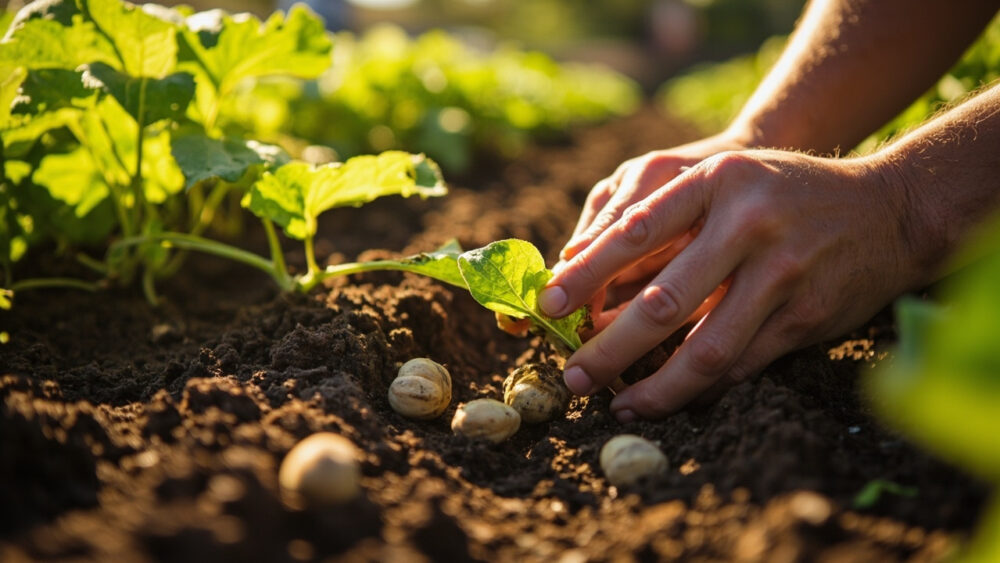
Sow seed 1 to 1.5 inches deep directly in the garden, two to three seeds per hill, thinning to the strongest one seedling once true leaves appear. Pumpkins transplant poorly once roots are disturbed, so direct-seeding beats starting indoors for this crop.
Mulch heavily once seedlings are established, both to hold soil moisture through Texas summer heat and to keep developing fruit off bare, hot soil.
Good soil and the right spacing only pay off if the timing behind them is right too.
Zone Notes Worth Knowing Before You Commit
Texas spans USDA zones 6b through 10, and that range changes more than just your frost dates. Central and East Texas (zones 8a to 8b) usually get the cleanest shot at both windows, spring and summer, with enough season length to try either one.
West Texas and the High Plains deal with intense sun, low humidity, and wind that dries soil fast, so irrigation consistency matters more there than exact planting date.
Humidity along the Gulf Coast brings its own tradeoff: powdery mildew and other fungal disease pressure runs higher there, so good airflow between plants and watering at the soil line instead of overhead matters more than it does in drier parts of the state. If mildew shows up as white powdery patches on leaves, treat it at the first sign using a labeled fungicide and follow the product instructions exactly, since letting it spread across the canopy will cut your harvest short regardless of when you planted.
Know your zone, know your local frost dates, and the rest of this guide slots right into your own yard.
Pumpkins at a Glance
- When to plant for fall harvest: mid June through mid July, timed 90 to 120 days before your first expected fall frost.
- When to plant for summer harvest: two to three weeks after your last spring frost, once soil hits 65 to 70°F.
- Soil temperature check: four inches down, morning reading, seed will not germinate reliably below 65°F.
- Spacing: vining types 4 to 6 feet apart in rows 8 to 10 feet apart, bush types 3 to 4 feet apart.
- Planting depth: 1 to 1.5 inches, direct-seeded, two to three seeds per hill thinned to one.
- Days to maturity: 90 to 120 days depending on variety, count backward from your target harvest date.
- Watch for: vigorous vines with no fruit set in peak heat, a sign of heat stress, not a fertility problem.
Pick your window based on your target harvest, then trust your soil thermometer over the calendar. Get that one decision right and the rest of the season is mostly just water, feed, and patience.