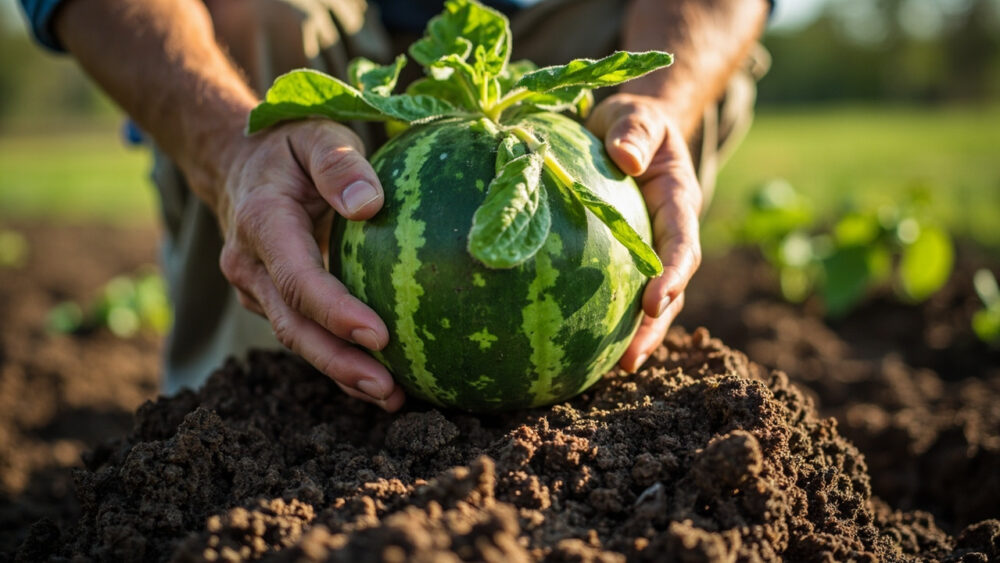
The real window for planting watermelon in Missouri runs from about mid-May through early June for direct seeding or transplants outdoors, once soil temperatures hold above 70°F and the danger of frost has passed. In far southern Missouri you can sometimes push into early May; up north near Iowa, waiting until late May is the safer bet. Get this timing wrong in either direction and you either lose the crop to a cold snap or run out of summer before the melons finish ripening.
Most people who fail with watermelon in Missouri do not fail from neglect. They fail because they plant by the calendar instead of the soil, or because they misread one specific sign that everyone assumes means the opposite of what it actually means.
There is also a mistake tied to succession planting that costs an entire harvest without the gardener ever realizing it happened until August. Stick with this, because the Watermelon at a Glance card at the bottom pulls the whole timeline into one saveable list, but the reasoning behind each number matters more than the number alone.
The Actual Planting Window for Missouri
Missouri sits mostly in USDA zones 5b through 7a, with the Bootheel region edging warmer and the northern counties running cooler. Average last frost dates fall around April 15 to April 20 in southern Missouri, and closer to May 1 to May 10 in the north.
Watermelon is not frost tolerant at any stage, and it sulks in cold soil even without a frost touching it. You want soil temperature at 4 inches deep sitting at 70°F or warmer, checked with a simple soil thermometer, not guessed at by feel.
That soil threshold usually lines up two to three weeks after your last frost date, which is why mid-May to early June is the sweet spot statewide.
Knowing the date on paper is one thing, reading your own yard is another.
How to Tell Your Actual Window, Not the Textbook One
Two yards ten miles apart in the same county can be ready two weeks apart. Soil that warms fast is usually sandy, sits in full sun all day, and slopes slightly so water does not pool overnight.
Heavy clay, shaded mornings, or a low spot that stays damp will run cooler and later, sometimes by ten days or more.
Check soil temperature at the same time each morning for about a week before you plan to plant. If it is climbing and holding above 70°F for several consecutive days, you are close.
A second, low-tech check: weeds like crabgrass and foxtail germinating heavily in a bed is a decent sign the soil has warmed enough for a warm-season crop.
Once your soil tells you it is ready, the next question is what happens if you jump the gun.
Planting Too Early: The Mistake That Looks Fine for Two Weeks
If you assume an early planting just means a slightly slower start, that guess is what wrecks most first attempts. Cold soil does not just delay germination, it can rot the seed outright or stunt a transplant so badly it never fully recovers even after the weather warms.
A watermelon transplant that sits in 55°F soil for a week often survives, but it stays stunted all season and produces small, late fruit, if it fruits at all.
The visible sign is deceptive. The plant looks green and upright for a week or two, then simply stalls, no new leaves, no vine extension, while a properly timed planting right next to it takes off.
By the time the stall is obvious, you have already lost the head start you thought you gained.
Planting Too Late: The Follow-Up Problem Most People Do Not See Coming
Here is the honest answer to the question this reader is about to ask next: yes, you can plant too late even in a state with a long summer. Watermelon needs 70 to 90 days from transplant to harvest depending on variety, and the fruit needs consistent heat through that entire stretch to sweeten properly.
Planting in late June in most of Missouri still works for early varieties, but push past the first week of July and you are racing the first fall frost with very little margin.
Missouri’s first fall frost typically lands mid-October in the south and late September to early October in the north.
The other late-planting trap is succession seeding. Gardeners who plant a second round in July hoping for a fall harvest often get vines that flower fine but never finish ripening before nights cool and pollination slows down.
That is the mistake that quietly costs a whole crop, and it happens after the main window closes, not before it opens.
What to Do Before the Window Opens
Watermelon wants full sun, at least eight hours, and loose, well-drained soil with a pH between 6.0 and 6.8. Work in an inch or two of compost a few weeks ahead if your soil is heavy clay, since watermelon roots resent compaction more than most vine crops.
Build slightly raised mounds or rows, 12 inches high is plenty, which helps soil warm faster in spring and keeps roots out of standing water after summer storms.
Space seeds or transplants 24 to 36 inches apart within the row for smaller bush-type varieties, and up to 6 feet apart for full-size vining melons, with rows 6 to 8 feet apart. Plant seeds about 1 inch deep, two to three per hole, thinning to the strongest seedling once true leaves appear.
If you are starting seed indoors, do it 2 to 3 weeks before your outdoor planting date, not earlier, since overgrown watermelon transplants handle the shock of transplanting badly.
Get the bed ready on that timeline and you are not scrambling the week soil temperatures finally cooperate.
Regional Notes Across Missouri
Southern Missouri, including the Bootheel and the southern Ozarks, zones 6b to 7a, can often plant in early to mid-May and has enough season for even the slower 90-day varieties.
Central Missouri, zone 6a, sits comfortably in the mid-May window and rarely needs to rush.
Northern Missouri, zone 5b to 6a near the Iowa line, should lean toward late May to early June and favor varieties on the shorter end of the maturity range, 75 days or under, to guarantee a finish before fall cooling sets in.
None of this is exact to the week, since a warm spring or a cool one can shift things either direction by ten days.
Whatever zone you garden in, the numbers below are the ones worth keeping on your phone.
Watermelon at a Glance
- When to plant: mid-May through early June statewide, two to three weeks after your last frost date, once soil hits 70°F at 4 inches deep.
- Southern Missouri: early to mid-May often works, zones 6b to 7a.
- Northern Missouri: late May to early June is safer, zones 5b to 6a, favor shorter-season varieties.
- Latest safe planting: first week of July for early varieties, earlier is better as fall frost risk climbs by mid to late September in the north.
- Spacing and depth: seeds 1 inch deep, 24 to 36 inches apart for bush types, up to 6 feet for vining types, rows 6 to 8 feet apart.
- Soil prep: full sun, pH 6.0 to 6.8, work in compost a few weeks ahead, raised mounds 12 inches high for drainage and faster warming.
- Days to maturity: 70 to 90 days depending on variety, plan backward from your expected first fall frost.
If you only remember one thing, remember this: trust the soil thermometer over the calendar, every time.
Everything else about timing watermelon in Missouri follows from that one number.