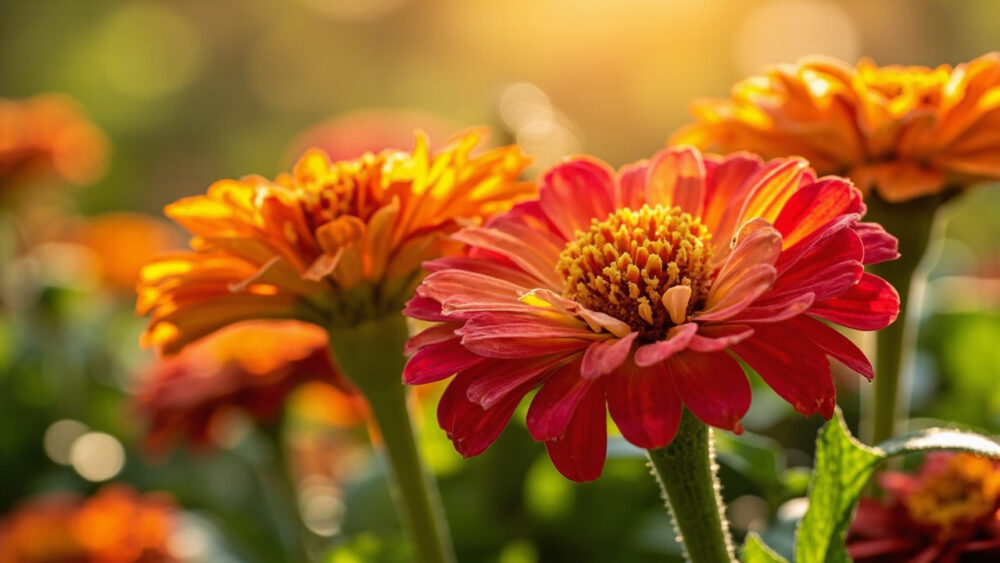
Zinnias start blooming about seven to eight weeks after seeds go in the ground, and once they start, they keep going nonstop until the first real frost. For most gardeners that means a bloom season running from early summer through mid fall, roughly June or July into October depending on your climate.
That is the honest average. But your actual start date depends on when you planted, how much sun the bed gets, and whether you have been cutting or deadheading the spent blooms.
Some gardeners get flowers by June, others are still waiting in August wondering what went wrong. Stick around, because the quick-reference card at the bottom of this page lays out the whole bloom timeline plus the exact conditions that shift it, so you can save it and check your own plants against it.
How Long the Bloom Window Actually Lasts
A single zinnia plant does not bloom once and quit. Each plant produces flower after flower for the entire growing season, as long as you keep removing spent blooms and the weather stays warm.
That means the “bloom season” for zinnias as a whole is really just the frost-free season. Plant after your last spring frost, and they will flower right up until the first fall frost knocks them back, often a run of 12 to 16 weeks or more.
In hot climates with a long frost-free stretch, zinnias can bloom for four or five months straight. In short-season northern climates, expect closer to 10 to 12 weeks of flowers.
Next, the part most people get wrong about what actually controls that start date.
What Controls When Your Zinnias Actually Bloom
If you assumed the calendar decides bloom time, that guess is only half right. Soil temperature and sun exposure do most of the real work.
Zinnia seeds want soil at 70 to 75°F to germinate quickly and grow without stalling. Cold, wet soil below 60°F just sits there, and seedlings planted too early sulk for weeks instead of taking off.
Full sun matters just as much. Zinnias need six or more hours of direct sun a day to bloom on schedule. Give them four hours in dappled shade and you will get a leggy plant with flowers weeks late and noticeably fewer of them.
Variety matters too. Compact bedding types like Profusion or Thumbelina often flower faster, sometimes in five to six weeks, while tall cutting varieties like State Fair or Benary’s Giant can take closer to eight weeks to open their first bloom.
So the real question is not “when do zinnias bloom” in general, it is whether your soil, sun, and variety line up.
How to Get More Blooms, and Keep Them Longer
The single biggest lever you have is deadheading. Cutting spent flowers tells the plant to put energy into making more blooms instead of setting seed, and it is the difference between a zinnia patch that fades by August and one that is still going strong in October.
Feeding helps too, but lightly. A balanced fertilizer every four to six weeks, or a inch of compost worked in at planting, is plenty. Overdoing nitrogen gives you huge leafy plants with fewer flowers.
Water at the base, not overhead, and let the soil dry slightly between waterings. Zinnias are genuinely drought tolerant once established, and wet foliage is what invites the powdery mildew that can shut a plant down early.
Spacing matters more than people expect. Crowd zinnias closer than 12 to 18 inches and you get weaker stems, more mildew, and fewer blooms per plant, even though it feels like more plants should mean more flowers.
Get the spacing and deadheading right and the next issue mostly takes care of itself.
Why Your Zinnias Might Not Be Blooming Yet
If it has been more than eight or nine weeks with no flowers, something specific is off, and it is almost always one of four things.
- Not enough sun: anything less than six hours of direct light will delay and reduce blooming significantly.
- Cold snap after planting: a stretch of nights below 50°F right after transplanting can stall growth for two to three weeks.
- Too much nitrogen: lush dark green growth with no buds usually means the fertilizer is too heavy on nitrogen.
- Overcrowding: plants packed tight compete for light and put energy into stretching, not flowering.
Check the sun exposure first, since that is the cause most people overlook while blaming the soil or the seed packet.
Deadheading and Aftercare That Extend the Show
Once flowers start, your job is simple: cut them, and cut them often. Snip spent blooms just below the flower head, down to the next set of leaves or a side branch, rather than pinching off just the petals.
Cutting for bouquets does the same job as deadheading, so a zinnia patch you harvest from heavily will often outperform one you leave untouched. This is one flower where being generous with the cutting shears actually rewards you with more blooms, not fewer.
Stop deadheading about three to four weeks before your expected first fall frost if you want to save seed, since spent flower heads need time to dry and mature on the plant.
Otherwise, keep cutting right up until frost ends the season for good.
Zinnias: Quick Reference
- Bloom start: about 7 to 8 weeks after seeds go in warm soil, sometimes 5 to 6 weeks for compact varieties.
- Bloom season: early summer through the first fall frost, roughly June or July into October in most climates.
- Bloom duration: 10 to 16 or more weeks per season, continuous as long as you deadhead and frost holds off.
- Ideal soil temperature: 70 to 75°F for fast, even germination.
- Sun needs: 6 or more hours of direct sun daily for on-time, heavy blooming.
- Spacing: 12 to 18 inches apart to avoid weak stems and mildew.
- Biggest bloom booster: regular deadheading or cutting for bouquets, done weekly through the season.
Get the sun, spacing, and deadheading right, and zinnias will bloom hard from early summer clear through the first frost.
That reliability, more than any single bloom date, is the real reason gardeners keep coming back to them every year.