Learning how to grow celosia comes down to three things: wait until the soil is genuinely warm before you plant, give the roots full sun and sharp drainage, and stop babying it once it’s established. Celosia is a heat lover from warm climates, and it grows fastest and blooms hardest when you basically leave it alone in blazing sun. Get those three right and you’ll have velvety flame-shaped or bead-like flower spikes from midsummer clear to frost.
Most failed attempts trace back to one mistake: planting too early into cool soil, which stalls the seedlings so badly they never catch up even after the weather turns. There’s also a sign a lot of people misread as disease when it’s actually just the plant doing something completely normal in the heat. And if you’re wondering whether celosia will reseed itself and come back next year uninvited, the honest answer surprises people who’ve never grown it before.
Stick with me through the growing season and I’ll cover watering, feeding, the pests actually worth worrying about, and exactly when to cut those flower spikes for the best color. The save-able Celosia at a Glance card is waiting at the bottom once you’ve got the full picture.
When to Plant Celosia
Wait until night temperatures reliably stay above 55°F and soil has warmed to at least 65-70°Fwhich is usually two to three weeks after your last spring frost. This is the mistake that ruins most attempts: celosia planted into cool spring soil just sits there, sulking, yellowing at the edges, and it rarely recovers its momentum even once summer heat arrives.
In cooler zones (5-6), that often means late May or early June. In warmer zones (8-10), you can plant in April and get a second round going in midsummer for fall color.
If you’re starting seed indoors, do it 6-8 weeks before your last frost date, but hold seedlings back from the garden until that soil temperature threshold is actually met.
Timing right buys you nothing if the spot you pick is wrong, so let’s talk location.
Choosing the Spot and Prepping the Soil
Celosia wants full sunsix hours minimum, eight or more if you can give it. Shade doesn’t kill celosia outright, but it makes the plants stretch, flop, and produce sad, undersized flower spikes.
Soil matters less than people assume, celosia isn’t fussy about fertility, but it is unforgiving about drainage. Heavy clay that stays soggy will rot the roots fast.
Work a couple inches of compost into the top 6-8 inches of soil before planting, especially in clay or sandy extremes. Aim for a soil pH somewhere in the 6.0-7.0 range, though celosia tolerates a bit outside that without much complaint.
Raised beds or mounded rows are worth the extra effort if your yard holds water after rain.
Once the bed is ready, the actual planting takes only a few minutes.
Step by Step: Planting Celosia
- Depth: sow seed just barely below the surface, about 1/8 inch deep, or press seedlings into the soil at the same depth they sat in their nursery pot.
- Spacing: 8-12 inches apart for shorter bedding varieties, 12-18 inches for the taller plumed types that can reach 2-3 feet.
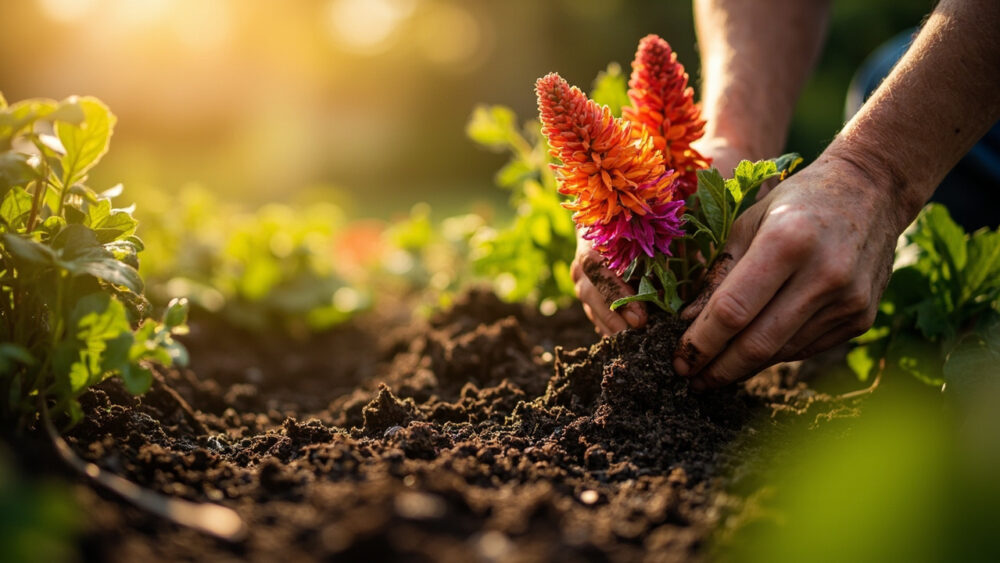
- Technique: water the hole before transplanting, set the seedling in, firm the soil gently around the stem, and water again immediately after.
- Germination: direct-sown seed sprouts in 10-14 days when soil stays consistently warm and lightly moist.
Don’t bury celosia seed deep, it needs light to germinate well, a detail that trips up a lot of first-timers used to planting bigger seeds.
Getting it in the ground right is half the job, keeping it alive through summer is the other half.
Watering and Feeding Through the Season
Water consistently for the first 2-3 weeks after transplanting, keeping the top inch of soil lightly moist while roots establish. Once celosia is established, it actually prefers to dry out somewhat between waterings and handles heat and short dry spells better than most bedding annuals.
Overwatering established plants is the more common errorand it shows up as weak, floppy stems and rot at the base rather than obvious wilting. Check the soil an inch down before you water; if it’s still damp, skip a day.
Feed lightly. A balanced fertilizer worked in at planting, followed by one or two light feedings over the season, is plenty. Too much nitrogen pushes leafy growth at the expense of the flower spikes you actually want.
Mulch around the base to conserve moisture and keep splashing soil off the lower leaves.
Now here’s the part where a normal-looking plant starts worrying people for no good reason.
Problems That Actually Threaten Celosia (and the One That Doesn’t)
If you notice the lower leaves of a mature, blooming celosia turning yellow and dropping in late summer, that’s not disease, it’s the plant redirecting energy into its flower spikes as it matures. This is the sign everyone misreads. Leave it alone and watch the blooms instead.
Real problems to watch for:
- Root rot: caused almost always by soggy soil or overwatering; the fix is better drainage, not more care.
- Fusarium wilt: a soilborne fungal disease that causes sudden wilting despite moist soil. There’s no cure once it takes hold, pull and discard affected plants and rotate the bed next year.
- Aphids and spider mites: show up in hot, dry stretches. A strong water spray or insecticidal soap applied per the label handles most infestations.
- Leaf spot fungal diseases: appear as dark spots in humid, crowded conditions. Improve airflow with wider spacing and avoid overhead watering late in the day.
Good spacing and correct watering prevent almost every problem on that list before it starts.
Get the plant this far and the reward is the whole reason you grew it in the first place.
When and How to Harvest Celosia
Celosia typically blooms 60-90 days from seed, and the flower spikes hold color for weeks on the plant, so there’s no narrow harvest window to panic about. Cut for fresh arrangements once the plume or crest has fully colored and feels slightly firm, not soft.
For dried flowers, wait until the spike feels dry and papery at the base, then cut with 8-10 inches of stem and hang it upside down in a dark, airy spot for two to three weeks. Celosia is one of the best annuals for drying because it holds its color and shape far better than most cut flowers.
Cutting spikes regularly, rather than letting them all go to seed, actually encourages the plant to keep producing new ones through fall.
Now, about that reseeding question I mentioned earlier: celosia does drop seed readily and will often come back on its own the following year in mild climates, but the volunteers are frequently smaller and less vigorous than the parent plant, and colors can drift if you grew mixed varieties. Most gardeners still replant fresh seed or transplants each year for reliable results.
Everything you need day to day is right here in one place.
Celosia at a Glance
- When to plant: two to three weeks after last frost, once soil hits 65-70°F and nights stay above 55°F.
- Sun and soil: full sun, six to eight hours minimum, well-drained soil with a pH around 6.0 to 7.0.
- Spacing and depth: sow seed 1/8 inch deep, space plants 8-12 inches apart for bedding types, 12-18 inches for tall plumed varieties.
- Watering: keep soil lightly moist until established, then let the top inch dry out between waterings.
- Feeding: light balanced fertilizer at planting, one or two light follow-up feedings, avoid excess nitrogen.
- Bloom time: 60 to 90 days from seed, blooms hold color on the plant for weeks and dry beautifully.
- Watch for: root rot and fusarium wilt from wet soil, aphids and spider mites in hot dry weather.
Get the soil temperature and drainage right and celosia mostly grows itself from there.
Everything else on this list is just fine-tuning around that one decision.