Growing catmint is about as forgiving as flower gardening gets: plant it in full sun with decent drainage after your last frost, space plants 15 to 18 inches apart, and water it in until it establishes. That is genuinely most of the job. Catmint (Nepeta) wants to be left alone more than it wants to be fussed over, and most of what goes wrong happens because someone treats it like a needy annual instead of the tough, sprawling perennial it actually is.
But there are a few real traps here. There is a mistake with feeding that turns a tidy mounding plant into a flopped-over mess by July. There is a pruning move almost nobody does that is the actual secret to getting a second full flush of bloom instead of a tired, leggy plant limping through August. And there is an honest answer to the question you are probably about to ask, which is whether this is the same stuff that makes your cat lose its mind, and what that means for planting it near a yard your cat uses.
Stick with me through the sections below and I will answer all of it, including what to do the first week after planting that determines whether this thing thrives or sulks. At the bottom is a save-able Catmint at a Glance card with the numbers you will actually want on hand next time you are standing in the garden with a trowel.
When to Plant Catmint
Plant catmint after your last spring frost, once soil temperatures sit reliably above 50°F, or in early fall at least four to six weeks before your ground typically freezes. Spring planting is the safer bet for most gardeners because it gives roots a full season to establish before winter.
Catmint is hardy in USDA zones 3 through 8, and established plants shrug off hard freezes without protection. What they do not love is being planted into cold, soggy spring soil, which invites rot before the roots ever get going.
If you are starting from nursery pots, you have flexibility through most of the growing season, since container plants transplant with minimal shock. Seed-started catmint is slower and less predictable, and most gardeners are better off buying small plants.
Get the timing right and the next decision, where you actually put it, matters even more.
Choosing the Spot and Prepping the Soil
Catmint needs full sunat least 6 hours of direct light a day, to stay compact and bloom hard. In partial shade it survives but gets floppy, sparse, and reluctant to flower.
Drainage matters more than fertility here. Catmint actually prefers lean, average soil and struggles in rich, moisture-retentive beds where its roots sit wet. If you have heavy clay, work in some coarse compost or grit to loosen it, but do not go overboard amending with rich organic matter the way you would for a vegetable bed.
A soil pH in the neutral range, roughly 6.0 to 7.5, suits it fine, and it is not picky enough to need testing in most home gardens. If water puddles and sits for more than a few hours after rain, pick a different spot or raise the bed.
Once you have found the sunny, well-drained spot, it is time to get the plant in the ground the right way.
Planting Catmint Step by Step
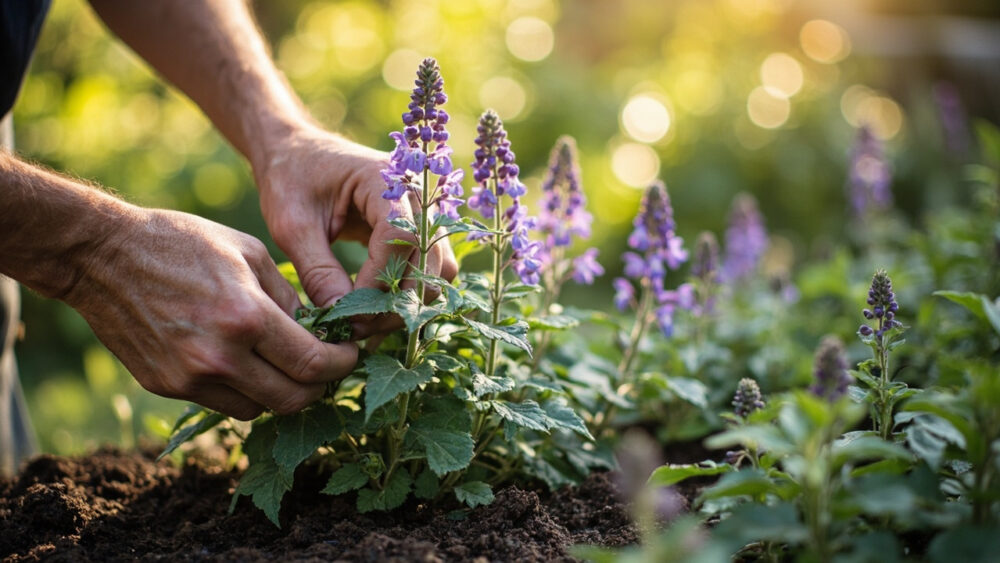
- Dig the hole: make it just as deep as the root ball and about twice as wide, loosening the surrounding soil so roots can spread easily.
- Set the depth: the crown of the plant, where stems meet roots, should sit level with or very slightly above the surrounding soil, never buried.
- Space plants: 15 to 18 inches apart for most varieties, up to 24 inches for larger types like Nepeta ‘Six Hills Giant’, since catmint spreads wide.
- Backfill and firm: fill in around the roots, pressing gently to remove air pockets without compacting the soil hard.
- Water immediately: give it a slow, deep soak right after planting to settle the soil against the roots.
That first watering is the easy part; keeping the balance right over the following weeks is where people overcorrect.
Watering and Feeding Through the Season
Water new plants every 2 to 3 days for the first couple of weeks, then taper off as roots establish. Once catmint is settled, usually within a month, it is genuinely drought-tolerant and often needs no supplemental water beyond normal rainfall except in extended dry spells.
Here is the mistake that costs people a tidy plant: feeding catmint like a hungry annual. If you assumed more fertilizer means a fuller, healthier plant, that guess is exactly what causes the floppy, sprawling, falling-open-in-the-middle look so many gardeners fight all summer.
Catmint evolved to handle poor soil, and heavy nitrogen pushes soft, weak growth that cannot hold itself up. Skip fertilizer entirely in average soil, or at most work a light layer of compost into the bed once in spring.
Get the feeding restraint right and you have solved the biggest structural problem before it starts, but there is still a bloom problem worth heading off.
Problems Most Likely to Strike (and How to Head Them Off)
The two real risks with catmint are root rot from wet feet and, less seriously, powdery mildew in humid, crowded conditions. Both trace back to drainage and airflow, which is why spacing plants generously matters as much as soil prep.
Root rot shows up as yellowing, wilting foliage even when soil is damp, and mushy, dark stems near the base. There is no reviving a plant deep into rot; the honest move is to pull it, improve drainage, and start fresh rather than nursing it along.
Powdery mildew looks like a white, dusty coating on leaves, usually late in the season when nights cool and plants are crowded. Thin overcrowded clumps, water at the soil line instead of overhead, and if it is severe, a fungicide labeled for powdery mildew used exactly per its instructions will knock it back.
Deer and rabbits generally leave catmint alone because of its strong scent, which is a real perk if browsing pressure is an issue in your yard. Cats are another story entirely, and that is worth addressing directly before you decide where to plant it.
If you share a yard with a cat, here is what you actually need to know before this goes in the ground.
The Cat Question, Answered Honestly
Yes, catmint contains the same compound, nepetalactone, found in true catnip, and many cats respond to it by rolling, rubbing, or chewing on the foliage. It is not toxic in the way that matters for concern. It is not a plant you need to fear having in a yard with pets.
The realistic problem is physical damage, not poisoning: an enthusiastic cat can flatten or shred a young plant fast. If that is a concern, plant it inside a small wire cage for the first season until stems are woody and established, or tuck it into a bed your cat does not frequent.
If a cat eats a large quantity and seems unwell afterward, vomiting or unusually lethargic, call your veterinarian rather than waiting it out.
With that settled, the last thing left to cover is the part everyone actually clicked for: getting it to bloom and keeping it blooming.
When and How to Harvest (or Encourage Bloom)
Most catmint varieties bloom in late spring to early summer, roughly 8 to 10 weeks after planting established nursery starts, and continue in flushes through summer if you help them along. The sign everyone misreads is a flower flush finishing and thinking the plant is done for the season.
It is not done. It is waiting on you.
Shear the entire plant back by about a third to half its height right after the first flush fades and flowers look spent and sparse. This unglamorous, slightly brutal-looking haircut is the actual secret to a second, often nearly-as-full bloom a few weeks later, and it also keeps the center of the plant from splitting open and flopping.
If you are harvesting for cut arrangements or drying, snip stems in the morning after dew has dried, right as the lowest flowers on the spike open and before they brown. Hang small bundles upside down in a dark, airy spot for a couple of weeks to dry.
Do this shearing every time a flush fades, right through late summer, and you get a plant that looks intentional all season instead of tired by August.
Catmint at a Glance
- When to plant: after last frost with soil above 50°F, or in early fall 4 to 6 weeks before your ground typically freezes.
- Sun and soil: full sun, at least 6 hours daily, in lean, well-drained soil rather than rich, moisture-retentive beds.
- Spacing and depth: 15 to 18 inches apart, up to 24 inches for larger varieties, crown level with the soil surface.
- Watering: every 2 to 3 days until established, then rainfall alone in most climates once roots take hold.
- Feeding: skip fertilizer or use a light compost topdressing once in spring, never heavy nitrogen.
- Bloom time: late spring to early summer, roughly 8 to 10 weeks from planting, with repeat flushes if sheared back.
- Key maintenance: shear the plant back by a third to half after each flush fades to trigger reblooming.
Get the sun, drainage, and restraint on fertilizer right, and catmint takes care of nearly everything else itself.
The shears are the only tool you actually need to master to keep it blooming all season.