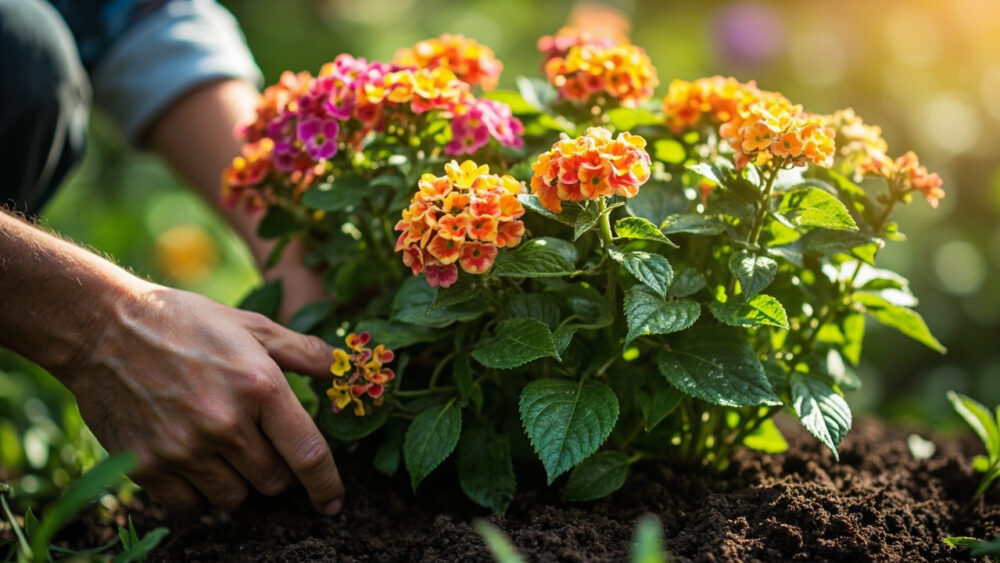
Growing lantana is mostly about getting out of its way. Plant it in full sun after your last frost, in soil that drains fast, water it deeply but rarely, and this plant will bloom nonstop from early summer into fall on neglect alone. The how to grow lantana question trips people up not because lantana is fussy, but because it looks tropical and delicate when it is actually one of the toughest, most drought-tolerant bloomers you can put in the ground.
Here is where most people lose the plant anyway: overwatering it like it is an annual petunia, planting it somewhere with afternoon shade because they assume “flowering plant” means “needs protection,” and giving up on it in early spring when it looks like a pile of dead sticks. That last one costs more established lantana than any pest or frost ever does.
I will walk through timing, siting, planting, and the feeding schedule that actually gets you the thick, season-long bloom lantana is known for. Save the Lantana at a Glance card at the very bottom, it has every number in one place for your phone.
When to Plant Lantana
Lantana is tender to frost and hates cold, wet soil, so timing is everything. Wait until night temperatures are reliably above 50°F and all frost danger has passed, generally two to three weeks after your last spring frost date. Soil temperature matters more than the calendar: lantana roots stall out below 60°F, so pushing it into cold ground just sits the plant in place and invites rot.
In zones 8 through 11, lantana often behaves as a perennial or woody subshrub and can go in the ground once it warms up in spring, then come back from the roots each year. In zones below 7, treat it as an annual, or grow it in a pot you can bring inside before the first hard freeze.
Nurseries sell lantana already in bloom, which tempts people to plant in April. Resist that if a frost is still possible where you garden.
Get the timing right and the next decision, where you actually put it, matters just as much.
Choosing the Spot and Prepping the Soil
Lantana wants full sun, six hours minimum, eight or more is better. Part shade gives you a leggy plant with thin bloom clusters and more disease pressure. This is not a plant to tuck under a porch overhang for protection; the more brutal the sun and heat, the happier it gets.
Drainage is the other non-negotiable. Lantana is genuinely drought-tolerant once established but has zero tolerance for wet feet. If water puddles and sits for more than a few minutes after rain, amend with coarse compost or grit, or move to a raised bed or large container instead.
Skip heavy fertilizer amendments at planting time. Lean, well-drained soil produces better blooms than rich, moisture-retentive soil ever will.
Once the spot is right, the planting itself is quick.
Planting Lantana Step by Step
- Dig the hole twice as wide as the nursery pot and just as deep, so the crown sits level with the surrounding soil, not buried.
- Space plants 18 to 36 inches apart depending on the variety, trailing types need more room, upright bush types can go closer.
- Loosen the roots gently if they are circling the pot, then set the plant in the hole.
- Backfill and firm the soil around the base without compacting it hard.
- Water in slowly and deeply right after planting to settle the soil and eliminate air pockets.
That first deep watering is the last easy part; how you water afterward is where most people overcorrect.
Watering and Feeding Through the Season
If you assumed a heat-loving flowering plant needs frequent watering to keep pumping out blooms, that guess is exactly backward with lantana. Overwatering is the single most common way people kill this plantcausing root rot, yellowing leaves, and collapsed stems that look like disease but are really drowning.
Water new plants two to three times a week for the first two to three weeks while roots establish. After that, let the top 2 inches of soil dry out completely between waterings, then soak deeply. Established, in-ground lantana in most climates needs water only during extended dry stretches.
Feed lightly. A balanced fertilizer at half strength once a month, or a slow-release granular applied in spring, is plenty. Heavy nitrogen produces lush leaves and fewer flowers, which is the opposite of what you planted it for.
Get the water and feed light, and you have already dodged most of what actually goes wrong.
Problems That Actually Show Up
Lace bugs are the most common lantana pest, leaving stippled, bleached-looking patches on leaves, especially in hot, dry spells. Strong water sprays knock down light infestations. For heavier outbreaks, an insecticidal soap applied per the product label works well.
Powdery mildew and root rot both trace back to the same root cause: too much moisture, not enough airflow. Space plants properly, water at the base rather than overhead, and let soil dry between waterings to prevent both.
Here is the sign everyone misreads: in late winter or early spring, established lantana looks completely dead, brown, brittle, leafless. That is normal dormancy, not death. Resist cutting it to the ground or ripping it out until you see whether new growth emerges from the base once temperatures warm.
Lantana is toxic to dogs, cats, and horses if eatenparticularly the unripe green berries. Watch for vomiting, drooling, lethargy, or diarrhea, and call a veterinarian promptly if you suspect a pet has eaten any part of the plant.
Handle the dormancy scare correctly and you will get years out of the same root system instead of replanting every spring.
When Lantana Blooms and How to Keep It Going
Lantana typically starts blooming six to ten weeks after plantingand once it starts, it does not really stop until frost cuts it down in fall. There is no single harvest moment the way there is with a vegetable. The reward here is a long season of continuous flower clusters in orange, yellow, pink, red, or purple, often multiple colors on the same cluster as the blooms age.
Deadheading is not required, since lantana is largely self-cleaning, but shearing the plant back by a third once or twice mid-season keeps it dense and triggers a fresh flush of blooms rather than leggy growth with flowers only at the tips.
If you are growing lantana for cut arrangements or just want the fullest possible bush, that mid-season haircut is the trick most people skip entirely.
All that is left is locking the numbers in so you are not rereading this on your phone next weekend.
Lantana at a Glance
- When to plant: two to three weeks after last frost, once nights stay above 50°F and soil has warmed past 60°F.
- Sun and soil: full sun, six to eight hours minimum, lean and fast-draining soil, no heavy amendments needed.
- Spacing and depth: 18 to 36 inches apart, crown level with the soil surface, not buried.
- Watering: two to three times a week while establishing, then deep soaks only after the top 2 inches of soil dry out.
- Feeding: balanced fertilizer at half strength monthly, or slow-release granular once in spring, avoid heavy nitrogen.
- Bloom time: six to ten weeks after planting through first frost, shear back by a third mid-season for denser flowering.
- Watch for: lace bugs, powdery mildew and root rot from overwatering, and normal winter dieback that is not the same as a dead plant.
Lantana rewards sun, dry soil, and a light hand with the hose more than any other single thing you can do for it.
Get those three right and this plant will outlast almost everything else in your bed.