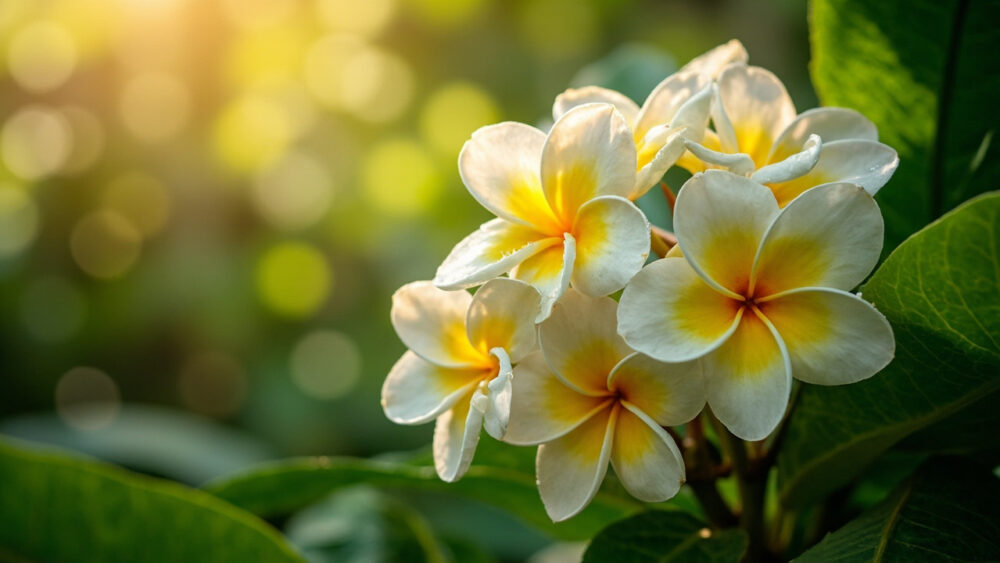
Plumeria bloom from late spring through fall, roughly May through October or November in warm climates, with the heaviest flush hitting in the peak of summer heat. If your plant is outdoors in full sun and settled into its spot, that six-month window is the honest range. A plumeria kept in a pot, moved indoors for winter, or planted somewhere it doesn’t get enough direct sun runs a shorter, later, or thinner season.
The tricky part is that two plumerias in the same yard can bloom on completely different schedules, and the reason usually isn’t the weather. It’s age, root space, and a fertilizer habit most people get backwards without realizing it.
Stick with this one. Below the timing and the fixes, there’s a save-able quick-reference card that sums up the whole bloom cycle in a few lines, worth screenshotting before you close this page.
The Bloom Window and How Long It Actually Lasts
A healthy, mature plumeria in the ground in a warm climate starts pushing flower clusters as new growth hardens off in late spring. Bloom continues in waves through summer and tapers as nights cool in fall.
Each individual cluster of flowers, called an inflorescence, can stay showy for two to six weeks depending on heat and humidity. But the plant keeps producing new clusters from the tips of mature branches all season, so the display as a whole can run months, not weeks.
Potted plumerias, especially ones that spend winter indoors or in a garage, usually start later and finish earlier, often a four to five month window instead of six.
That gap between potted and in-ground timing isn’t random, and it comes down to something you control.
What Actually Controls When Your Plumeria Blooms
Three things drive the timing more than the calendar does: heat, light, and branch maturity.
Heat triggers the growth spurt that precedes flowering. Plumeria wants consistent days above roughly 80 to 85 F before it commits energy to blooming instead of just leafing out.
Light matters just as much. Six or more hours of direct sun a day is the minimum for reliable flowers. Four hours of dappled shade will keep a plumeria alive and green for years without ever blooming.
Branch maturity is the one people miss. Flowers form only at the tips of branches that are at least a year or two old and have hardened past the soft green growth stage. A plumeria that’s constantly pruned or repotted into fresh new growth may look great and never flower.
If your plant checks all three boxes and still hasn’t bloomed, age is usually the missing piece.
How to Get More Blooms, or a Longer Season
If you assumed a high-nitrogen fertilizer would push more flowers, that’s the mistake that keeps plumerias green and bloomless for years. Nitrogen builds leaves and stems, not flower buds.
Switch to a bloom fertilizer higher in phosphorus and potassium relative to nitrogen, something like a 10-30-10 or similar ratio marketed for flowering, starting once night temperatures settle above 60 F in spring. Feed every two to four weeks through the growing season and taper off by late summer.
Root confinement helps too. Plumerias bloom more reliably when slightly potbound rather than swimming in a huge container of fresh soil. Skip the yearly repot unless roots are circling the pot’s bottom or pushing out drainage holes.
Maximize sun exposure. Move potted plants to the brightest, hottest spot you have, ideally against a south facing wall that holds heat into the evening.
Get the fertilizer, the sun, and the potbound roots right, and most plumerias respond within one season.
Why Your Plumeria Isn’t Blooming At All
If it’s leafy, green, and healthy but has never once flowered, run through this list in order:
- Not enough direct sun: under six hours a day is the single most common cause.
- Too young: plumeria grown from a cutting typically needs two to three years of growth before it’s mature enough to flower.
- Too much nitrogen: lush all-purpose fertilizer or rich compost keeps it in leaf-growing mode.
- Cold nights: temperatures dipping below 60 F regularly will stall bud formation even if days are warm.
- Overwatering: soggy roots push green growth and rot risk over flowers, and plumeria actually prefers to dry out somewhat between waterings during active growth.
None of these are permanent damage, they’re all fixable with a season of the right conditions.
Deadheading and Aftercare That Stretch the Show
Plumeria doesn’t need deadheading the way roses do. Spent flowers drop on their own and don’t need to be removed for the plant’s health.
Snapping off a spent flower cluster once it’s fully faded can tidy the plant and redirect a little energy, but it won’t reliably trigger a new flush the way deadheading does on repeat bloomers like roses or dahlias.
What actually extends the season is steady care: consistent watering through summer heat, that bloom-boosting fertilizer on schedule, and not letting the plant sit in shade as the angle of the sun shifts later in summer.
As nights cool below 60 F in fall, flowering slows and stops on its own, and that’s your cue to ease off water and fertilizer heading into dormancy.
Get the plant through a clean, gradual slowdown in fall, and it comes back stronger the following bloom season.
Plumeria: Quick Reference
- Bloom season: late spring through fall, roughly May to October or November in warm climates.
- Length of display: each flower cluster lasts two to six weeks, with new clusters forming continuously through the season.
- Minimum sun: six or more hours of direct sun daily for reliable flowering.
- Fertilizer: switch to a low-nitrogen, high-phosphorus bloom formula in spring, feeding every two to four weeks.
- Maturity needed: plants grown from cuttings usually need two to three years before they flower.
- Common no-bloom causes: too little sun, too young, too much nitrogen, cold nights, or overwatered roots.
Give it heat, sun, and the right feed, and a plumeria will flower on its own schedule every single year.
Skip any one of those and you’ll have a healthy green plant waiting for the conditions it actually needs.