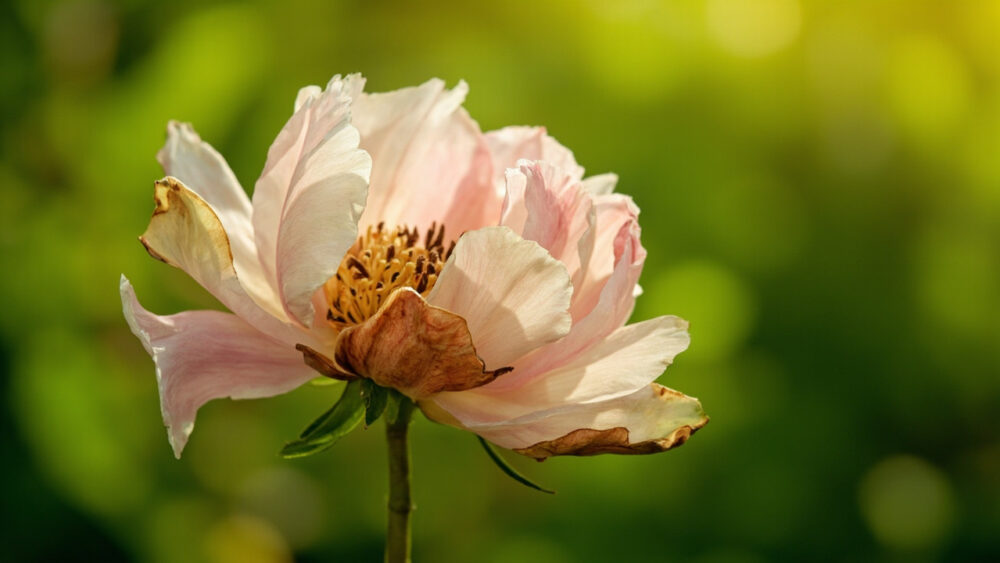
Nine times out of ten, peonies wilting in the heat of the afternoon is not a disaster, it is just the plant coping with sun and moving air on a big-leafed stem. Check it again in the early evening once temperatures drop, and if the foliage has perked back up, you were never actually looking at a problem. If it is still limp by morning, or if the wilting is showing up on just part of the plant while the rest looks fine, you are dealing with something that needs a real fix.
Most people jump straight to blaming water, either too little or too much, and that guess is right less often than you would think. Peony wilting has a short list of real culprits, and the one you have depends on details like whether it is the whole plant or just a few stems, whether the leaves are yellowing first, and whether anything looks rotted at the base.
Stick with this. Below is every likely cause ranked by how often it actually happens, a tell-apart guide so you can match your plant to its cause, an honest recovery outlook, and a save-able diagnosis checklist at the very bottom you can run through in two minutes standing right at the plant.
Most Likely Causes, Ranked
1. Botrytis Blight (Gray Mold)
This is the number one cause of peonies wilting suddenly during cool, damp spring weather. Confirm it by looking at the base of the wilted stems for a blackened, water-soaked lesion right at or just above the soil line, sometimes with a fuzzy gray-brown coating in humid conditions. Buds may also turn brown and fail to open.
Fix it by cutting affected stems down to the ground and out of the garden entirely, not into the compost pile. Improve air circulation by dividing crowded clumps and clearing old foliage each fall. If it is recurring badly, a fungicide labeled for botrytis on ornamentals can help when applied per the label starting at emergence in spring.
But mold is not the only thing that can rot a stem from below.
2. Root and Crown Rot
If entire stems wilt and pull loose easily at the base, and the roots underneath smell sour or feel mushy and dark instead of firm and tan, you are looking at crown rot, usually from soil that stays wet too long. Confirm it by gently digging a few inches down at the crown; healthy peony roots are firm, rot is soft and dark, sometimes almost slimy.
There is no fungicide drench that reliably saves a badly rotted crown. The real fix is improving drainage: raise the bed, work in coarse compost, or move the plant entirely to a spot that does not hold water after rain. Cut away obviously rotted roots with a clean tool before replanting shallow, with the eyes no more than an inch or two below the soil surface.
Planting depth causes more peony trouble than most people realize, and it is next on this list for a different reason.
3. Planted Too Deep, or Recently Transplanted
A peony planted with its eyes buried more than 2 inches deep often struggles, throws weak stems, and wilts under any stress because the crown just is not vigorous. Recently divided or transplanted peonies also wilt for a season simply from root disturbance and are not necessarily sick at all.
Confirm it by checking planting depth directly and by noting whether this plant went into the ground in the last several months. If both check out, this is likely your answer, and it is not an emergency.
Fix a too-deep planting by carefully lifting the whole clump in fall once foliage dies back and resetting the eyes 1 to 2 inches under the soil surface, no deeper. A recent transplant just needs patience and consistent moisture while it re-establishes.
If depth and timing rule this out, the next suspect is underground and much less visible.
4. Verticillium or Fusarium Wilt
These soil-borne fungal wilts are less common but show up as one-sided wilting, where stems on just one part of the plant droop and yellow while the rest looks normal, often worsening through the season rather than overnight. Confirm it by slicing a wilted stem lengthwise near the base; brown or dark streaking inside the stem tissue is the giveaway, and it is not something you will see with botrytis or simple drought stress.
There is no cure once a plant is infected. Remove and discard affected stems, and if it spreads through the whole crown over a season or two, the plant needs to come out, roots and all, and that spot should not host peonies again for several years.
Now for the cause that actually is about water, because sometimes it really is that simple.
5. Drought Stress or Root Damage from Digging Nearby
Peonies have deep, fleshy roots, and a stretch of dry weeks with no rain, combined with sandy or fast-draining soil, will wilt the whole plant evenly. Digging nearby to plant something else, running a tiller too close, or even heavy foot traffic compacting the soil over the roots can do the same thing by damaging the root system directly.
Confirm it by checking soil moisture 3 to 4 inches down. If it is bone dry and you cannot recall recent rain or watering, that is your answer. If the soil is fine but you remember digging or trenching near the plant recently, root damage is more likely the cause.
Fix drought stress with a deep watering, about an inch of water applied slowly at the base, and a 2 to 3 inch mulch layer to hold moisture going forward. Root damage from digging just needs time and no further disturbance.
With five real causes on the table, the next step is matching yours by pattern instead of by guesswork.
How to Tell the Causes Apart
Location on the plant is your fastest clue. Whole-plant, even wilting points to drought stress or a crown rot problem affecting the entire root system.
One-sided or partial wiltingespecially if it is getting worse week by week, points toward verticillium or fusarium wilt.
Sudden wilting of individual stems during cool, wet weather, especially with blackened stem bases, is botrytis. A sour smell and mushy roots at the crown is rot, full stop.
New transplants or anything planted within the last year gets the benefit of the doubt for simple establishment stress before you assume disease.
Once you know which pattern you are looking at, the next question is what happens from here.
Will It Recover?
Botrytis caught early, with affected stems removed promptly, usually lets the rest of the plant recover fine that same season. Peonies are tough once the fungus is cleared out of the immediate area.
Drought stress and transplant shock have the best outlook of all. A deep watering or a season of settling in typically brings the plant fully back.
Planting depth issues resolve completely once you correct the depth, though you will not see the improvement until the following spring after replanting.
Crown rot is a mixed bag. Caught early with a drainage fix and rotted tissue removed, a peony can pull through. Caught late, with most of the crown soft, the plant is usually not worth saving.
Verticillium and fusarium wilt have the worst prognosis of the group. There is no cure, and a plant that is badly infected will decline over one to two seasons regardless of what you do.
Knowing the outlook is one thing, avoiding a repeat next year is another.
How to Keep It From Happening Again
Plant shallow and in well-drained soil from the start, eyes no deeper than 1 to 2 inches, in a spot that does not collect standing water after rain.
Space plants 3 feet apart or more so air moves freely through the foliage. Crowding is what lets botrytis take hold in the first place.
Clear and discard old foliage every fall instead of letting it sit through winter, since that debris is where fungal spores overwinter.
Water at the base rather than overhead, and water deeply but infrequently rather than a little every day, which encourages the deep root system peonies actually want.
Avoid digging, tilling, or piling mulch directly against the crown, and give the plant a few years undisturbed once it is established.
All of that is prevention for next year, but here is how to sort out what is happening today.
Diagnosis Checklist
- Check the time of day: if it wilted in afternoon heat and looks fine by evening, stop here, it was just heat, not a problem.
- Check whether wilting is whole-plant or one-sided: whole plant points to drought or crown rot, one side points to a vascular wilt.
- Feel the soil 3 to 4 inches down: bone dry means drought stress, water deeply and mulch.
- Look at the stem base for a blackened, water-soaked lesion, with or without gray fuzz: that is botrytis, cut affected stems to the ground and discard them.
- Gently dig at the crown and check the roots: soft, dark, or sour-smelling means rot, improve drainage and trim away dead tissue.
- Slice a wilted stem near the base: brown internal streaking means verticillium or fusarium wilt, remove affected stems and watch closely for spread.
- Check planting depth: eyes buried more than 2 inches, or a transplant done within the last year, explains general weak growth without needing a disease diagnosis.
- If none of the above match and only one or two stems are affected with no other symptoms, wait a few days and recheck before assuming the worst.
Most peony wilting traces back to something fixable: drainage, spacing, or a stem or two worth cutting out.
Work through the checklist once, match the pattern, and you will know exactly which fix is yours.