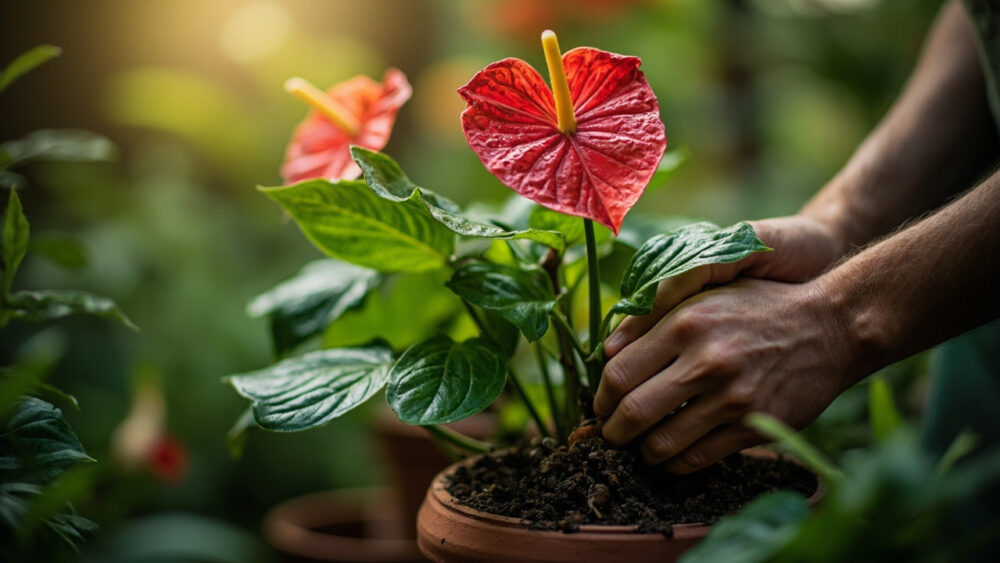
The most common reason an anthurium won’t bloom is not enough light. These plants need bright, indirect light almost all day to flower, and a spot that looks “bright enough” to us is often too dim for a plant that wants near-greenhouse conditions. Move it closer to an east or west window, or under a grow light for part of the day, and you’ll usually see new flower spikes within six to ten weeks.
But light isn’t the only culprit, and it’s not always the right guess. If your anthurium sits in a bright window and still refuses to flower, the problem is probably something you can’t see from across the room: a rootball that’s outgrown its pot, a fertilizer that’s all nitrogen and no phosphorus, or a plant that’s simply too young to bloom yet.
There’s one detail on the plant itself that usually tells you which cause is yours, and I’ll walk you through it. Stick around for the full ranked list of causes, the tell-apart guide, an honest recovery timeline, and the two-minute diagnosis checklist at the very bottom you can run right now, standing in front of the plant.
Most Likely Reasons Your Anthurium Won’t Bloom
1. Not Enough Light
Confirm it: Check the leaves. If they’re dark green and glossy but the plant hasn’t sent up a flower spike in six months or more, low light is the top suspect. Anthuriums in too little light also tend to grow leggy, with long gaps between leaves.
Fix it by moving the plant within 3 feet of a bright, unobstructed window, ideally east or west facing. Direct hot afternoon sun will scorch the leaves, so filter it with a sheer curtain if the window faces south or west and gets intense sun.
Light is the fix most people need, but the next cause is the one people usually blame first and get wrong.
2. Wrong Fertilizer Ratio
Confirm it: Look at your fertilizer label. If it’s a high-nitrogen formula (the first number is noticeably higher than the other two), that’s likely pushing leaf growth at the expense of flowers. A plant that’s lush, leafy, and never blooms fits this pattern almost exactly.
Switch to a fertilizer higher in phosphorus, the middle number, applied at quarter to half strength every two to four weeks during active growth. Phosphorus is the nutrient most tied to flower and root development in anthuriums.
Feeding right matters, but only if the roots underneath are actually able to use what you’re giving them.
3. Rootbound or Depleted Soil
Confirm it: Slide the plant out of its pot. If you see a dense mass of roots circling the inside with little visible soil, or if roots are pushing up out of the drainage holes, it’s rootbound. This alone can stall blooming even with perfect light.
Repot into a pot just one size up, using a chunky, well-draining aroid mix with bark, perlite, and some peat or coir. Anthuriums actually bloom better slightly snug in their pot, so don’t jump multiple sizes at once.
A happy root system sets the stage, but the air around those roots matters just as much.
4. Low Humidity or Inconsistent Watering
Confirm it: Feel the leaf edges. Crispy, browning tips alongside no blooms point to humidity below 40 percent or watering that swings between bone dry and soaked. Anthuriums are native to humid tropical understories and flower best around 60 to 80 percent humidity.
Group it with other plants, run a humidifier nearby, or set it on a pebble tray with water below the pot’s base. Water when the top inch or two of soil is dry, not on a fixed schedule.
Even with humidity dialed in, a plant that’s still a baby has nothing left to spend on flowers.
5. Plant Is Still Too Young or Too Small
Confirm it: Count the leaves and check the stem thickness. A plant with fewer than eight to ten mature leaves, or one grown from a small starter pot within the last year, may simply not be mature enough to flower yet.
There’s no fix here except time, consistent care, and patience. Keep light, feeding, and humidity in range and let the plant build size; blooming usually starts once it’s established with a solid root system and multiple mature leaves.
If age isn’t the issue, temperature stress might be quietly working against you.
6. Temperature Stress
Confirm it: Think back on where the plant has lived. Cold drafts below 60°F, a spot near an AC vent, or nighttime temperatures that dip sharply can suppress flowering even when everything else is right.
Keep the plant in a steady range of 65 to 85°F, away from exterior doors, drafty windows, and vents. Anthuriums like consistency more than any particular perfect number.
Once you’ve ruled these out individually, the real skill is telling them apart when a plant has more than one going on at once.
How to Tell the Causes Apart
Where the leaves look normal but nothing blooms: that’s almost always light or fertilizer, not water or pests. Healthy foliage with zero flower spikes over many months is a classic light-deficiency signature.
Where old leaves look fine but new growth is small and slow: check the roots first. That pattern often means rootbound conditions choking new growth before it can mature enough to flower.
Where leaf edges brown and curl: humidity or watering inconsistency is the more likely thread, especially if it’s paired with slow, sparse new leaves.
Where the whole plant seems small and stalled at the same size for a year: age and pot size usually explain more than any nutrient or light issue.
Once you’ve matched your plant to a pattern, the next question is how long the fix actually takes to show results.
Will It Recover?
Light fixes are the fastest. Move a plant into proper bright indirect light and you can often see a new flower spike in six to ten weeks, sometimes sooner if the plant was otherwise healthy.
Fertilizer and repotting fixes take longer, often two to four months, since the plant needs to recover from the root work or build up phosphorus reserves before it commits energy to flowering.
Humidity and temperature fixes usually show results within a month or two once conditions stabilize, assuming no other stress is layered on top.
Age-related delays are the one true waiting game. There’s no shortcut, just steady care for another six months to a year until the plant matures.
Cut your losses only if the plant is also losing leaves steadily, has mushy black roots at repotting, or hasn’t grown at all in over a year despite good conditions. Those point to a health problem bigger than blooming, and no amount of feeding will fix a declining plant.
Recovery is realistic in almost every case above, which makes prevention worth the small effort it takes.
How to Keep It From Happening Again
Keep light consistent year-round, not just during the season you remember to check on it. Winter light drops more than people expect, even indoors.
Feed on a light, regular schedule with a phosphorus-forward fertilizer through spring and summer, and taper off in the low-light winter months.
Repot every 18 to 24 months, or when roots start circling, using a chunky aroid mix that drains fast and never stays soggy.
Keep humidity in the 60 to 80 percent range if you can, and avoid letting the plant sit near drafts, vents, or doors that swing open to cold air.
Do all four consistently and blooming stops being a mystery and starts being predictable, which is exactly what the checklist below will help you confirm today.
Diagnosis Checklist
- Check the light: if the plant is more than 3 feet from a bright window, move it closer, this is the single most common fix.
- Check the leaves: dark, glossy, healthy leaves with zero blooms for months points to light or fertilizer, not water.
- Check the fertilizer label: if nitrogen is the highest number, switch to a phosphorus-forward formula.
- Slide the plant from its pot: dense circling roots or roots poking through drainage holes mean it’s time to repot one size up.
- Feel the leaf tips: crispy or browning edges mean raise humidity toward 60 to 80 percent and check your watering rhythm.
- Count mature leaves: fewer than eight to ten, or a plant under a year in its current pot, likely just needs more time to mature.
- Recall its location history: cold drafts, vents, or temperatures under 60°F can suppress blooming on their own.
- Watch for a six to ten week response after fixing light, and two to four months after fertilizer or repotting changes, before assuming a fix failed.
Anthurium blooming is almost never a mystery once you check light, roots, and food in that order.
Fix the biggest lever first, give it the weeks it needs, and the flower spikes follow.