Most asters bloom in late summer through fall, typically from August into October, with some varieties holding on until the first hard frost. That is the honest range because asters are a big family, and a few oddballs bloom earlier in summer instead of waiting for fall.
The exact window in your yard depends on which type you planted, how much sun it gets, and whether anything is pinching the buds before they open. There is also a sneaky reason a healthy-looking aster refuses to flower at all, and it is not the one most people guess first.
Stick with this one. Down at the bottom there is a save-able quick-reference card with the bloom window, the bloom length, and the fixes, all in one place.
The Bloom Window and How Long It Actually Lasts
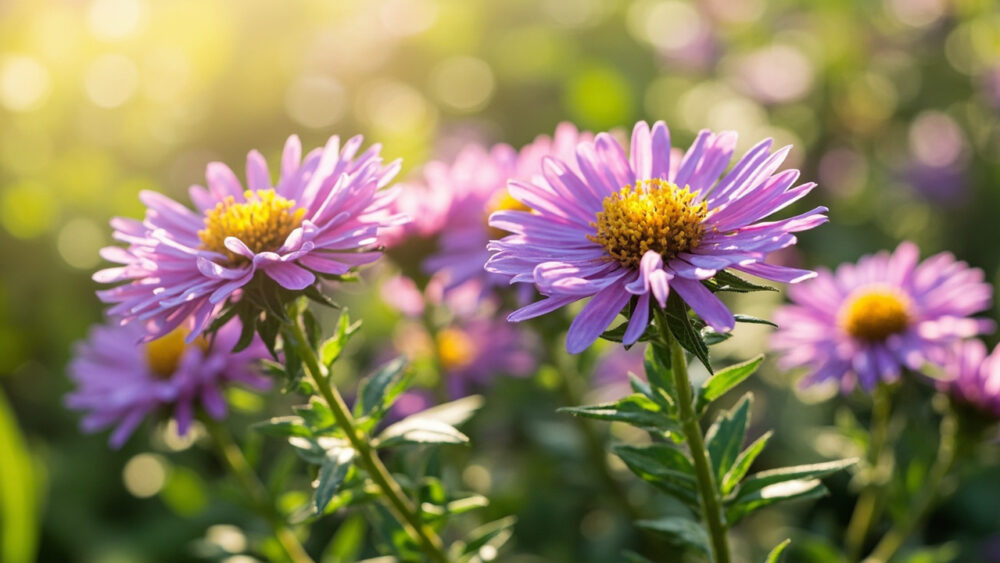
Fall-blooming asters, the New England and New York types most garden centers sell, start flowering in late August or September and often keep going into October, sometimes right up to the first frost.
Each individual plant blooms for roughly four to six weeks, but because a healthy clump produces flowers in waves, the overall show can stretch two months or more if conditions stay decent.
There are also early bloomers, like some alpine and dwarf asters, that flower in June or July instead. If your plant is putting out color in early summer, it is one of those types, not a fall aster running ahead of schedule.
Knowing which category you have tells you whether to expect one clean flush or a long slow burn, and that changes what happens next.
What Actually Controls the Timing
Asters are what gardeners call short-day plants, meaning they set flower buds as daylight hours shrink in late summer. That is the real trigger, not temperature.
A stretch of unusually hot weather can stall bud formation even when the calendar says it is time, and a cool, wet summer can sometimes nudge blooms a week or two earlier than normal.
Where you live matters too. Gardeners in warmer zones (roughly zone 7 and south) often see fall asters bloom later into October and even November, while colder zones (5 and north) tend to get a shorter, more compressed window before frost shuts it down.
Age of the plant plays a role as well. A first-year aster, especially one grown from a small nursery pot, may bloom later and lighter than an established clump that has had a full season to build root mass.
So the calendar gives you a range, but your zone, your weather, and your plant’s age are what narrow it down.
How to Get More Blooms, or Make Them Last Longer
If you assumed more fertilizer means more flowers, that guess backfires with asters. Too much nitrogen pushes leafy growth and floppy stems instead of buds.
The single biggest lever is sun. Asters need at least six hours of direct sun to bloom heavily. In partial shade they will survive and even flower, but thinly, with fewer blooms spread over a shorter window.
Pinching helps too. If you cut fall asters back by about a third in late spring, before mid-June, they branch out and set more buds, giving you a fuller, longer bloom instead of a few tall stems that flower once and quit.
Consistent moisture matters more than feeding. Asters are not drought lovers, and a plant that dries out repeatedly during bud formation in midsummer will open fewer flowers than one that got steady water.
Get the sun and the pinching right, and the next problem, a plant that will not bloom at all, usually stops being a problem.
Why Your Aster Might Not Be Blooming Yet
The most common cause is simple timing. If it is still July and you planted a fall type, it is not late, it just is not there yet.
Past that, look at light first. A shaded aster that gets less than five or six hours of direct sun will often grow lush green foliage and never flower heavily, because it never got the light signal to commit resources to buds.
Overfeeding is the second usual suspect, especially with lawn fertilizer runoff or a heavy hand with a balanced feed. Lots of nitrogen, lots of leaves, few flowers.
Crowding is the third. Asters that have not been divided in three or four years get congested at the center, and bloom drops off noticeably. This is a plant problem, not a care mistake, and dividing in spring fixes it.
Finally, a late, hard pinch or cutback done after mid-July can remove the very buds you were waiting on, delaying or skipping bloom for that season entirely.
- Too much shade: move it or thin overhanging branches next season.
- Too much nitrogen: back off fertilizer, let it rebalance next year.
- Overcrowded clump: divide in early spring every three to four years.
- Late pruning: stop cutting back after mid-July.
If you have ruled all four out and it is genuinely fall with no flowers in sight, the plant likely needs another full season to establish.
Once it does bloom, a little aftercare stretches the show considerably longer.
Deadheading and Aftercare That Extend the Show
Deadheading spent flowers keeps an aster producing new buds instead of putting energy into seed production. Snip individual faded blooms back to the next leaf set or side bud.
Late in the season, once frost has finally knocked the flowers back for good, you can leave the seed heads standing. Finches and other birds work them through winter, and the structure adds some interest to an otherwise bare bed.
Cut the whole plant down to a few inches once it has gone fully brown, typically after a couple of hard frosts. Cutting green stems too early just removes energy the roots still need to store for next year.
A light mulch over the crown in cold climates protects against heaving through freeze-thaw cycles, which matters more for young, first-year plants than for established clumps.
Do that once, and most asters come back thicker and more floriferous the following fall on their own.
Asters: Quick Reference
- Bloom season: late summer into fall, roughly August through October, some varieties to first frost.
- Bloom length per plant: about four to six weeks, longer overall from waves of new buds.
- Exceptions: alpine and dwarf types bloom in June or July instead of fall.
- Main trigger: shortening daylight in late summer, not temperature alone.
- Sun needed: at least six hours of direct sun for heavy bloom.
- Boost bloom: pinch stems back by a third before mid-June, keep moisture steady, avoid heavy nitrogen.
- No blooms yet: check for shade, overfeeding, crowding, or a too-late cutback.
- Aftercare: deadhead through the season, cut stems down after hard frost, divide clumps every three to four years.
Get the sun and the timing right, and asters do most of the rest of the work themselves.
They are one of the few plants that actually show up on cue when the days start shortening, right when the rest of the garden is winding down.