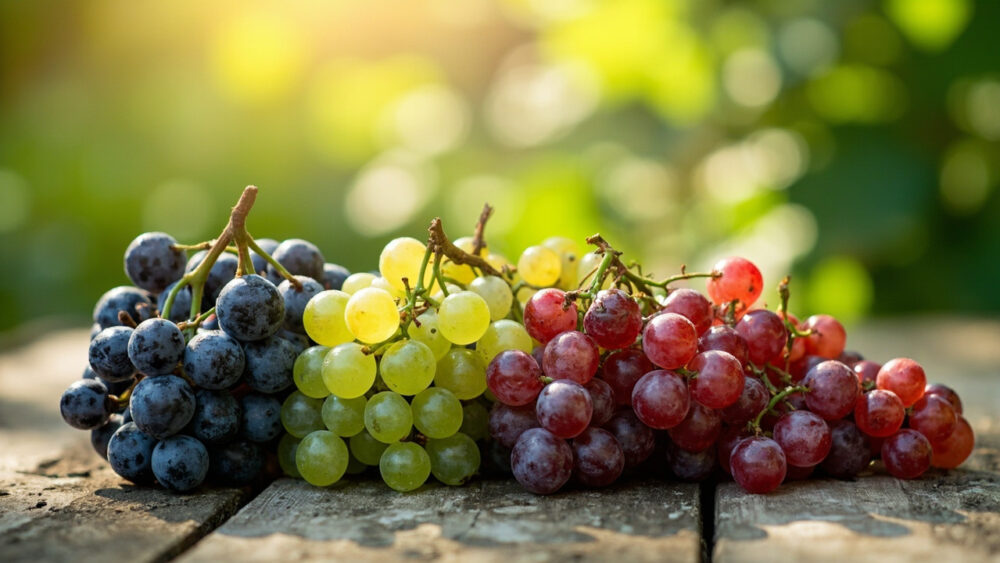
The fastest way to sort out types of grapes is by what you plan to do with them: eat them fresh, dry them into raisins, or crush them for juice or wine. That single question eliminates most of the list before you even look at cold hardiness or vine size. Get that right first and everything else, from pruning style to trellis strength, falls into place behind it.
Most people pick Concord because it is the only name they know, then wonder why the skins slip and seeds turn up in every bite. Meanwhile plenty of experienced backyard growers have quietly moved on to seedless muscadines and cold-hardy hybrids that outperform the famous names in a normal home garden. There is also a straightforward mistake buried in table grape shopping that ruins the harvest for people who never see it coming, and it shows up at number 13.
Below are 15 types grouped by what they are grown for, numbered straight through. The last few entries and the full method for choosing between them, based on space, climate, purpose, and how much fuss you actually want to deal with, are waiting at the bottom.
American Table and Juice Grapes
These are the cold-hardy, slip-skin grapes most familiar to home gardeners in the eastern and northern United States.
1. Concord
The classic slip-skin grape behind most grape juice and jelly you grew up on. It is extremely cold hardy down to about zone 4, vigorous to the point of needing hard annual pruning, and the flavor is intensely grapey but the seeds and loose skins make it a poor choice for anyone wanting to eat straight off the vine.
2. Niagara
Concord’s white sibling in every practical sense: same hardiness, same vigor, same slip skins, but a golden green fruit with a milder, almost musky sweetness. Grow it if you want white juice or jelly and already have the space and trellis a Concord needs.
3. Catawba
A pink-red heirloom with a musky, foxy flavor that some people love and others find too strong for fresh eating. It ripens later than Concord, so it needs a longer season, and it is traditionally used for sweet wine and juice more than the table.
4. Delaware
A smaller-clustered pink grape prized for a sweeter, less musky flavor than most American types. It is less vigorous and a bit more disease prone than Concord, so it rewards a gardener willing to spray on a normal schedule and keep the canopy open.
Those four cover the backyard juice-and-jelly tradition, but fresh eating asks for a different group entirely.
Seedless Table Grapes for Fresh Eating
If snacking straight off the vine is the goal, seedlessness and thin skin matter more than cold hardiness.
5. Thompson Seedless
The grocery store standard and also the grape most often dried into raisins. It needs a long, hot growing season and reliably ripens well only in warm climates such as California-type conditions; in short-season or cold-winter regions it struggles to size up before frost.
6. Flame Seedless
A red, crisp, sweet table grape bred for exactly the areas where Thompson thrives, but with better cold tolerance and a shorter season requirement. It is a solid pick for a gardener who wants a red seedless grape without waiting on the longest possible growing season.
7. Sweet Jubilee
A large, elongated black-red grape with genuinely crunchy flesh, popular with growers who want something that looks and eats like a specialty market grape. It needs full sun and a sturdy trellis since the clusters get heavy, and it does best in zones 6 through 9.
8. Vanessa
A cold-hardy red seedless option bred specifically for growers north of where Thompson and Flame can reliably ripen. It handles winters down to around zone 5 and still delivers a firm, sweet, seedless red grape, which makes it the practical answer for cold-climate gardeners who feel shut out of the seedless category.
Seedless is not the only path to easy eating, and the next group proves it.
Muscadines and Southern Types
In the hot, humid Southeast, muscadines outperform nearly every European-type grape and resist the diseases that wreck them.
9. Scuppernong
A bronze-gold muscadine and the variety that gave the whole muscadine group its southern reputation. The skin is thick and tough, the flesh is sweet with a musky, almost tropical note, and the vine tolerates heat, humidity, and the fungal pressure that would ruin most other grapes.
10. Carlos
A reliable bronze muscadine grown as much for wine and juice as fresh eating, and one of the most widely planted muscadines in the Southeast for exactly that versatility. It is self-fertile, which matters because many muscadines need a separate pollinator vine nearby.
11. Cowart
A black-fruited muscadine known for heavy, dependable yields and good disease resistance even in wet southern summers. It needs a male or self-fertile pollinator variety planted nearby unless you already have one in the yard.
If you garden anywhere with hot, sticky summers, this group deserves a second look before you default to a European wine grape that will only disappoint you.
Wine Grapes for the Home Vineyard
European wine grapes reward patience and the right climate more than any other category on this list.
12. Cabernet Sauvignon
The benchmark red wine grape and a genuinely demanding one, needing a long, warm, dry-ish season to ripen its thick-skinned, tannic fruit fully. It struggles in humid climates prone to fungal disease, so it is best left to gardeners in warm, arid to semi-arid regions with real vineyard experience.
13. Riesling
This is the one most people get completely wrong when they shop for wine grapes. People assume all wine grapes need hot summers because that is the vineyard image everyone carries around, but Riesling actually prefers cooler climates and can lose its bright acidity and aromatic character if grown somewhere too hot. Plant it in a cooler zone 5 to 7 site with good air movement, and it will out-produce and out-flavor a Cabernet struggling in the same spot.
14. Pinot Noir
A thin-skinned, early-ripening red that is notoriously fussy about disease pressure and site selection, doing best with excellent airflow and well-drained soil. It is not a forgiving first wine grape, but it rewards a grower who nails the site with a genuinely fine, complex fruit.
Wine grapes ask the most of a gardener, which is exactly why the next entry is such a relief.
The Low-Fuss Hybrid
Hybrids cross American cold hardiness and disease resistance with European flavor, splitting the difference for gardeners who do not want a full-time vineyard chore list.
15. Marquette
A disease-resistant, cold-hardy red hybrid bred for wine but grown by plenty of home gardeners simply because it survives winters down to around zone 3 and shrugs off the fungal pressure that plagues true European varieties. It is the quiet favorite among experienced growers who want wine-grape flavor without babying a fragile vine through every humid week of summer.
How to Choose the Right One
Match the grape to your yard and your patience before you fall for a name you recognize from the grocery store.
- Check your space: grapevines need a sturdy trellis or arbor and 6 to 10 feet of row space per vine, so measure before you buy more than one or two.
- Confirm your zone: American types and hybrids handle zone 3 to 5 winters, muscadines need the heat and humidity of zone 7 and up, and classic wine grapes like Cabernet want a long warm season.
- Decide the purpose first: fresh eating wants seedless table types, jelly and juice want Concord-family grapes, and wine wants a true wine variety matched to your climate, cool for Riesling and Pinot, warm for Cabernet.
- Be honest about your care appetite: muscadines and hybrids like Marquette forgive missed spray schedules, while European wine grapes and Pinot Noir punish neglect fast.
- Ask about pollination: some muscadines need a separate male or self-fertile variety planted within about 25 feet to fruit at all.
- Plan the harvest window: early hybrids and American types ripen weeks ahead of late wine grapes, so stagger varieties if you want fruit across a longer stretch of the season.
Pick by purpose and climate first, and the specific variety almost chooses itself.
Any of these fifteen will grow. Only the one matched to your season and your patience will actually thrive.