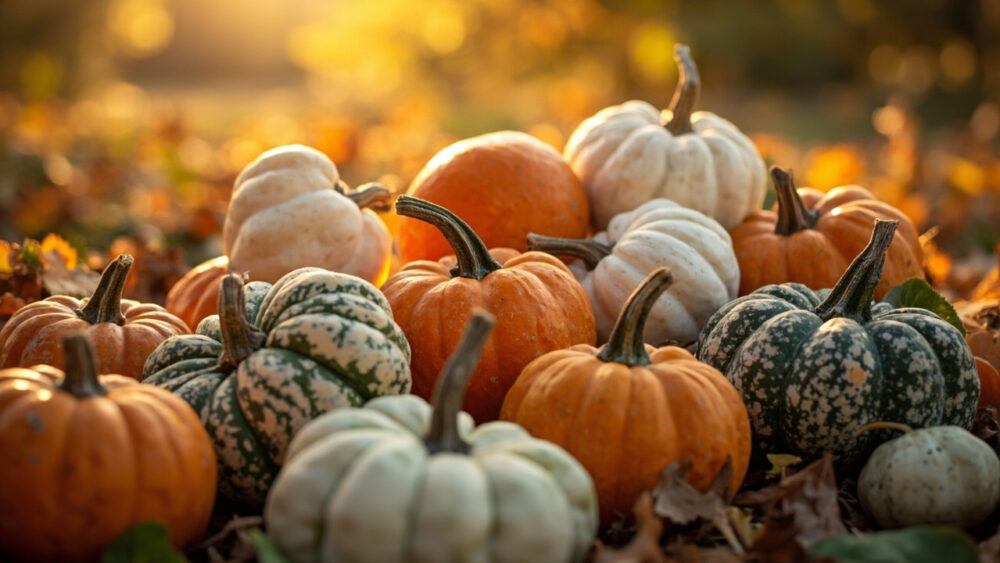
The fastest way to sort out the types of pumpkins is to stop thinking about color and start thinking about job. Every pumpkin variety was bred for one of four purposes: eating fresh, cooking down into puree, carving into a jack-o-lantern, or growing enormous for a scale. Once you know which job you want done, half the varieties on this list eliminate themselves.
Most people walking into a farm stand or seed rack pick based on size alone, and it is the wrong metric almost every time. A pumpkin the size of a beach ball is usually stringy and bland inside, bred to look good on a porch, not to end up in a pie. The variety experienced growers quietly reach for instead barely gets mentioned on seed racks because it looks unremarkable sitting next to the showier types.
Below you will find fifteen varieties grouped by what they are actually good for. Number 13 is the one most home gardeners get completely backwards, picking it for a purpose it was never built for. Stick around for the full list and the choosing method at the bottom, that is where the entry everyone misjudges and the actual decision steps are waiting.
Classic Jack-O-Lantern Pumpkins
These are bred for a thick, carveable wall and a shape that reads “pumpkin” from across a yard, not for eating quality.
1. Connecticut Field
The original American pumpkin and the ancestor of most orange varieties you see today. It runs 15 to 25 pounds, has a slightly flattened round shape, and rambling vines that need 50 to 100 square feet per plant, which makes it a poor fit for small gardens.
2. Howden
The pumpkin behind most patch photos, Howden is what commercial growers plant when the goal is a tall, uniform, deep-orange fruit with strong handles. It runs 20 to 25 pounds, holds its shape well after cutting, and the flesh is stringy enough that almost nobody bothers cooking with it.
3. Jack Be Little
A miniature that fits in one hand, weighing just 3 to 5 ounces and maturing in about 90 to 100 days. It is not meant for carving at all, it is a decoration pumpkin and a genuinely fun one for kids to grow since the compact vines will even climb a trellis.
4. Autumn Gold
The earliest orange carver you can grow, turning color while still on the vine well before most jack-o-lantern types are ready. That early maturity, usually 90 to 100 days, makes it the reliable choice for short-season northern gardens where frost threatens before a Howden ever colors up.
Carving pumpkins get the attention, but the eating varieties are where flavor actually lives.
Pie and Cooking Pumpkins
If you want a pumpkin that tastes like something, skip the carving aisle entirely and look here instead.
5. Small Sugar
The classic heirloom pie pumpkin, running just 6 to 8 pounds with dense, sweet, fine-grained flesh that cooks down smooth without watering out your filling. It is the variety most experienced bakers quietly prefer over anything larger, precisely because size and flavor trade off against each other in pumpkins.
6. Long Island Cheese
Named for its flattened, pale tan shape that genuinely resembles a wheel of cheese, not for any dairy flavor. The flesh is deep orange, smooth, and excellent roasted or pureed, and it is a favorite among heirloom growers for both looks and kitchen performance.
7. Winter Luxury Pie
Recognizable by its netted, russeted skin, almost like a cantaloupe rind stretched over a pumpkin. Underneath is smooth, silky flesh built specifically for pie, and the vines are compact enough to suit a mid-size backyard plot.
8. Fairytale (Musquee de Provence)
A deeply lobed, flattened French heirloom that turns from green to a warm tan-orange as it matures, usually needing 100 to 110 days. The flesh is dense, sweet, and closer to squash than typical pumpkin, which makes it excellent roasted with nothing but salt and oil.
If your pumpkin’s whole future is a pie, none of the carving varieties above belong in your garden at all.
Giant and Novelty Pumpkins
These exist for spectacle, not soup, and they demand a different kind of commitment from the grower.
9. Atlantic Giant
The variety behind every fair-record pumpkin you have ever seen photographed next to a tractor. Under serious feeding and pruning it can reach several hundred pounds, but even a casually grown Atlantic Giant in a home garden commonly hits 100 to 200 pounds, and it needs 200 to 400 square feet of room to sprawl.
10. Lakota
An orange and green striped Native American heirloom shaped like an inverted teardrop with a slender neck. It stores exceptionally well through winter, and the flesh is nutty and dense enough for baking, making it one of the better dual-purpose novelty types.
11. Turk’s Turban
Grown for its shape, not its flavor, with a bulging, ribbed cap that genuinely looks like a wrapped turban in shades of orange, cream, and green. The flesh is edible but mild and watery, so most gardeners grow this one purely as a fall table centerpiece.
Giants and novelties earn their space by looking wild, but the next group earns it by tasting better than anything you have grown before.
Specialty and Heirloom Pumpkins
This is the category serious cooks and market growers reach for once they get tired of bland orange flesh.
12. Cinderella (Rouge Vif d’Etampes)
A flattened, deep red-orange French heirloom that genuinely looks like the coach from the fairy tale. It runs 15 to 35 pounds, and while it is often bought for decoration, the flesh is actually good for cooking, sweeter and less fibrous than typical carving stock.
13. Blue Hubbard
This is the one most home gardeners get backwards. People see the huge, teardrop-shaped, blue-gray fruit and assume it is another giant novelty pumpkin meant for the porch, when it is actually a winter squash grown and eaten exactly like a top-tier cooking pumpkin. Its warty, thick blue skin hides bright orange flesh that is dense, dry, and intensely sweet, better for baking than almost anything on this list, and it stores for months in a cool basement without softening. Skip it for carving entirely and roast it instead.
14. Galeux d’Eysines
Covered in wart-like peanut-shaped bumps across a salmon-pink skin, caused by sugar deposits pushing to the surface as the fruit matures. Those warts are actually a good sign, since this variety is prized for genuinely sweet, smooth flesh that works well in both savory soups and pie.
15. Marina di Chioggia
An Italian heirloom with dark green, heavily blistered skin and a flattened, ribbed shape. It is the pumpkin Italian cooks reach for in risotto and ravioli filling because the flesh is exceptionally dry, dense, and concentrated in flavor, and it keeps for months in a cool, dry spot.
How to Choose the Right One
Save this part. It is the actual decision, stripped of marketing names.
- Measure your space first: giants and rambling field types need 100 to 400 square feet per plant, while bush and mini types like Jack Be Little fit in 15 to 25 square feet or a large container.
- Check your season length: most pumpkins need 90 to 120 days of warm weather from seed to harvest, so short-season growers should favor early types like Autumn Gold and skip 110-day heirlooms.
- Decide the job before you buy seed: carving wants Howden or Connecticut Field, baking wants Small Sugar, Blue Hubbard, or Long Island Cheese, and decoration wants Cinderella or Turk’s Turban.
- Match your care appetite: giants demand regular feeding, pruning to one or two fruits per vine, and constant watering, while heirloom cooking types are largely set-it-and-check-in.
- Plant when soil hits about 65 to 70 F, roughly two to three weeks after your last frost, since pumpkin seed rots fast in cold, wet ground.
- Give vining types full sun and rich, well-drained soil, and expect to water deeply once or twice a week rather than lightly every day.
Pick the job first and the right variety practically picks itself.
Whatever you choose, get it in the ground while the soil is warm, that head start matters more than which name is on the seed packet.