The fastest way to sort through types of fruit trees is chill hours: how much winter cold a tree needs before it will fruit reliably. Get that wrong and you can plant a gorgeous tree that never sets fruit or dies its first hard winter. Everything else, size, flavor, disease risk, is negotiable, but chill hours and hardiness zone are not.
Most people pick a fruit tree because they liked eating one growing up, without checking whether their yard can actually ripen it. Peaches get picked for nostalgia and then sulk in the wrong zone for a decade. Meanwhile, quiet growers who’ve killed a few trees tend to circle back to the same underrated pick that almost never gets mentioned in catalogs.
Below are 15 real options grouped by what they actually demand from you: pome fruit, stone fruit, citrus, and the small or unusual ones worth a second look. Number 13 is the one most first-time buyers get completely wrong, usually at the garden center checkout. The last few entries and the actual method for choosing between all of them are waiting at the bottom, so keep scrolling before you commit to anything.
Pome Fruit: Apples, Pears, and Their Relatives
These are the trees most people think of first, and they’re forgiving as long as you match rootstock to your space.
1. Apple
Needs a pollinator partner almost always. Very few apple varieties are self-fertile, so you need two different varieties blooming at the same time within about 50 feet of each other, or a nearby neighbor’s tree will do the job. Hardy to zone 3 in many varieties, tolerant of cold, and available on dwarfing rootstock that keeps a mature tree under 10 feet.
2. Pear (European)
Ripens off the tree, not on it. Pick European pears like Bartlett or Bosc while still firm and green-hard, then let them finish ripening on the counter; leave them on the branch too long and the flesh turns mealy from the inside out. Hardy to zone 4 or 5, generally easier to grow organically than apples since they draw fewer pests.
3. Asian Pear
Tastes like a cross between an apple and a pear because it’s crisp and juicy rather than soft, and unlike European pears it ripens fully on the tree. Needs full sun, a pollinator partner, and does best in zones 5 through 9. Fire blight susceptibility is the main headache in humid climates.
4. Quince
Almost nobody eats it raw because the fruit is hard and astringent off the tree, but cooked into paste or jelly it turns a deep rose color and tastes floral. Self-fertile, compact at 10 to 15 feet, and tough enough for zone 4 through 9.
Pome fruit rewards patience with storage; the next group rewards patience with a much shorter window.
Stone Fruit: Peaches, Plums, and Cousins
These ripen fast, bruise easily, and are the ones most likely to disappoint if your winters run too mild or too harsh.
5. Peach
Wants real winter cold but not too much. Most peach varieties need 600 to 900 chill hours below 45°F to set fruit, which rules them out in the deep South unless you choose a low-chill cultivar bred for it. Full sun, zone 5 through 8 typically, and short-lived compared to apples, often declining after 10 to 15 years.
6. Nectarine
Is genetically a fuzzless peachnot a separate species, which is why growing conditions match peaches almost exactly. Slightly more prone to brown rot and bacterial spot in humid regions because there’s no fuzz to buffer moisture on the skin.
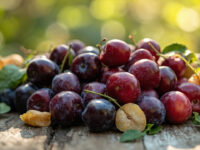
7. Plum (European and Japanese)
Splits into two families that behave differently. European plums (like Italian prune types) are more cold-hardy and often self-fertile. Japanese plums bloom earlier, need a pollinator, and are more susceptible to spring frost killing the blossoms. Both stay manageable at 12 to 20 feet.
8. Cherry (Sweet and Sour)
Sour cherries are the forgiving ones. Sweet cherries need long hot summers, are often self-sterile, and birds strip them the day before you were planning to pick. Sour or tart cherries like Montmorency are self-fertile, more cold-hardy into zone 4, and far more likely to actually reach your kitchen.
9. Apricot
Blooms earliest of all the stone fruitssometimes weeks before last frost, which means a late cold snap can wipe out the entire crop even on a healthy tree. Best in regions with dry springs. Humid climates fight brown rot constantly.
If the frost risk on stone fruit made you nervous, citrus swaps that problem for a different one entirely.
Citrus: Container Stars and Warm-Climate Staples
Citrus trades cold tolerance for the ability to fruit nearly year-round, and most varieties can live in a pot if your winters get harsh.
10. Meyer Lemon
Is the citrus that survives being a houseplant. Sweeter and less acidic than a true lemon, it tolerates a pot indoors near a bright window through winter and moves outside once nights stay above 50°F. Hardy outdoors only in zones 9 through 11 unmulched.
11. Lime (Key or Persian)
Persian lime is the seedless grocery-store type. Key lime is smaller, more aromatic, and less cold-tolerant, dying back at temperatures many other citrus shrug off. Both want full sun, sharp drainage, and protection below about 30°F.
12. Orange (Sweet or Sour)
Sweet oranges need real heat to finish sweetwhich is why the best juice oranges come from hot inland growing regions rather than mild coastal ones. Sour orange (used for marmalade and as rootstock) tolerates more cold and less heat, making it the more forgiving choice outside true citrus country.
13. Kumquat
Gets bought as a novelty and then genuinely outperforms everything else on the porch. This is the one most first-time buyers get wrong: they treat it as decorative rather than as the hardiest, most cold-tolerant true citrus you can grow, surviving brief dips into the low 20s°F where lemons and limes would die. Skin and all is edible, tart-sweet, and it fruits reliably even in a large container.
Citrus solved the cold problem by ignoring it, but the last two entries solve different problems entirely.
Small and Unusual Picks Worth a Second Look
These rarely show up in big-box nurseries, which is exactly why experienced gardeners plant them.
14. Fig
Doesn’t need a pollinator at all for the common varieties sold in nurseries, and it fruits on both old and new wood depending on type, so a hard winter that kills the top growth still leaves you a crop off fresh shoots. Root-hardy into zone 6 with mulch, fully hardy to zone 8 and warmer without protection.
15. Pawpaw
Tastes like a mango crossed with a banana and is native to a wide swath of the eastern half of North America, tolerating shade better than any fruit tree on this list. Needs a pollinator partner, drops fruit that bruises within days, and almost never appears in grocery stores because it doesn’t ship. This is the quiet grower’s favorite: nobody markets it, but anyone who’s tasted a ripe one plants a second tree the following spring.
How to Choose the Right One
Work through these in order and the list above narrows itself fast.
- Measure your actual space: dwarf rootstock keeps most pome and stone fruit under 10 to 12 feet, standard rootstock needs 20 to 30 feet of clearance in every direction.
- Check your hardiness zone and chill hours before falling in love with a variety: a peach bred for zone 8 will struggle or die in zone 4, and the reverse is just as true for citrus.
- Decide what you actually want the fruit for: fresh eating, baking, preserving, or juicing changes which variety within a species makes sense, not just which species.
- Be honest about your care appetite: apples and stone fruit ask for real pruning and pest management, figs and pawpaws ask for almost none.
- Confirm pollination needs before you buy one tree: self-fertile types fruit alone, most others need a second compatible variety nearby or you get blossoms and no fruit at all.
- If you’re short on ground space, remember citrus and figs both perform well in large containers, letting you dodge zone limits entirely.
Pick based on your winters and your patience, not your nostalgia, and the tree will actually feed you.