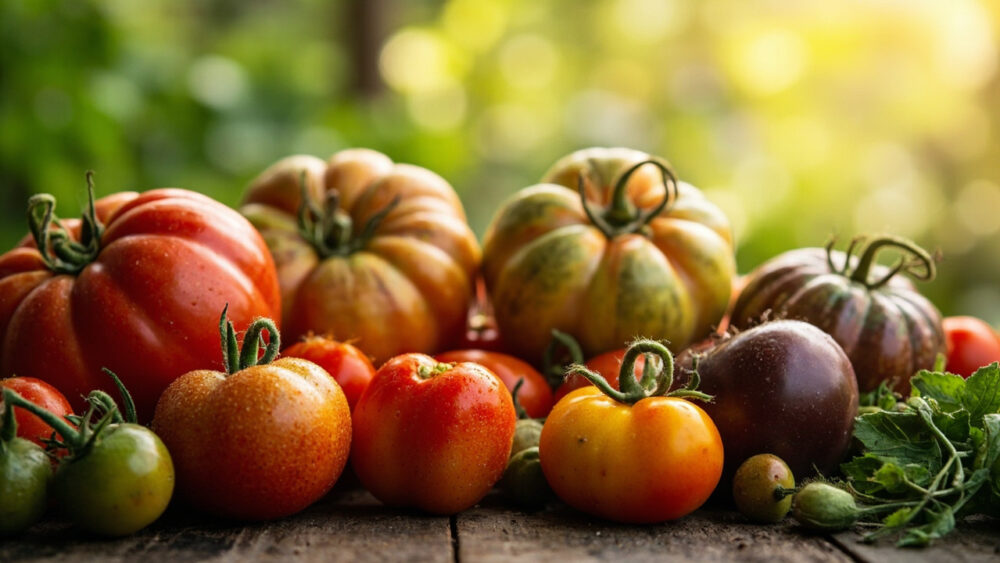
The fastest way to sort out types of tomatoes is by growth habit and use, not by name. Every tomato falls into determinate (stops at a set size, fruits all at once) or indeterminate (keeps growing and fruiting until frost), and it’s either a slicer, a sauce tomato, or a snacker. Get those two things straight and the rest is just picking flavor and color.
Most first-time gardeners grab the tomato with the biggest, showiest photo on the tag, which is usually a mistake for reasons that have nothing to do with flavor. There’s also a plain old workhorse variety that veteran growers plant every single year while newer gardeners walk right past it for flashier stuff.
Stick around for number 13, which is the tomato most people plant expecting one thing and get something completely different. The last few entries and a straight method for choosing between all of them are waiting at the bottom.
Everyday Slicers
These are the burger-and-sandwich tomatoes, bred for size and balanced flavor rather than any specialty use.
1. Beefsteak
Defining trait: enormous, meaty fruit, often a pound or more, with thick flesh and few seeds. Beefsteak types are indeterminate, need sturdy staking or caging, and take 80 to 90 days from transplant. They reward full sun and consistent watering with the best sandwich slices you’ll grow, but heavy rain right before harvest can crack those big shoulders.
2. Better Boy
Defining trait: disease resistance bred right into a reliable mid-size red tomato, usually 8 to 12 ounces. It’s indeterminate, produces over a long season, and shrugs off verticillium and fusarium wilt better than most heirlooms. This is the tomato experienced gardeners plant without fanfare because it simply performs, year after year, in average soil.
3. Celebrity
Defining trait: a semi-determinate habit, meaning it stays more compact than a full indeterminate but still keeps producing for weeks. Fruit runs 7 to 8 ounces, uniform and crack-resistant, ready in about 70 days. It’s a solid pick for a smaller garden or a first-time grower who wants forgiving, steady results rather than a jungle of vine.
4. Big Boy
Defining trait: the classic hybrid slicer most people picture when they hear “tomato,” with smooth red 10 to 16 ounce fruit and a straightforward, sweet-acidic balance. It’s indeterminate and needs a tall cage or stake, since it will keep climbing past 6 feet in a long season. This is the one people grab for the photo on the tag, then get frustrated when it needs far more support than the flimsy cage it came with.
Slicers get you the classic tomato experience, but sauce is a different plant entirely.
Paste and Sauce Tomatoes
These are bred for dense flesh and low water content, which is exactly what you want cooked down, not eaten raw off the counter.
5. Roma
Defining trait: a small, oval, determinate paste tomato that ripens its whole crop in a tight window, perfect for a single big canning day. Fruit is meaty with almost no seed cavity and modest juice, which is why it’s a poor choice for sandwiches but a great one for sauce and paste. It stays compact enough for a large container.
6. San Marzano
Defining trait: a longer, narrower paste tomato with thinner skin and a sweeter, less acidic flavor than Roma, prized by anyone who makes their own marinara. It’s indeterminate, needs staking, and runs 80-plus days to maturity, so it wants a full, warm season to really pay off. The true Italian strain can be finicky about disease, so look for a disease-resistant selection if your summers are humid.
7. Amish Paste
Defining trait: a heirloom paste tomato that breaks the small-and-oval mold, growing fruit up to 8 ounces with a richer, more complex flavor than most sauce types. It’s indeterminate, open-pollinated, so you can save true seed, and it splits the difference between paste tomato and slicer well enough to eat fresh too. Underrated by beginners who don’t realize paste tomatoes can taste this good raw.
Sauce tomatoes reward patience, but the next group is built for people who want fruit now, not in August.
Snacking and Small-Fruit Types
Cherry, grape, and currant tomatoes trade size for speed, sweetness, and sheer volume.
8. Cherry Tomato (Sweet 100 / Sun Gold types)
Defining trait: small, round, 1-inch fruit in huge clusters, often ready in as little as 55 to 65 days. These are indeterminate and genuinely prolific, one healthy plant can outproduce a whole bed of slicers. Sun Gold in particular has an almost tropical sweetness that makes it the variety most kids will actually eat straight off the vine.
9. Grape Tomato
Defining trait: an oblong, firm, thick-skinned fruit that holds up far better in the fridge and in lunchboxes than cherry types, which bruise and split easily. Grape tomatoes are usually determinate or semi-determinate, making them a good container choice, and their sturdier skin comes with a milder, less complex sweetness than a good cherry variety.
10. Currant Tomato
Defining trait: tiny, pea-sized fruit, wild in origin, on a sprawling indeterminate vine that can reach 8 feet and self-seed aggressively if you let fruit drop. Flavor is intensely sweet and a little tart, closer to a wild berry than a garden tomato. It’s the one that surprises gardeners who assumed smaller always meant blander.
11. Pear Tomato
Defining trait: shaped exactly like the name says, in yellow or red, with a firmer bite and slightly milder flavor than round cherry types. It’s indeterminate, ornamental enough to grow just for the look in a salad, and holds its shape well when roasted whole. A good choice if you want the cherry-tomato volume without the cherry-tomato sweetness overload.
Small-fruit types solve the speed problem, but the next category solves the flavor problem for people bored of standard red.
Heirloom and Specialty Colors
These are grown for flavor, color, and character first, uniformity and shelf life a distant last.
12. Brandywine
Defining trait: a potato-leaf heirloom with huge, pink-red, slightly ribbed fruit and a rich, old-fashioned tomato flavor that most modern hybrids can’t match. It’s indeterminate, slow to mature at 85 to 100 days, and has weak disease resistance, so it needs good airflow and a long, warm season to be worth the wait. This is the connoisseur’s tomato, not the beginner’s.
13. Green Zebra
Defining trait: a striped green-and-yellow tomato that stays green even when fully ripe, which trips up nearly everyone who grows it the first time. You have to judge ripeness by feel and slight color shift toward yellow-green, not by the color change you’re used to watching for. It’s indeterminate, tangy rather than sweet, and a genuinely fun addition to a mixed salsa or salad once you know when to actually pick it.
14. Cherokee Purple
Defining trait: dusky pink-purple-brown skin over deep, dark flesh, with a smoky, almost savory sweetness that heirloom fans go out of their way to grow. It’s indeterminate, fairly productive for an heirloom, and more disease-tolerant than Brandywine, making it the better entry point into dark heirlooms for someone new to them.
15. Black Krim
Defining trait: a Russian heirloom with deep maroon-black shoulders fading to red, and a bold, slightly salty-sweet flavor that stands out even among other dark tomatoes. It’s indeterminate, does best with a bit of afternoon shade in very hot climates since intense heat can wash out that dark color, and it stores poorly, so it’s a grow-to-eat-fresh tomato, not a keeper.
How to Choose the Right One
Work through these in order and you’ll land on the right tomato faster than scrolling seed catalogs for an hour.
- Space: a determinate variety in a container or small bed, an indeterminate one only where you can commit to a tall cage or stake and give it 24 to 36 inches of room.
- Climate: shorter, cooler seasons want faster varieties like Celebrity or cherry types, long hot summers can support slower heirlooms like Brandywine or San Marzano.
- Purpose: slicing for sandwiches, paste for sauce and canning, small-fruit for snacking and salads, heirlooms for flavor above all else.
- Disease pressure: if your garden has had wilt or blight problems before, favor resistant hybrids like Better Boy or Celebrity over fussier heirlooms.
- Care appetite: determinate and semi-determinate types forgive neglect better, indeterminate heirlooms want regular pruning, feeding, and watching.
- Season length: count back from your first fall frost using the days-to-maturity on the tag, then add a couple weeks of buffer for a cool spring.
Pick one from each category this season and you’ll actually learn the differences instead of just reading about them.
That’s the only real way to find out which tomato deserves a permanent spot in your garden.