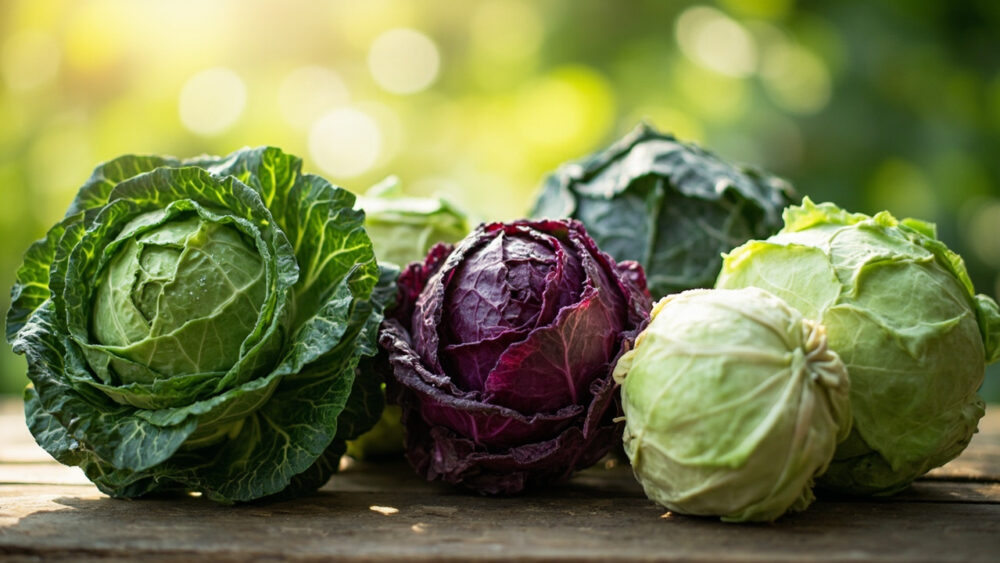
The fastest way to sort out types of cabbage is by head shape and leaf texture: round smooth-leaved heads are your all-purpose slicers, pointed heads are the fast, tender early crop, savoy types have crinkled leaves built for cooking down, and red cabbage is its own flavor and color category entirely. Once you know which shape you need, the variety choice gets easy.
Most beginners grab the biggest, roundest head at the garden center because it looks like the most cabbage for the money, which is exactly the wrong reason. Size tells you almost nothing about flavor, storage life, or how forgiving the plant is of heat and uneven watering.
Below I’ve grouped 15 varieties into categories that actually matter at planting time. Number 13 is the one most gardeners overlook completely, and it might be the best-tasting cabbage on this whole list. The last few entries and a straight-talk method for choosing your own are waiting at the bottom, so keep scrolling.
Classic Round Green Cabbage
This is the cabbage most people picture, dense and ball-shaped, and it covers everything from quick spring crops to winter keepers.
1. Golden Acre
Small and fast is the whole point here. Heads run 3 to 4 pounds and mature in about 60 to 65 days, making this the variety to plant when you want an early harvest or you’re working with a small raised bed. It doesn’t store long, so plan to eat it within a few weeks of cutting.
2. Stonehead
Tight, solid heads that resist splitting set this one apart. It matures around 65 to 70 days, holds well in the garden a bit longer than most early types without cracking open, and is a reliable choice if your summers turn hot and dry right when heads are sizing up.
3. Late Flat Dutch
This is the storage cabbage your grandparents grew. Heads reach 10 to 15 pounds and take 100 days or more, but they keep for months in a cold, humid root cellar or fridge crisper. Plant it as your fall crop, not your spring one.
4. Brunswick
An old heirloom bred for sauerkraut and slaw, with slightly flattened, dense heads around 8 to 10 pounds. It’s slower than Golden Acre but tougher, tolerating cooler fall temperatures well, which makes it a good pick for gardeners who start cabbage in mid to late summer.
Round green types are the workhorses, but pointed heads are where the flavor gets noticeably better.
Pointed and Conical Types
These heads taper to a point instead of forming a ball, and that shape usually means thinner, sweeter, more tender leaves.
5. Early Jersey Wakefield
One of the oldest American cabbage varieties still in circulation, with a distinct cone shape and a sweetness that round types rarely match. It matures in about 60 to 65 days and is genuinely one of the best cabbages for fresh eating raw, not just cooking.
6. Caraflex
A modern hybrid with a sharp, dense point and very few loose outer leaves, so there’s less waste when you trim it. Heads stay compact at 2 to 3 pounds, and the tender texture makes it a favorite for slaw where you want crunch without toughness.
7. Farao
Bred specifically for speed, with mature heads in as little as 55 to 60 days. It’s a good choice if your spring window before summer heat is short, since it beats the bolt-and-bitter stage that catches slower varieties.
If sweetness and speed are what you’re after, pointed types win, but if you cook cabbage more than you eat it raw, the crinkled savoys are worth a closer look.
Savoy Types
Crinkled, blistered leaves are the giveaway here, and that texture holds sauces and butter far better than smooth cabbage does.
8. Savoy Perfection
The standard savoy, with loose, ruffled, deep green leaves and a milder, sweeter flavor than most round cabbage. It matures around 80 to 90 days and handles light frost well, so it’s a strong fall crop in most zones.
9. Alcosa
A compact savoy bred for smaller gardens and containers, staying around 2 to 3 pounds. It’s fast for a savoy type, ready in roughly 65 to 70 days, and it holds its texture nicely in soups and braises.
10. Famosa
Semi-savoy with less severe crinkling, which means a bit more tenderness for raw use while still having the flavor depth of a true savoy. It’s a good middle-ground pick if you want savoy taste without fully committing to savoy cooking.
Cook with cabbage often and you’ll reach for savoy leaves without thinking, but color changes the conversation entirely.
Red and Purple Cabbage
Anthocyanin pigment gives these varieties their color, and that same compound is why red cabbage holds up better in vinegar-based dishes and long braises than green does.
11. Red Acre
The standard red cabbage, with dense, round, deep purple-red heads around 3 to 4 pounds. It matures in about 75 to 80 days and stores noticeably longer than most green early types, which makes it a solid dual-purpose choice.
12. Ruby Perfection
Bred for uniform, very round heads and reliable color, even in years when heat or uneven rain would make other red varieties turn out patchy or green-tinged. It’s a favorite with market growers because it looks the same in every head.
13. Ruby Ball
This is the one most home gardeners walk right past, mistaking it for just another red cabbage on the seed rack. It’s actually one of the earliest red varieties available, maturing in around 70 days with a sweeter, less peppery bite than Red Acre, which makes it genuinely good raw in slaw rather than only useful cooked. If you’ve written off red cabbage as bitter, this is the variety that changes your mind.
Color variety covers flavor and looks, but a couple of oddball types don’t fit any of the categories above.
Specialty and Unusual Types
These don’t behave like standard heading cabbage, and that’s exactly why they’re worth growing.
14. Napa Cabbage (Chinese Cabbage)
Barrel-shaped and much softer than European cabbage, with pale green, crinkled leaves and a mild, almost sweet flavor. It matures fast, around 55 to 60 days, but it’s genuinely picky about bolting in heat, so it does best as a cool-season spring or fall crop rather than a summer one.
15. Pak Choi (Bok Choy)
Not a heading cabbage at all, but the same species family, with glossy dark leaves and thick white or pale green stalks instead of a wrapped head. It’s ready in as little as 45 days, tolerates partial shade better than any other type on this list, and is the easiest entry point if you’ve never grown a cabbage relative before.
That covers all 15, and now here’s the part worth saving: how to actually pick between them.
How to Choose the Right One
- Check your space first: compact types like Caraflex, Alcosa, or pak choi fit containers and small beds, while Late Flat Dutch and Brunswick need real room to bulk up.
- Match your climate window: if your spring is short and heat arrives fast, choose fast growers like Farao, Early Jersey Wakefield, or Ruby Ball rather than the 90-day-plus storage types.
- Decide raw versus cooked before you shop: pointed and red types like Caraflex and Ruby Ball are better fresh, while savoy types like Savoy Perfection cook down best.
- Plan for storage if you’re growing a lot: Late Flat Dutch and Red Acre hold for months in cold, humid storage, while early types should be eaten within a few weeks.
- Be honest about your care appetite: pak choi and napa cabbage are the most forgiving of imperfect watering, while big storage heads need consistent moisture all season to avoid splitting.
- Watch the head, not the calendar: harvest when the head feels solid and firm when you squeeze it, regardless of the days-to-maturity number on the seed packet.
Pick by shape and purpose first, and you will end the season with cabbage you actually want to eat.
Grow two or three types from different categories rather than five of the same shape. You’ll learn more about what your garden actually wants to grow, and you will not get bored eating the same slaw for a month.