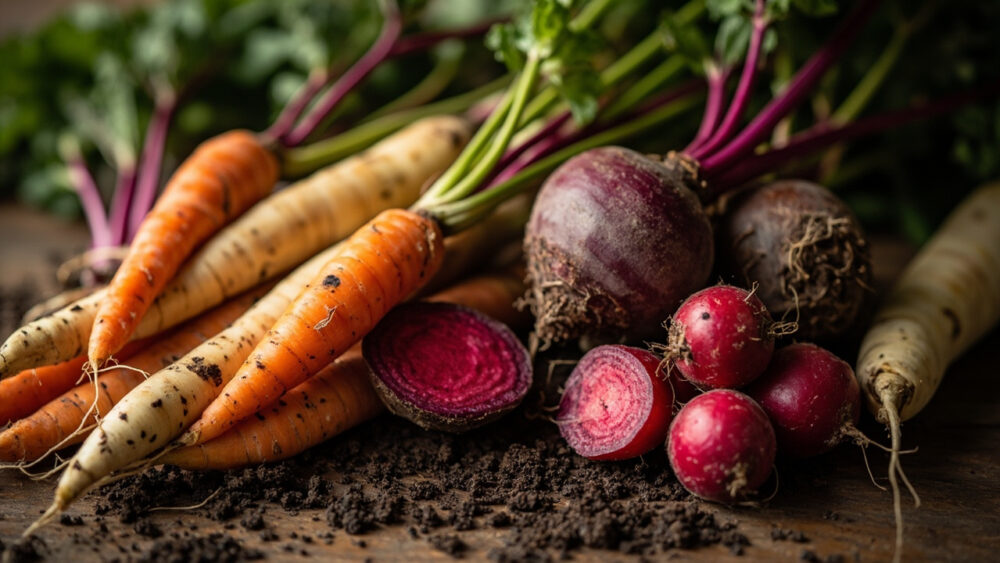
The fastest way to sort out types of root vegetables is to ask what part of the plant you are actually eating: a true root (carrot, beet, radish), a swollen stem base (turnip, kohlrabi), or an underground storage stem called a tuber or corm (potato, taro). That one distinction explains almost every difference in how they grow, how long they store, and how they taste. Get that sorted and the rest of the choosing gets easy.
Most people pick carrots for the wrong reason, assuming all carrots taste the same and grabbing whatever seed packet has the prettiest photo, when soil texture is actually what decides whether you get a decent harvest or a box of stubby forked roots. Meanwhile there is a root vegetable most experienced gardeners quietly grow every year that almost nobody plants on purpose, because it looks like a weed until you taste it.
Number 13 on this list is the one most gardeners get completely wrong, mostly because they harvest it at the wrong size and decide they hate it. Stick around, because the last few entries and a simple step-by-step method for choosing between all of them are waiting at the bottom.
The Classic Taproots
These are true roots, long and tapered, and they are the ones most new vegetable gardeners reach for first.
1. Carrots
Straight, sweet roots that punish heavy soil. Carrots need loose, rock-free soil at least 10 to 12 inches deep or they fork and stunt; grow them in raised beds or sandy loam for the straightest roots, and expect 60 to 80 days to maturity depending on variety.
2. Beets
A root and a green in one plant. Beets mature in 50 to 65 days, tolerate cooler soil better than carrots, and give you edible tops along the way, which makes them one of the most efficient root crops for a small bed.
3. Radishes
The fastest payoff in the whole root vegetable world. Standard round radishes are ready in 22 to 30 days, making them the classic crop for impatient gardeners or for filling gaps between slower crops; daikon and other long radishes take longer, closer to 60 days.
4. Turnips
Peppery when small, coarse and strong when left too long. Turnips are best pulled at 2 to 3 inches across. They grow fast, tolerate poor soil better than most root crops, and the greens are genuinely good eating too.
5. Rutabagas
A turnip’s bigger, sweeter, slower cousin. Rutabagas need 90 to 100 days and cool weather to develop good flavor, so they suit gardeners in northern zones planting for a fall harvest rather than a quick summer crop.
Taproots reward patience with texture, but the next group solves a different problem: what to grow when your soil is heavy clay that would maim a carrot.
The Swollen Stems (Not Actually Roots)
Botanically these are stem tissue, not root tissue, and that is exactly why they tolerate soil that would ruin a taproot crop.
6. Kohlrabi
A cabbage that skipped the leafy stage and just bulged. The bulb sits above the soil line, matures in 45 to 60 days, and stays crisp and mild if harvested at 3 to 4 inches. Left longer it turns woody fast.
7. Celeriac
Ugly on the outside, worth it for the soup pot. Celeriac needs a long season, 100 days or more, and steady moisture all summer. It looks like a gnarled brown ball but tastes like celery with a nutty edge, and it stores for months in a cold, humid spot.
8. Fennel Bulb
Not a root at all, but grouped here because it acts like one. The bulb is layered leaf bases, ready in 60 to 90 days, and it bolts fast in heat, so it does best as a cool-season crop in spring or fall rather than midsummer.
Stem vegetables shrug off clay, but the next category is where storage life really separates the serious growers from the casual ones.
The True Tubers and Storage Roots
These grow from underground stems or swollen roots built specifically to store energy, and they are the crops that fill a root cellar.
9. Potatoes
The tuber everyone grows and almost nobody rotates properly. Potatoes need hilled soil to protect developing tubers from sun and green shoulders, 70 to 120 days depending on variety, and a different bed each year to dodge soil-borne disease buildup.
10. Sweet Potatoes
A warm-season vine that needs real heat to bulk up. Sweet potatoes want 100 to 140 warm days and sandy, well-drained soil. Gardeners in cooler zones start slips indoors early and still may only get modest yields, so this one is genuinely climate-limited.
11. Jerusalem Artichokes (Sunchokes)
A sunflower relative that spreads if you let it. Sunchokes are brutally easy to grow, tolerate poor soil, and come back every year from missed tubers, which is a selling point for a dedicated bed and a real headache if planted in the main garden.
12. Cassava
A tropical staple root, not a backyard crop outside warm climates. Cassava needs a long frost-free season, 8 months or more, and the raw root and leaves contain compounds that are toxic unless properly processed by peeling, cooking, and preparing them the traditional way. It is not a casual home-garden pick in most of the United States.
13. Parsnips
The root most people give up on after one bad batch. Parsnips take 100 to 120 slow days and actually taste better after a light frost sweetens the starches, so gardeners who pull them early in warm weather get a bitter, bland root and decide they dislike the vegetable entirely. Leave them in the ground through the first frosts and harvest them like a completely different crop.
Storage roots reward the patient and the well-mulched, but the last group is the one most people never plant on purpose.
The Underrated and Overlooked
These rarely show up in a starter seed catalog, but they are the ones seasoned gardeners keep quietly growing.
14. Salsify
An oyster-flavored root that looks like a skinny parsnip. Salsify takes about 100 to 120 days, tolerates poor soil, and has a mild, faintly briny flavor that surprises people who have never heard of it. It is a low-competition crop precisely because almost nobody grows it.
15. Horseradish
The root that will outlive your garden plan. Horseradish is a perennial that spreads aggressively from root fragments, so most experienced growers confine it to a bottomless bucket or a dedicated bed. One planting can produce pungent roots for years with almost no attention.
That covers all fifteen, and now the only real work left is matching one to your soil, your patience, and your kitchen.
How to Choose the Right One
- Check your soil first: heavy clay favors stem vegetables like kohlrabi and turnips, while loose sandy loam favors long taproots like carrots and parsnips.
- Match your climate: sweet potatoes and cassava need long warm seasons, while rutabagas and parsnips actually improve with cold and short days.
- Decide your timeline: radishes and kohlrabi reward impatience in under two months, while celeriac and cassava demand a full season of commitment.
- Think about storage: potatoes, beets, and rutabagas hold for months in cool, dark, humid conditions, while radishes and salsify are best used soon after harvest.
- Be honest about your care appetite: potatoes need hilling, sweet potatoes need heat and space, horseradish needs containment, and turnips need almost nothing.
- Start small with an unfamiliar one: a short row of salsify or kohlrabi costs little and tells you fast whether it earns a permanent spot in the rotation.
Fifteen root vegetables, one soil test, and a lot fewer forked carrots in your future.
Pick two you have never grown and give them a real try this season.