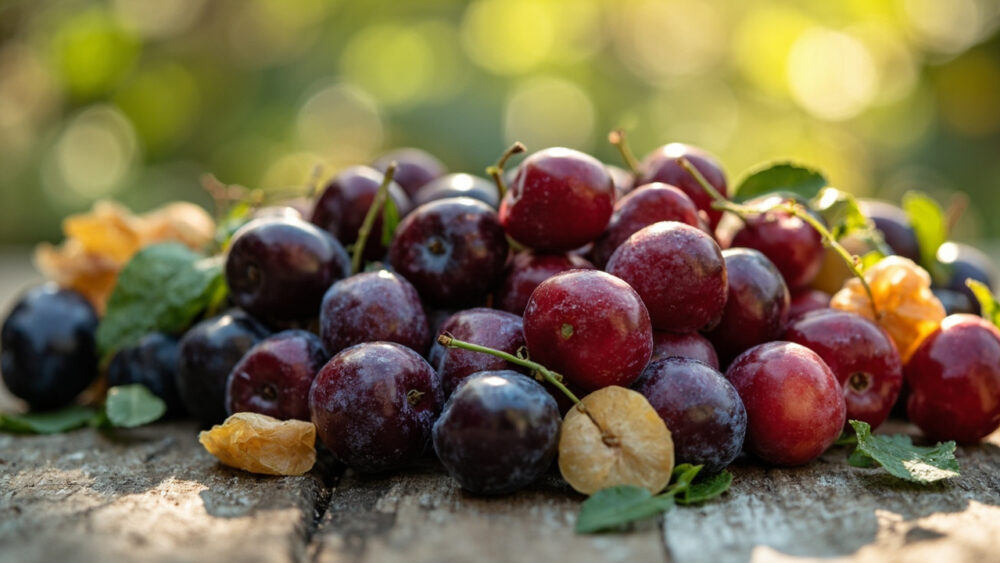
The fastest way to sort out all these types of plums is by how they’re used: European plums are dense and sweet enough to dry into prunes, Japanese plums are juicy and best eaten fresh off the tree, and the American and hybrid types split the difference while surviving cold that would kill the other two outright. Get that one distinction and half your decision is already made.
Most home gardeners grab a Santa Rosa because it’s the name they recognize, which is fine, but it’s often the wrong pick for a small yard that only has room for one tree and no partner to pollinate it. Meanwhile there’s a workhorse variety later on this list that experienced growers plant precisely because it’s forgiving, self-fertile, and never gets mentioned at the garden center.
Stick around for number 13, it’s the one people assume is a snack plum and plant in completely the wrong spot. The last few entries and the actual method for choosing between all of these are waiting at the bottom, so keep scrolling.
European Plums: The Sweet, Dense, Dry-Well Types
These are cold-hardy, often self-fertile, and built for drying, baking, and jam as much as fresh eating.
1. Italian Prune Plum
The classic drying plum with deep purple skin, firm amber flesh, and a sugar content high enough to dehydrate without added syrup. It’s self-fertile, hardy to about zone 5, and ripens in late summer on a tree that stays a manageable 15 to 20 feet if left unpruned, less if you keep it in check.
2. Mount Royal
A far-north answer to the Italian prune, bred for reliability in short, cool seasons where standard European plums sulk. It’s self-fertile, hardy into zone 4, and produces smaller but still sweet blue-purple fruit that freestones cleanly from the pit.
3. Stanley
The default commercial prune plum for a reason: heavy, dependable crops on a self-fertile tree that tolerates poor pruning and inconsistent watering better than most fruit trees will admit to needing. Flesh is firm and greenish yellow under purple skin, good for canning as much as eating fresh.
4. Green Gage (Reine Claude)
The connoisseur’s plum, small, round, and green to yellow-green even when fully ripe, which throws off gardeners expecting purple skin to mean ready. The flavor is honeyed and complex, the tree is self-fertile but a shy, patchy bearer some years, and it’s the one experienced growers plant for taste over yield.
Those four cover the dependable, dry-well end of the spectrum, but the fresh-eating plums most people picture live somewhere else entirely.
Japanese Plums: Juicy, Fresh-Eating, and Fast to Ripen
These need a pollinator partner more often than not, ripen earlier, and are bred for eating out of hand, not drying.
5. Santa Rosa
The plum most people already know, with reddish purple skin, tangy-sweet amber flesh, and a bloom time early enough that a late frost can wipe out the crop in marginal zones. It’s partially self-fertile but produces far better with a second variety nearby, which is the detail most casual buyers skip.
6. Elephant Heart
Grown for the inside, not the outside: dull, dusty red-purple skin hides deep blood-red flesh that’s dense, sweet, and genuinely dramatic when sliced. It needs a pollinator, ripens in late summer, and rewards patience since it colors up outside well before it’s actually ripe.
7. Methley
The easiest Japanese plum for a beginner, because it’s self-fertile and still improves with a partner, tolerant of heat, and quick to bear at a young age. Fruit is small, reddish purple, and soft-sweet with almost no tartness, best eaten within days of picking.
8. Shiro
A yellow-skinned plum that surprises people who assume purple means ripe and yellow means unripe, that’s a guess worth abandoning here. It’s extremely juicy, mild rather than sharp, needs a pollinator, and drops fruit hard and fast once it starts, so pick every day or lose it to the ground.
9. Burgundy
A low-chill option for warm winters, self-fertile, and one of the few Japanese types that will still set fruit in areas that barely dip below 45°F for a proper dormancy period. Deep red skin and flesh, moderate sweetness, and a long harvest window compared to most of its relatives.
Fresh eating covered, but there’s a whole group of plums bred specifically to survive winters these types can’t.
American and Hybrid Plums: Built for Cold and Tough Sites
Native American plums and their modern hybrids trade some size and refinement for cold tolerance most European and Japanese types can’t touch.
10. American Plum (Prunus americana)
A native species as much as a variety, thicket-forming, extremely cold-hardy into zone 3, and producing small, tart-to-sweet red or yellow fruit that’s better cooked than eaten raw off the tree. It’s the toughest option here, useful for hedgerows, wildlife plantings, and sites nothing else survives.
11. Toka
A hybrid plum grown as much for pollination as for fruit, with small, apricot-scented reddish fruit and a bloom that overlaps well with many Japanese varieties. It’s hardy into zone 3, self-fertile, and often planted specifically to pollinate a pickier neighbor rather than as the main event.
12. Waneta
A large-fruited hybrid bred for northern climates that still want size and sweetness, not just survival. Red skin, yellow flesh, good fresh-eating quality, and hardiness into zone 3 make it a rare combination in this group.
13. Beach Plum (Prunus maritima)
The one people mistake for a casual snacking plum and plant in the wrong spot entirely, when it’s actually a tough, sandy-soil, salt-tolerant coastal shrub more than a proper tree. The fruit is small, tart, and better suited to jam and jelly than fresh eating, and it wants full sun and sharp drainage, not a rich, moist garden bed where it will sulk and rot.
Cold-hardy types handled, but there’s still the pit itself worth knowing before you plant any of these, plus the two entries that finish this list.
The Ones Worth Knowing Before You Buy
Two more varieties round this out, chosen because they solve specific problems the rest of the list doesn’t.
14. Damson
A sharp, astringent European type nobody eats straight off the tree by choice, but everybody wants once it’s cooked into jam, chutney, or gin. Small, oval, deep blue-black fruit, self-fertile, hardy into zone 5, and genuinely one of the best-flavored cooking plums once heat and sugar transform it.
15. Pluot and Other Plum-Apricot Hybrids
Not a plum at all in the strict sense, but a plum-apricot cross close enough that it’s sold and grown alongside true plums everywhere. Skin can be smooth or fuzzy, flavor runs sweeter and less acidic than most straight plums, and it needs a compatible pollinator, usually a Japanese plum variety, to fruit reliably.
How to Choose the Right One
Work through these in order and you’ll land on the right type faster than by scrolling variety photos.
- Space: full-size trees run 15 to 20 feet, but dwarf and semi-dwarf rootstock keeps most of these under 10 to 12 feet for small yards.
- Climate: check your winter lows against the hardiness zone listed for each type, European and American types tolerate more cold than Japanese types do.
- Pollination: confirm whether the variety is self-fertile or needs a partner blooming at the same time, this single detail causes more no-fruit disappointment than any pest or disease.
- Purpose: pick European or Damson for drying and cooking, Japanese for fresh eating, American or hybrid for tough sites and hard winters.
- Care appetite: Japanese types drop fruit fast and need near-daily picking at peak, European types are far more forgiving of a missed day or two.
- Chill hours: if your winters are mild, look specifically for low-chill varieties like Burgundy, otherwise the tree may bloom poorly or not at all.
Pick the category first, the variety second, and you’ll end up with a tree that actually fits your yard instead of one that just looked good in a photo.