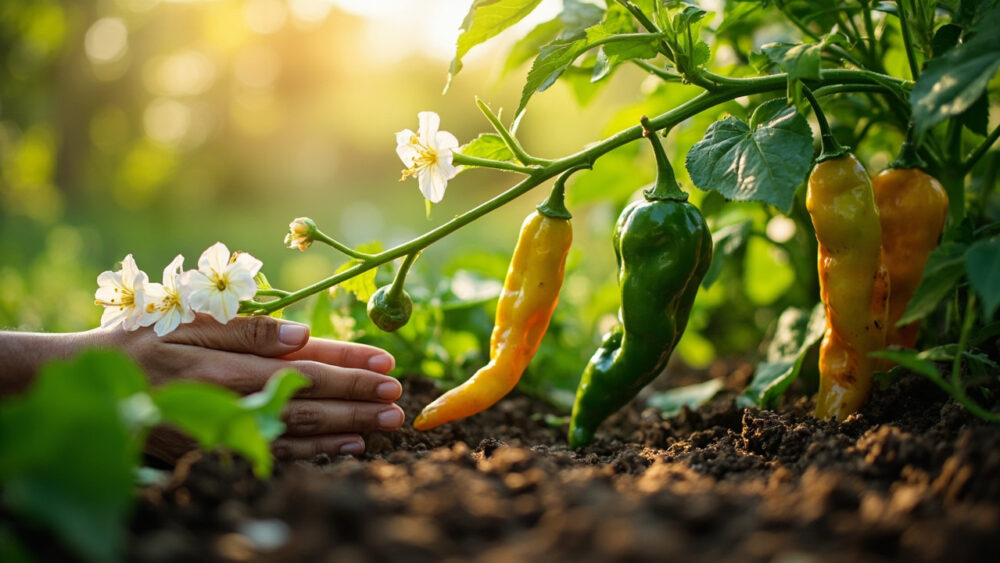
Peppers move through six distinct stages from seed to harvest, and the whole process takes roughly 90 to 150 days depending on the variety and your climate. Peppers growing stages follow a predictable order: germination, seedling, vegetative growth, flowering, fruit set, and ripening. Miss the cues at any one stage and you either lose weeks or lose the whole plant, which is why knowing what each stage actually looks like matters more than knowing the calendar date.
Here is what nobody tells you up front: the stage that wrecks most home pepper crops is not the fragile seedling stage everyone worries about. It is a specific point in flowering where a totally healthy-looking plant quietly drops every blossom it makes.
There is also a stall that looks exactly like a problem but is not one, and a transplant mistake that costs three to four weeks of growth before you even notice it happened. Stick around to the end and you will find a save-able Peppers at a Glance card with every timing and spacing number in one place.
Germination: Weeks 1 to 3
Pepper seeds need warmth to germinate, more than most vegetable seeds. Soil temperature of 75 to 85 F gets seeds up in 7 to 10 days; anything below 65 F can stretch germination to three weeks or cause seeds to rot before they sprout. This is why bottom heat from a seedling mat matters more for peppers than for tomatoes or squash.
Plant seeds a quarter inch deep in a light seed-starting mix, kept consistently moist but never soggy. Start seeds indoors 8 to 10 weeks before your last expected frost date, since peppers are slow out of the gate compared to other garden vegetables.
If nothing has emerged after three weeks in warm soil, the seed is not coming.
Seedling Stage: Weeks 3 to 8
Once up, seedlings grow slowly at first, putting out two round cotyledon leaves followed by true, pointed pepper leaves. Growth stays modest for the first few weeks no matter how good your care is, and that is normal, not a failure on your part.
This stage needs strong light above almost everything else. A sunny windowsill is rarely enough; seedlings under weak light grow tall, pale, and floppy, a condition called legginess that a plant never fully recovers from.
Give seedlings 14 to 16 hours of strong direct light daily, whether from a south-facing window supplemented with a grow light or a light positioned just a few inches above the leaves.
Feed lightly once true leaves appear, using a diluted balanced fertilizer every couple of weeks. Do not transplant outdoors until nighttime temperatures reliably stay above 55 F, since pepper growth genuinely stalls in cold soil even if the plant survives it.
The next stretch is where a lot of gardeners quietly cost themselves a month without realizing it.
The Transplant Mistake That Steals Three Weeks
Here is the mistake almost nobody warns you about: moving peppers outside too early doesn’t kill them, it just stunts them, and that stunting is often permanent. A pepper transplanted into soil below 60 F can sit there sulking for weeks while a plant set out two weeks later at the right soil temperature sails past it in size.
Soil, not air temperature, is what peppers actually respond to. Check it with a soil thermometer 2 to 3 inches down. You want a steady 65 F or warmer before transplanting, which is usually two to three weeks after your last frost date, not on the frost date itself.
Harden seedlings off over 7 to 10 days, giving them a few hours outdoors the first day and building up to a full day in sun and wind before they go in the ground permanently.
Space plants 18 to 24 inches apart in rows 24 to 36 inches apart, and set them at the same depth they were growing in the pot, unlike tomatoes, which benefit from deeper planting.
Get the timing right here and the plant moves straight into strong vegetative growth without a setback.
Vegetative Growth: Weeks 8 to 12
Once soil and air are warm, peppers put on real growth, branching out and filling in with dark green foliage. This is the stage where the plant builds the structure that will eventually hold its fruit, and it is the best time to pinch the growing tip on young plants to encourage bushier branching.
Consistent moisture matters more than volume here. Water deeply once or twice a week rather than a little every day, aiming for about 1 to 1.5 inches of water weekly including rainfall, and let the top inch of soil dry between waterings.
A light all-purpose fertilizer every three to four weeks keeps growth steady, but go easy on nitrogen once flowering starts approaching, since too much nitrogen produces lush leaves at the expense of flowers.
Healthy vegetative growth sets the stage for flowering, and flowering is where things get genuinely tricky.
Flowering: Weeks 10 to 14, and Where Most Crops Go Wrong
If you assumed the fragile seedling stage was the riskiest part of growing peppers, that is a reasonable guess, but it is the wrong one. The real trouble spot is flower drop, where a plant covered in blossoms suddenly sheds most of them without setting a single pepper.
Blossom drop has a short list of real causes: temperature stress above 90 F or below 60 F during flowering, inconsistent watering, too much nitrogen fertilizer, or poor pollination from low insect activity or still, windless air.
The fix depends on the cause. In extreme heat, some drop is unavoidable and the plant will resume setting fruit once temperatures moderate. In the meantime, keep watering steady and avoid heavy fertilizing, which only compounds the problem.
You can hand-pollinate by gently shaking flowering branches midday or brushing an open flower with a small soft brush, which helps in low-wind conditions or in enclosed growing spaces like greenhouses.
Once flowers actually hold and swell instead of dropping, you have cleared the hardest stage in the whole process.
Fruit Set and Sizing: Weeks 12 to 18
A held flower becomes a small green fruit within a few days, and from there sizing up to full mature size typically takes 3 to 5 weeks depending on the variety. Small peppers like jalapenos size up faster than large bell types.
This is the stage where consistent watering pays off most directly, since irregular moisture during fruit sizing causes blossom end rot, misshapen pods, and thin walls. Mulch around the base to hold soil moisture steady and keep roots cooler in hot weather.
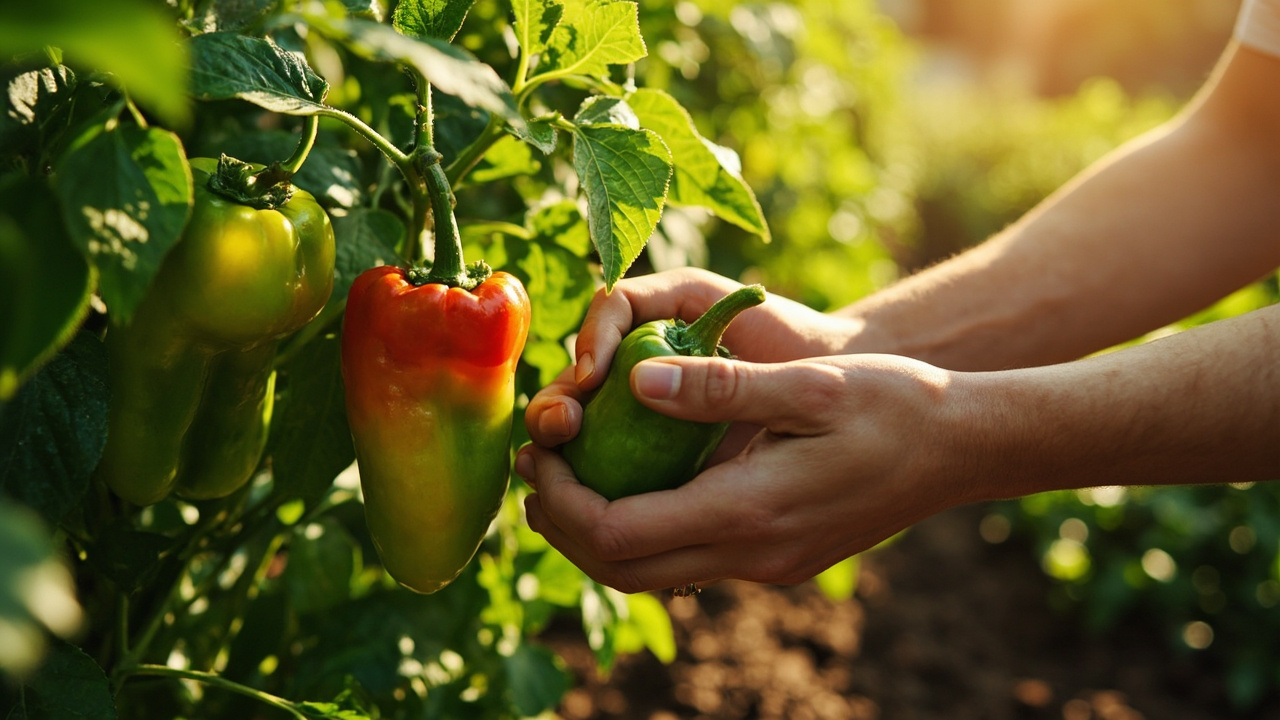
Fruit at full size but still green or pale is not necessarily ready. Size tells you the fruit stopped growing, but color tells you it is ripe.
The final wait, from full size to full color, is the one most gardeners misjudge.
Ripening: The Stage Everyone Rushes
Every pepper is technically edible green, but the sweetness, heat, and full flavor most varieties are grown for only develop as the fruit changes color, whether that is red, yellow, orange, purple, or chocolate brown depending on variety. This color change can take another 2 to 3 weeks after the fruit reaches full size.
Picking green isn’t wrong exactly, it just isn’t the payoff you were growing toward. If you want the pepper’s true flavor and the nutritional boost that comes with ripening, patience here is the entire trick.
Leaving ripe fruit on the plant too long, though, signals the plant to slow new fruit production, so harvest promptly once peppers hit full color.
Use scissors or pruners rather than pulling by hand, since yanking pods off can snap brittle branches.
Knowing when growth has genuinely stopped versus when it has just paused is the last skill that separates a good pepper season from a frustrating one.
Healthy Stall or Real Problem: How to Tell
Peppers naturally pause growth during heat waves above 90 F, during transplant shock for the first week or two after moving outside, and briefly after a heavy fruit set while the plant redirects energy into ripening. These are normal stalls and the plant resumes on its own within a week or two.
A real problem looks different: yellowing that spreads upward from lower leaves, wilting that does not recover overnight after watering, or leaf drop beyond what heat stress explains. Those point to root issues, disease, or a nutrient deficiency that needs diagnosis, not patience.
The simplest test is time. If a stalled plant is still stalled with no new leaf growth after two full weeks of decent weather and consistent watering, something is actually wrong rather than just resting.
That distinction is worth more than any fertilizer schedule, and it is the last thing you need before the numbers.
Peppers at a Glance
- When to start seeds: 8 to 10 weeks before your last frost date, in soil kept at 75 to 85 F for fastest germination.
- When to transplant: two to three weeks after last frost, once soil is a steady 65 F or warmer at 2 to 3 inches deep.
- Spacing: 18 to 24 inches between plants, 24 to 36 inches between rows.
- Watering: about 1 to 1.5 inches per week total, deep and consistent rather than frequent and shallow.
- Time to first flowers: roughly 10 to 14 weeks after germination, depending on variety.
- Time from fruit set to full size: 3 to 5 weeks. Add another 2 to 3 weeks for full ripe color.
- Total time, seed to ripe harvest: 90 to 150 days depending on variety and climate.
If you remember one thing, remember that soil temperature drives every stage more than air temperature or the calendar does.
Get peppers into warm soil, keep water steady through flowering and fruit set, and the plant will do the rest on its own schedule.