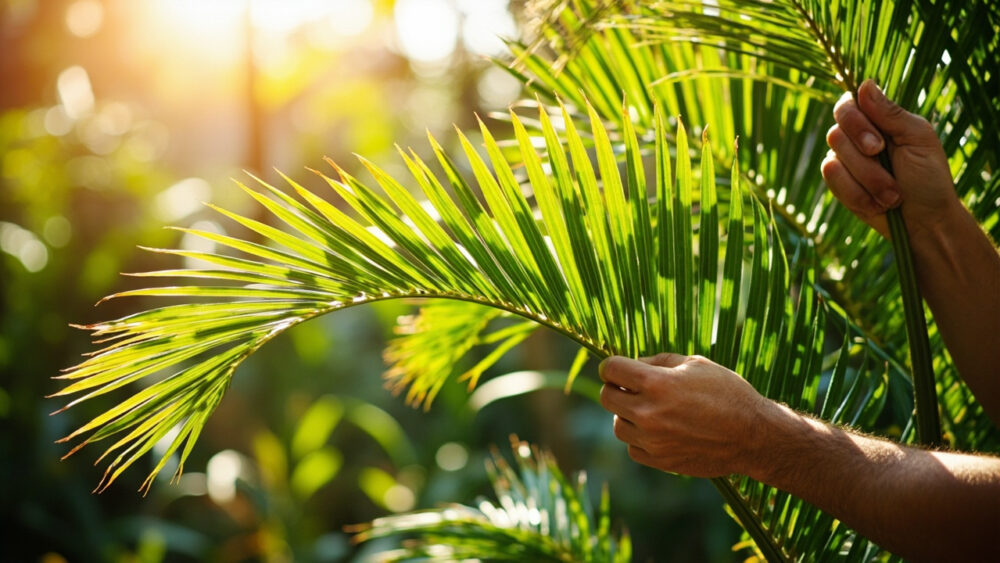
Majesty palm light requirements come down to one simple target: bright, indirect light for most of the day, ideally six or more hours of it, with a couple hours of gentle direct sun tolerated if it’s morning light rather than harsh afternoon sun. Too little light and the fronds thin out and yellow from the bottom up. Too much unfiltered afternoon sun and you get bleached, crispy tips that never green back up.
Here’s where most people go wrong, and it’s not the mistake you’d expect. Everyone assumes majesty palm is a low-light plant because it looks tropical and jungly, so they tuck it into a dim corner and wonder why it declines for months before dying slowly.
The honest truth is more specific than “bright light,” and it involves distance from the window, the direction that window faces, and how the light changes as the seasons turn. Stick around for the exact placement fixes, the sign that tells you you’ve overcorrected into too much sun, and the at-a-glance card at the bottom you’ll want to save to your phone before you move this plant anywhere.
How Much Light a Majesty Palm Actually Needs
Majesty palm (Ravenala or Ravenea rivularis, depending on how you were sold it, though true majesty palm is Ravenea rivularis) grows under a broken forest canopy in its native habitat. That means dappled, bright light all day, not deep shade and not open sun.
Indoors, that translates to bright, indirect light for six to eight hours daily. A little direct morning sun is fine and even beneficial. What it can’t handle is hours of unfiltered, hot afternoon sun through unobstructed glass.
Low light won’t kill it outright, but it will slowly starve it. This is a plant that needs real brightness to hold onto its color and produce full, feathery new fronds instead of sparse, weak ones.
Getting the light right is only half the picture, though. What that light actually looks like in your specific room is where most people misjudge it.
What the Right Spot Actually Looks Like
An east-facing window is close to perfect. You get a few hours of gentle morning sun followed by bright indirect light the rest of the day, which is almost exactly the dappled-canopy conditions this palm evolved under.
A south or west-facing window works too, but the palm needs to sit back from the glass, roughly three to six feet depending on how large and unobstructed the window is. Right up against south or west glass in summer is where the scorch problems start.
North-facing windows are the trickiest. They can work if the window is large and unobstructed, but you’ll likely need to place the palm within a foot or two of the glass, and even then growth will be slower and less full.
A simple hand test tells you a lot: hold your hand about a foot above the plant’s spot around midday. A soft, defined shadow means bright indirect light, good. A sharp, dark shadow means direct sun, fine only for an hour or two. No shadow at all means it’s too dim for this plant long term.
Once you know what good light looks like, the plant itself will start telling you when something’s off.
The Signs of Too Little Light
If you assumed yellowing fronds always mean overwatering, that guess is wrong more often than you’d think with majesty palm. Yellowing that starts on the lowest, oldest fronds and moves upward gradually is very often a light problem, not a water problem, especially if the yellowed fronds also look thin and pale rather than mushy.
Other low-light signs to watch for:
- Sparse new growth: new fronds emerge thinner and shorter than the ones already on the plant.
- Leggy, stretched stems: the plant reaches visibly toward the nearest light source.
- Dull, washed-out green: healthy majesty palm fronds are a rich, glossy dark green, not olive or grayish.
- Slow overall growth: little to no new frond production across an entire season.
None of this is fatal if you catch it early. Move the plant closer to a brighter window over a week or two rather than all at once, since a sudden jump in light intensity can stress a plant that’s adapted to dim conditions.
But low light isn’t the only failure mode, and the opposite mistake does damage that’s much harder to reverse.
The Signs of Too Much Direct Sun
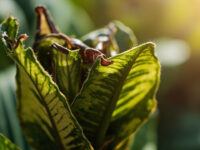
Too much hot, direct sun shows up fast, usually within days, and it’s visually distinct from a light shortage. Watch for these signs:
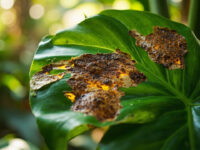
- Bleached or tan patches: pale, sun-scorched blotches on the parts of the fronds facing the window.
- Crispy, brown frond tips: dry, brittle edges that don’t recover once they’ve browned.
- Curling fronds: leaflets curl inward as the plant tries to reduce sun exposure.
- Faster-than-normal soil drying: intense sun heats the pot and pulls moisture out much quicker than usual.
Scorched sections don’t turn green again. The fix is to move the plant back from the window or add a sheer curtain, and trim off the worst damaged fronds once new, healthy growth appears to redirect the plant’s energy.
Light needs don’t stay fixed all year either, and that’s the follow-up question most people don’t think to ask until their plant starts acting different in winter.
How Light Needs Shift With the Seasons
A spot that was perfect in June can become too dim in December, and a window that felt gentle in spring can turn brutal in the peak of summer. The sun’s angle changes, and so does the intensity and duration of light hitting any given window.
In winter, days are shorter and the sun sits lower, so light indoors is weaker overall. A majesty palm that was three feet back from a south window in summer may need to move to within a foot or two of that same window in winter to get equivalent brightness.
In summer, that same south or west window throws much more intense, higher-angle light, and afternoon sun in particular gets hot enough to scorch a plant that sat there happily all winter.
The practical habit worth building is a seasonal check twice a year, once as spring ramps up and once as fall light drops off, moving the plant a foot or two closer or farther as needed. It’s a small adjustment that prevents both the slow winter decline and the sudden summer scorch.
If your home simply doesn’t have a window good enough for this year-round, there are still real options short of a greenhouse.
Placement Fixes That Don’t Require a Greenhouse
Most homes have at least one spot that works with a little creativity. You don’t need a conservatory to keep a majesty palm genuinely happy.
Rotate the pot a quarter turn every week or two so all sides of the plant get even light exposure instead of one side stretching toward the window while the other stays stunted.
Use a sheer curtain on strong south or west windows to soften direct sun into bright, filtered light without losing intensity, which is often the single best fix for a scorch problem.
If your only bright window is small, consider a grow light as a supplement rather than a replacement, run for eight to twelve hours daily, positioned twelve to twenty-four inches above the foliage depending on the light’s strength.
Moving the plant seasonally between rooms, or even just closer to and farther from the same window as described above, solves the majority of light complaints without any equipment at all.
Get the light dialed in and the rest of majesty palm care gets noticeably easier, which is exactly what the quick-reference card below is for.
Majesty Palm at a Glance
- Light needed: bright, indirect light for six to eight hours daily, with a little gentle morning direct sun tolerated.
- Best window: east-facing is ideal, south or west facing works if the plant sits three to six feet back from the glass.
- Signs of too little light: yellowing from the bottom up, sparse or thin new fronds, stretching toward the window.
- Signs of too much sun: bleached patches, crispy brown tips, curling leaflets, fast soil drying.
- Seasonal adjustment: move closer to the window in winter, back a foot or two in the height of summer.
- Quick fix for scorch: add a sheer curtain or pull the pot back from the glass rather than switching rooms entirely.
- Supplement option: a grow light run eight to twelve hours daily, twelve to twenty-four inches above the foliage.
Get the light right and most other majesty palm problems, from browning tips to slow growth, tend to sort themselves out.
When in doubt, err toward brighter and filtered rather than dim or scorching, this plant forgives a bright room far more easily than a dark one.