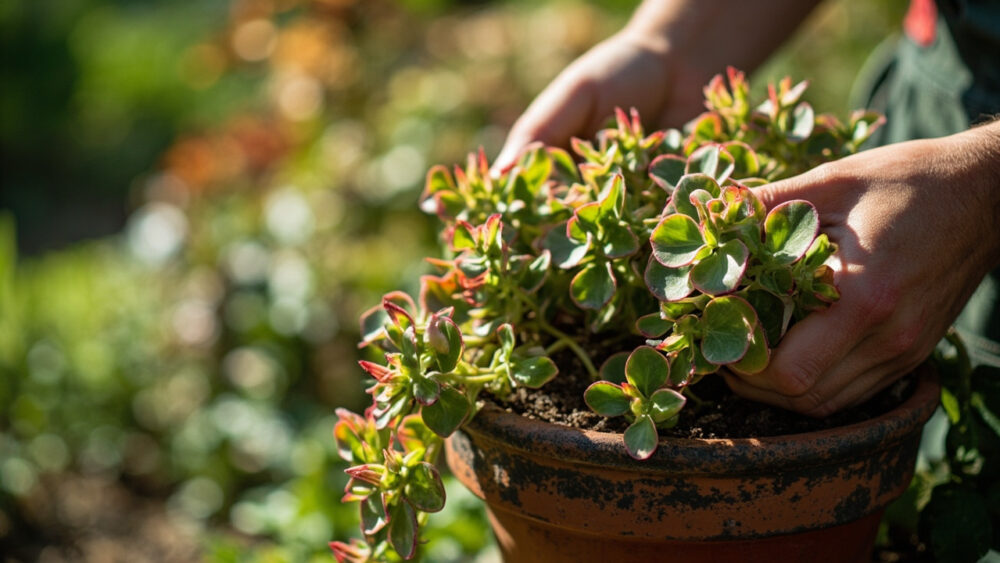
Hoya krimson queen care comes down to three things this plant will not compromise on: bright indirect light, a potting mix that dries out fast, and long stretches of near-neglect on watering. Give it those and the pink-edged, cream-and-green leaves stay tight and colorful for years. Get the light or the watering wrong and you get a plant that limps along, drops leaves, or rots at the base without ever really telling you why until it’s too late.
Here’s what trips people up. Most Krimson Queen failures are not disease, they’re one specific watering mistake that looks like good care until the roots are already gone. There’s also a sign of a happy plant that new growers consistently misread as a problem, and a question almost everyone asks right after “how much water” that most guides skip entirely.
Stick with me through the sections below and I’ll answer all of it, including the one thing that separates a Krimson Queen that vines for eight feet from one that stalls out at eight inches. Save the at-a-glance card at the bottom to your phone before you walk away, you’ll want it the next time you’re standing in front of the plant unsure what to do.
Light, Placement, and Temperature
Krimson Queen wants bright, indirect lightseveral hours of it, ideally from an east or south-facing window with a sheer curtain or a few feet of setback from direct south or west sun. Too little light and the pink variegation fades toward plain green as the plant tries to compensate. Too much direct sun and you get bleached, papery patches on the leaves, especially the white and pink margins, which scorch before the green does.
Room temperature is fine, ideally 65 to 85°F. Below 50°F for any stretch causes stress and leaf drop, so keep it away from drafty windows and doors in winter.
It also does not want to be moved constantly. Pick a bright spot and leave it.
Once the light is sorted, watering is where most people actually lose this plant.
Watering: The Mistake That Ruins Most Attempts
If you assumed a tropical-looking vine with thick leaves wants regular, scheduled watering, that guess is exactly what kills most Krimson Queens. This is a semi-succulent hoya. It stores water in those thick leaves and its roots rot fast in soil that stays damp.
Water only when the soil is fully drynot just dry on the surface but dry an inch or two down. Stick a finger in, or lift the pot and feel the weight. In most homes that’s every 10 to 14 days, longer in winter, sometimes stretching to three weeks.
When you do water, soak it thoroughly until water runs from the drainage hole, then let it drain completely. Never let the pot sit in standing water.
Underwatering shows up as thick leaves going slightly wrinkled or soft, an easy fix with one good soak.
Overwatering shows up as yellowing lower leaves, a mushy stem base, or leaves dropping with no warning, and that one is much harder to walk back.
The soil this plant sits in decides how forgiving that watering window actually is.
Soil, Pots, and Feeding
Use a chunky, fast-draining mix, not straight potting soil. A blend of standard potting mix with perlite, orchid bark, or coarse pumice, roughly half and half, mimics the airy conditions this epiphyte’s roots evolved for.
Always use a pot with drainage holes. Terra cotta is a good choice because it wicks moisture and helps prevent the rot that plain plastic can hide.
Feed monthly during spring and summer with a balanced liquid houseplant fertilizer diluted to about half strength. Skip feeding in fall and winter when growth slows.
Overfeeding causes crusty white buildup on the soil surface and leaf tip burn, so when in doubt, feed less, not more.
Good soil buys you room for error, but this plant also needs a few hands-on tasks done on a schedule.
Pruning, Repotting, and the Task Almost Everyone Skips
Krimson Queen blooms on old growth, specifically on short woody spurs called peduncles that form along the vine. This is the follow-up question almost everyone has right after they get watering figured out: why isn’t it blooming?
Never cut off those peduncles after a flower cluster fades. They look spent, but they’ll rebloom repeatedly for years if left alone. Cutting them off resets the plant’s flowering clock to zero.
Prune only to control length or remove dead, mushy, or bare leggy stems, and do it in spring or summer when the plant is actively growing.
Repot every 2 to 3 yearsor when roots circle tightly at the pot’s edge, moving up just one pot size. Krimson Queen actually blooms better slightly root-bound, so resist the urge to size up too soon.
Wipe dust off the leaves every few weeks with a damp cloth, both for looks and because clean leaves photosynthesize better.
Even with good care, a few problems show up often enough that you should know them by sight.
Problems Most Likely to Strike
Watch for these:
- Mushy black stem base: root or stem rot from overwatering or poor drainage; unpot, trim away any black or mushy roots, repot into fresh dry mix, and water sparingly going forward.
- Sticky residue on leaves or nearby surfaces: normal nectar from open flowers, not a pest, though it can attract ants.
- Fine webbing or stippled, dull leaves: spider mites, common in dry winter air; increase humidity and treat with insecticidal soap or a horticultural oil, following the product label exactly.
- Fuzzy white clusters in leaf joints: mealybugs. Isolate the plant and treat the same way, checking weekly until they’re gone.
- Curling, dry leaf edges: low humidity or too much direct sun. Move it back from the glass or add a pebble tray.
Hoya krimson queen is mildly toxic if ingestedparticularly to pets, and can cause vomiting or stomach upset. If you suspect a pet has eaten any part of it, call your veterinarian rather than waiting to see what happens.
Rule those out and it’s worth knowing what genuine thriving actually looks like, because it’s not always what people expect.
The Sign of a Thriving Plant Most People Misread
New leaves that emerge almost pure white or pale pink, with barely any green, look alarming to a lot of new owners who assume it’s a nutrient problem or stress. It’s the opposite.
Heavy pink and white new growth is a sign of excellent light and a healthy, vigorous plant. The green fills in as the leaf matures and photosynthesis kicks in.
Other real signs of thriving: steady vine growth of several inches a month in the growing season, firm and slightly glossy leaves, and eventually those waxy, star-shaped flower clusters with a faint sweet fragrance, usually after the plant is mature and a bit root-bound.
A plant that’s stalled, dropping lower leaves, and showing pale green new growth instead of pink is telling you it wants more light, not more water.
That distinction, light versus water, is the single most useful thing to keep straight, and it’s on the card below.
Hoya Krimson Queen at a Glance
- Light: bright indirect light for several hours daily, filtered direct sun tolerated, deep shade causes faded variegation.
- Watering: only when soil is fully dry an inch or two down, roughly every 10 to 14 days in the growing season, less in winter.
- Soil: chunky, fast-draining mix of potting soil with perlite or bark, always in a pot with drainage holes.
- Temperature: 65 to 85°F, protect from anything below 50°F.
- Feeding: balanced liquid fertilizer at half strength monthly in spring and summer, none in fall or winter.
- Pruning: remove dead growth only, never cut old flower spurs, they rebloom for years.
- Repotting: every 2 to 3 years, one size up, blooms best when slightly root-bound.
Get the light bright and the watering slow, and everything else about this plant takes care of itself.
When in doubt, check the soil before you touch the watering can.