Caladiums want bright, indirect light, not direct sun and not a dim corner. Think of the light under a high shade tree in early afternoon: bright enough to read a book comfortably, but nothing casting a sharp shadow. Get the caladium light requirements right and those leaves stay huge, colorful, and unmarked all season. Get it wrong in either direction and you will know within a week, because this plant does not suffer quietly.
Here is the thing almost nobody expects going in: the “shade plant” label caladium carries is only half true. Some varieties tolerate real sun, and the ones with pale pink or white leaves are actually the pickiest about it, not the toughest. That surprises most first-time growers, and it is the mistake that ruins more pots than root rot does.
Stick with me and I will walk through what real bright-indirect light looks like in an actual room or yard, how to read the leaves when you have guessed wrong, and what changes as the seasons turn. The save-able Caladium at a Glance card is at the very bottom, so scroll all the way down before you decide where that pot is going.
The Plain Answer: Bright, Indirect Light
Caladiums are understory plants by nature, grown from tubers that evolved under tropical tree canopies where sun arrives filtered and broken up, never direct. Indoors or out, you are trying to recreate that dappled, bright shade. Four to six hours of bright indirect light a day is the sweet spot for most varieties.
Deep shade all day, the kind under a porch roof or in a north room with no reflected light, will keep the plant alive but disappointing. The leaves get smaller, the color washes out toward plain green, and the whole plant stretches and leans toward whatever light source it can find.
Full, unfiltered midday sun for hours does the opposite kind of damage, and it happens faster than most people expect.
What “Bright Indirect” Actually Looks Like in Your House or Yard
Indoors, an east-facing window is close to perfect, giving gentle morning sun and bright light the rest of the day. A few feet back from a south or west window, out of the direct beam, also works well. Right up against unfiltered south or west glass in the afternoon is too much for most caladiums.
Outdoors, think dappled shade under high tree canopy, the north or east side of a house, or a spot that gets morning sun and afternoon shade. A covered porch with good ambient light is often ideal.
If you can see your own shadow with soft, blurry edges rather than a sharp outline, that is roughly the light level caladiums are asking for.
The Sign Everyone Misreads: Too Little Light vs Too Much
Here is the follow-up question every reader hits next: my leaves look bad, which way did I get it wrong? Most people guess backward.
Too little light shows up as stretching, smaller new leaves, and colors fading toward solid green, especially on the fancy-leaf types with heavy pink or white patterning. The plant is not burned, it is just bored and reaching.
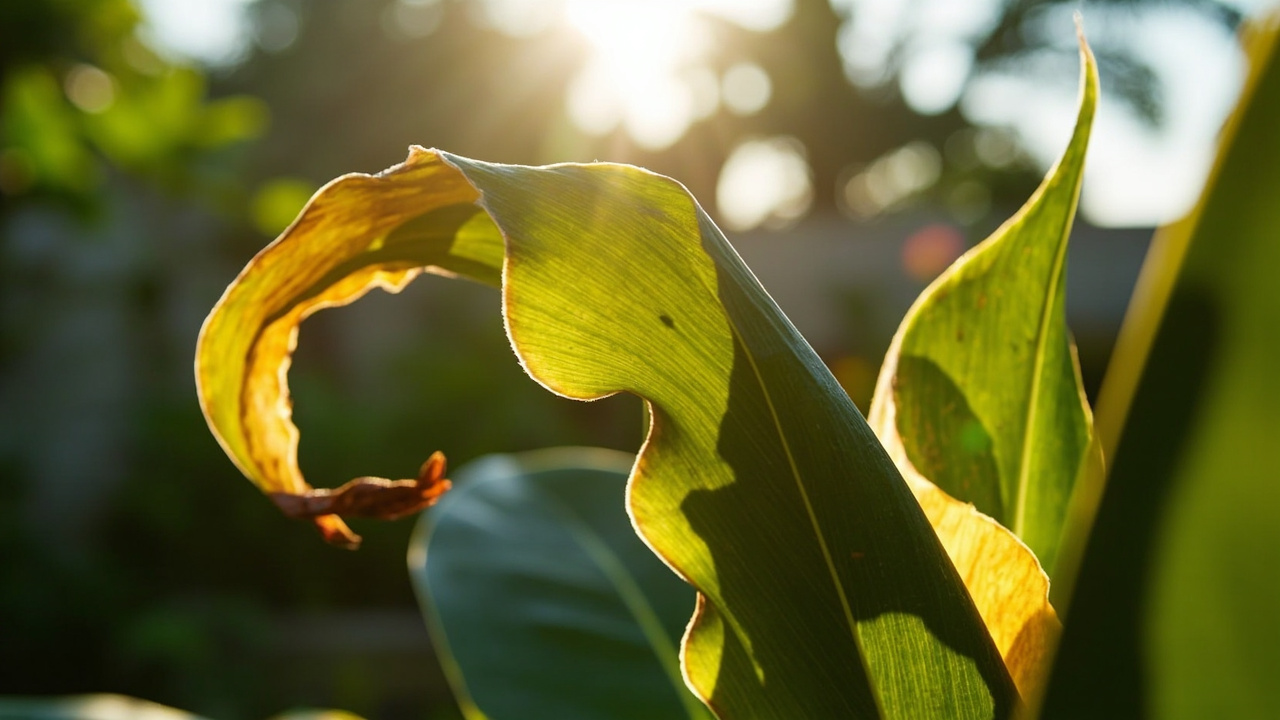
Too much light looks different and gets misdiagnosed constantly as a watering problem. Leaf edges crisp up brown and papery, pale or white sections of the leaf bleach out or develop dry, bleached patches first (since they have less protective pigment than the green areas), and leaves can droop hard in the early afternoon heat even with moist soil.
If you assumed a droopy caladium in full sun just needs more water, that guess is what burns the leaves for good, because the damage is light scorch, not thirst, and no amount of watering reverses a crisped leaf edge.
Once you know which symptom is which, moving the pot a few feet solves most of it within two to three weeks of new growth.
Not All Caladiums Read the Same Light the Same Way
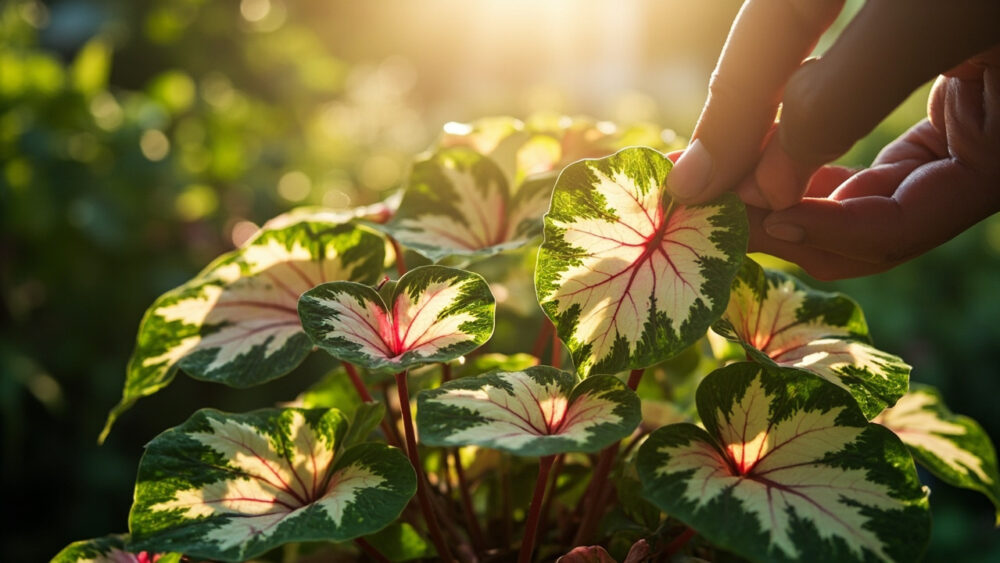
Leaf color is the real clue to sun tolerance, more than the variety name on the tag. Dark green varieties with red or pink veining, often sold as sun-tolerant types, can genuinely handle a few hours of direct morning sun, especially in cooler climates.
White and pale pink varieties have less chlorophyll and pigment protecting the leaf tissue, so they scorch fastest and should stay in full shade to bright indirect light only, never direct sun, even the mild morning kind in hot regions.
When in doubt about which type you have, treat it like a pale variety until you see how it responds.
That caution matters most in the hottest stretch of summer, which is its own separate problem.
Light Needs Shift With the Seasons
Spring sun and midsummer sun are not the same test, even at the identical window or garden spot. A location that was gentle in April can turn punishing by July, because the sun angle climbs higher and the light intensity roughly doubles from spring to peak summer at most latitudes.
A caladium that thrived on an east patio in spring may need to move a few feet deeper into shade, or get an umbrella or taller companion plants for afternoon cover, once real summer heat arrives.
Indoors, the reverse happens in fall and winter. Days shorten, the sun sits lower, and light through the same window drops noticeably, which is when a plant kept a few feet back from a bright window in summer often needs to move closer to the glass.
Caladiums also naturally go dormant and die back when temperatures cool below roughly 60°F, so a plant fading in autumn is not always a light problem at all, it may simply be shutting down for the season, which is normal and not a mistake you made.
Knowing the difference between seasonal dormancy and a real light problem saves a lot of unnecessary repotting.
Fixes That Do Not Require a Greenhouse
Most light problems get solved by moving the pot, not by buying equipment. A caladium in a container is easy to shift a few feet back from a window, rotate toward better light, or carry to a shadier porch corner for the hottest part of summer.
For outdoor beds, a simple shade cloth over a hoop, or planting caladiums under taller leafy companions like ferns or hostas, cuts midday intensity without any real investment.
Sheer curtains work well for a window that runs too hot in the afternoon, softening direct sun into the bright indirect light caladiums actually want.
If natural light genuinely will not reach a spot, a basic full-spectrum grow light run for eight to ten hours a day, positioned a foot or two above the foliage, keeps color and leaf size respectable through the darker months.
None of these fixes require moving house, just moving the pot, and that is usually the whole solution.
Caladium at a Glance
- Light needed: bright, indirect light for four to six hours a day, dappled shade outdoors or a few feet back from a bright window indoors.
- Direct sun tolerance: dark green, red-veined varieties can handle a little morning sun, white and pale pink varieties should avoid direct sun entirely.
- Signs of too little light: stretching stems, smaller new leaves, colors fading toward plain green.
- Signs of too much light: crisp brown leaf edges, bleached pale patches, midday droop even in moist soil.
- Best indoor spot: an east-facing window, or several feet back from an unfiltered south or west window.
- Best outdoor spot: under high tree canopy, or a north or east exposure with morning sun and afternoon shade.
- Seasonal note: summer sun is far more intense than spring sun at the same spot, so shift shadier as the season peaks and expect natural dormancy below about 60°F.
When in doubt, choose the shadier option and watch the new growth for two to three weeks before adjusting again.
Get the light right and everything else about caladium care gets easier.