You grow pothos by rooting a stem cutting with at least one node in water or damp soil, potting it once roots are an inch or two long, then giving it bright indirect light and letting the top inch or two of soil dry out between waterings. That is the whole plant, honestly, and it forgives more mistakes than almost anything else on a windowsill. If you are wondering how to grow pothos successfully long term rather than just keep it alive for a month, the details below are where people actually go wrong.
Most pothos failures are not watering mistakes, even though everyone assumes that first. The real culprit is usually light that looks bright to your eyes but is not bright enough for the plantand it shows up as a vine that stretches for months without ever producing a new leaf.
There is also a harvest question nobody expects to have with a houseplant, and the honest answer surprises most first-time growers. Stick around for the exact moment cuttings are ready to take, the one feeding mistake that stalls variegation, and the save-able Pothos at a Glance card waiting at the bottom.
When to Start a Pothos, and Why Timing Still Matters Indoors
Pothos is a tropical houseplant, so there is no frost date to work around, but timing still affects how fast it takes off. Spring through midsummer is the best window for potting a new plant or taking cuttings, because longer days and warmer indoor temperatures push root and leaf growth much faster than a cutting started in November.
Room temperature matters more than people think. Pothos roots best when the air stays between 65 and 80°F, and growth slows dramatically below 60°F.
If you are in zone 9 or warmer and keep pothos outdoors on a shaded porch, treat it like a houseplant that happens to live outside and bring it in well before nights dip into the 50s.
Get the timing right and everything downstream, from rooting speed to leaf size, gets easier.
Choosing the Spot and Getting the Soil Right
Pothos wants bright, indirect light, meaning a spot a few feet back from an east or west window, or a few feet further back from a south window with a sheer curtain filtering it. Direct afternoon sun through unfiltered glass will scorch the leaves; a north window with no other light source is usually too dim to hold variegation.
If you assumed a dim corner is fine because pothos is “low light tolerant,” that guess is technically true for survival but it is exactly what kills the variegated patterns on Marble Queen or Manjula pothos, since the plant reverts to solid green to make more chlorophyll when light is scarce.
For soil, use a standard, well-draining houseplant potting mix, ideally with some perlite or orchid bark mixed in. Straight garden soil or anything that stays soggy will rot the roots within weeks.
The pot matters almost as much as the mix, so let’s cover that next.
Planting a Pothos Step by Step
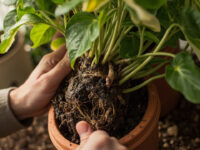
Whether you are potting up a rooted cutting or repotting a nursery plant, the mechanics are the same.
1. Choose the right pot
Pick a container with drainage holes, only 1 to 2 inches wider in diameter than the current root mass. Too much extra soil around small roots holds moisture and invites rot.
2. Set the depth
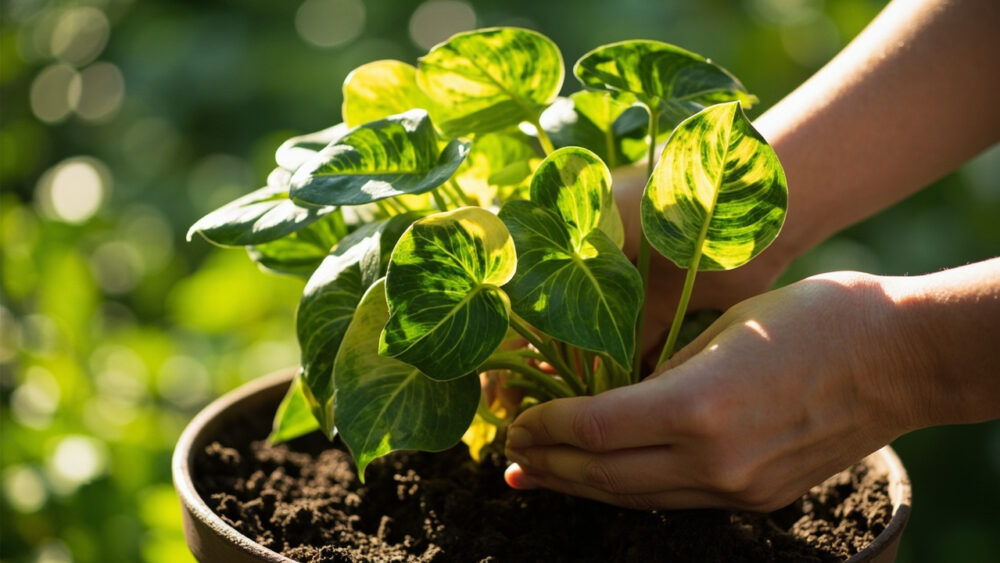
Plant so the base of the stem sits at the same soil level it was growing at before, or just slightly buried if you are rooting a cutting with a node. Never bury leaves.
3. Space multiple cuttings
If you are filling out one pot with several cuttings for a fuller look, space them 2 to 3 inches apart so each has room to root without tangling.
4. Firm and water
Press soil gently around the base, water thoroughly until it runs from the drainage holes, and let the pot drain fully before setting it back on a saucer.
Once it is in soil, the plant’s needs shift almost entirely to water and light, which is where most people either overdo it or underfeed it.
Watering and Feeding Through the Season
Water when the top 1 to 2 inches of soil feel dry to a finger poked innot on a fixed weekly schedule. In a bright room during summer that might mean every 7 to 10 days; in a dim room during winter it can stretch to three weeks or more.
Droopy, slightly wrinkled leaves that perk back up an hour after watering mean you let it go a bit too long, and that is a far safer mistake than soggy soil. Yellowing lower leaves with soil that is still wet is the real warning sign of overwatering and root rot risk.
Feed monthly during spring and summer with a balanced, diluted houseplant fertilizer, and skip feeding entirely in fall and winter when growth slows. Overfeeding a variegated pothos pushes out soft, all-green growth faster than underfeeding ever will, so go lighter than the label suggests rather than heavier.
Water and light get a plant growing, but pests and rot are what stop it cold, so know the signs before they show up.
Problems Most Likely to Strike, and How to Head Them Off
Pothos is genuinely one of the toughest houseplants, but three problems account for almost every support call.
- Root rot: mushy brown stems near the soil line and a sour smell mean the roots have suffocated in wet soil. Cut back to firm white tissue, repot in fresh dry mix, and water less often going forward.
- Mealybugs and spider mites: small cottony clumps in leaf joints or fine webbing on leaf undersides are the tell. Wipe leaves down and treat with an insecticidal soap, following the product label exactly, and isolate the plant from other houseplants while you treat it.
- Leggy, leafless vines: this is the light problem from earlier catching up with you, and it means the plant needs to move closer to a window, not get fed more.
One safety note worth stating plainly: pothos is toxic to cats, dogs, and people if chewed or swallowed, and can cause mouth irritation, drooling, and vomiting. If a pet or child eats any part of it, call a veterinarian or poison control rather than waiting to see what happens.
Head off those three issues and the only thing left to manage is a plant that grows faster than you expected.
When and How to “Harvest” Pothos
Here is the honest answer to the question people are about to ask next: pothos does not flower or fruit indoors in any way that matters to a home grower, so there is no harvest in the tomato-and-basil sense. What you are actually harvesting is cuttings, either to propagate more plants or to control a vine that has taken over the shelf.
A cutting is ready to take once a vine has at least three or four leaves and visible aerial roots or small brown nodes along the stemusually 8 to 12 inches of growth from where you last cut. Snip just below a node with clean shears, and that piece can go straight into water or moist soil to start the whole process over.
Pothos rarely blooms indoors at all. It needs conditions closer to its native rainforest floor than most homes provide, so do not treat a lack of flowers as a sign anything is wrong.
Everything you need to keep this going long term fits on the card below.
Pothos at a Glance
- When to plant: spring through midsummer indoors, anytime if you have strong grow lights, and keep room temperature between 65 and 80°F.
- Light: bright, indirect light a few feet from an east or west window, never unfiltered direct sun.
- Soil: well-draining potting mix with perlite or bark, in a pot with drainage holes only 1 to 2 inches wider than the root mass.
- Planting depth and spacing: stem base at the same level it grew before, cuttings spaced 2 to 3 inches apart in a shared pot.
- Watering: when the top 1 to 2 inches of soil are dry, roughly every 7 to 21 days depending on light and season.
- Feeding: diluted balanced fertilizer once a month in spring and summer, none in fall and winter.
- Propagating: cut below a node on an 8 to 12 inch vine with visible aerial roots, root it in water or soil.
Get the light right and everything else about pothos becomes forgiving.
When in doubt, water a little less and move it a little closer to a window.