Dendrobium orchid light requirements come down to one simple target: bright, indirect light for 12 to 14 hours a day, with an hour or two of gentle direct morning or late afternoon sun tolerated once the plant is established. Think of the light quality on a covered porch at midday, bright enough to read by easily without a lamp, but not the kind of glare that makes you squint. Too dim and the plant grows leaves forever and never blooms, too harsh and the leaves bleach or scorch before your eyes.
Here is where most people go wrong, and it is not where you would expect. Everyone assumes a dendrobium that will not flower needs more water or more fertilizer, when nine times out of ten it needs more light and nothing else.
There is also a sign of too much light that gets consistently misread as a disease, and a seasonal shift that catches almost every houseplant grower off guard when the sun angle changes in fall. Stick with me through the placement fixes below, and save the at-a-glance card at the bottom to your phone so you never have to guess again.
How Much Light a Dendrobium Actually Needs
Dendrobiums are epiphytes that grow on tree branches in the wild, filtered by a canopy rather than sitting in open sun or deep shade. Indoors, that translates to bright, filtered light for most of the day, roughly the intensity you get a few feet back from an unobstructed window.
They need noticeably more light than a phalaenopsis orchid but less than a cactus. If you can read fine print comfortably in that spot without turning on a light, and you can just barely see a soft shadow when you hold your hand a foot above the leaves, you are close.
No shadow at all usually means too little light for reliable blooming.
What the Right Spot Looks Like in a Real Room
An east-facing window is close to ideal, since it delivers a few hours of gentle morning sun followed by bright indirect light the rest of the day. A south-facing window works too, but the plant should sit 2 to 4 feet back from the glass, or sit right in the window behind a sheer curtain, to soften the midday intensity.
West-facing windows can work in fall and winter but often run too hot and bright in summer afternoons unless the plant is pulled back 3 feet or more. North-facing windows are usually too dim on their own for a dendrobium to bloom well, even though the foliage may look perfectly healthy.
If you are outdoors in a warm climate for summer, dappled shade under a tree canopy or 30 to 50 percent shade cloth mimics their natural habitat closely.
Healthy leaf color is your best daily check, and that is exactly where the next two problems show up first.
The Signs of Too Little Light
A dendrobium starved for light grows leaves that are dark green and soft, often thinner and more elongated than they should be, with canes that get progressively taller and skinnier as the plant reaches for more light. It will look perfectly alive, even lush, and that is exactly why this problem goes unnoticed for years.
The real tell is that it simply will not flower, or it produces one or two weak blooms instead of a full spray. If you assumed a sulking, leaf-only dendrobium just needs more fertilizer or a different pot, that guess is why so many of these plants sit green and flowerless on a shelf for seasons at a time.
More light, not more feeding, is almost always the actual fix.
The Signs of Too Much Light
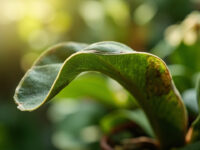
Too much direct sun bleaches leaves to a pale yellow-green and can leave reddish or purplish blotches on the foliage, especially on the side facing the window. In more severe cases you get papery tan or white patches, which are sunburn scars, not a fungus or bacterial infection.
This is the sign that gets misread constantly. Growers see blotchy, discolored leaves and assume disease, reach for a fungicide, and miss the light problem entirely.
If the damage is isolated to leaves facing the glass and the rest of the plant looks fine, it is sun, not sickness. Pull the plant back a foot or add a sheer curtain, and new growth will come in normal green within a few weeks, though existing scarred leaves will not heal.
Once you fix the light, the next challenge is keeping it right as the seasons turn.
How Light Needs Shift Through the Year
The sun angle drops in fall and winter, and a spot that was perfect in July can suddenly be too dim by November, even in the exact same window. This is the seasonal trap that catches almost everyone, because nothing about the room changed except the sun’s path outside it.
In winter, move the plant closer to the glass, or shift it from an east window to a brighter south or west one for a few months. In summer, watch for that first hint of bleaching on leaves closest to the glass and pull the plant back before scorch sets in.
Dendrobiums also generally want a slightly cooler night temperature and a touch more light intensity in fall to trigger flower spikes, so a bright, somewhat cool windowsill in autumn is doing double duty.
Even with a good window, some homes just cannot deliver enough natural light on their own, and that is a fixable problem too.
Fixes That Do Not Require a Greenhouse
If your best window still leaves the plant leggy and flowerless, a simple grow light closes the gap without any structural changes. A full-spectrum LED grow light positioned 12 to 18 inches above the plant, run for 12 to 14 hours a day on a cheap timer, will reliably push a stalled dendrobium into blooming.
Rotating the pot a quarter turn every week or two also keeps growth even, since dendrobiums lean hard toward their strongest light source and can end up lopsided fast.
A sheer curtain, a few feet of extra distance from south or west glass, or moving the plant to a sunroom or covered porch for summer are all far easier fixes than they sound, and none of them require anything close to a greenhouse.
With placement sorted, here is everything worth keeping in one place.
Dendrobium Orchid at a Glance
- Light level: bright, indirect light for 12 to 14 hours daily, with an hour or two of gentle direct morning or late sun tolerated once established.
- Best window: east-facing ideal, south or west-facing fine if the plant sits 2 to 4 feet back from the glass or behind a sheer curtain.
- Too little light looks like: dark, soft, elongated leaves, tall skinny canes, and a plant that grows well but refuses to flower.
- Too much light looks like: pale yellow-green leaves with reddish or purplish blotches, or papery tan scarring on the side facing the window.
- Seasonal adjustment: move closer to the window or to a brighter exposure in fall and winter, pull back a few inches in the height of summer sun.
- No good window fix: full-spectrum LED grow light, 12 to 18 inches above the plant, run 12 to 14 hours a day on a timer.
- Quick daily check: hold your hand a foot above the leaves, you want a soft, visible shadow, not a sharp one and not none at all.
Get the light right and everything else about growing a dendrobium gets easier, including the flowering that made you want one in the first place.
When in doubt, more bright indirect light beats more water or fertilizer almost every time.