The best time to prune impatiens is when stems get leggy or flowering slows in mid to late summer, and the fix is simple: cut the leggy stems back by about a third to a half, right above a leaf node. Do this on a cool morning or evening, never in the blazing heat of the day, and water them well afterward. That is how to prune impatiens in one sentence, but there are a few specific mistakes that keep people from getting the bushy, reblooming plant they were hoping for.
Most people either prune too hard out of frustration, or they never prune at all and just watch the plant get thinner and more sparse until frost takes it. Neither approach gets you the mounded, flower-covered impatiens you see in nursery photos. There is also a sign on the stem itself that tells you exactly where to cut, and almost nobody checks for it before grabbing the shears.
Stick with me through the how-to and I will cover the timing window, the tools, the exact cut points, and the mistakes that cost a whole season of bloom. There is a save-able Impatiens at a Glance card waiting at the bottom with every number in one place.
When to Prune Impatiens (and When to Leave Them Alone)
Prune when you see legginess, not on a schedule. Impatiens stretch when they are reaching for light or when they have been growing hard for eight to ten weeks straight. Bare lower stems, flowers only at the tips, and a general “leaning” look are your cues, usually sometime in July or August depending on your zone.
Do not prune in the first three to four weeks after planting. Young transplants need that time to establish roots and branch on their own. Pinching too early just sets them back.
Also skip pruning during a heat wave or drought stress. Cutting a thirsty, wilted plant adds insult to injury. Water first, wait a day, then cut once the plant looks turgid again.
Timing is half the job, the other half is knowing exactly where the scissors go.
Tools and the One Prep Step That Actually Matters
You do not need much. A clean pair of bypass pruners or sharp scissors handles everything on impatiens, since the stems are soft and succulent, not woody.
The prep step people skip is wiping the blades with rubbing alcohol before you start, especially if you have handled any other plant that day. Impatiens stems are tender and can pick up fungal issues fast from a dirty blade, and a stressed, freshly-cut plant is exactly when that matters most.
Have a small container ready if you want to save cuttings. Impatiens root readily in water in a bright spot indoors, so a hard prune does not have to mean waste.
Once your tools are clean, the cutting itself takes less time than deciding to do it.
How to Prune Impatiens Step by Step
Step 1: Find the leaf node
Look at any leggy stem and find the small swollen point where a leaf or leaf pair attaches. That node is where new growth will branch out, and it is the only spot on the stem that will actually push new stems.
Cutting mid-internode, between nodes, leaves a bare stub that just sits there and does nothing productive.
Step 2: Cut above the node, not below it
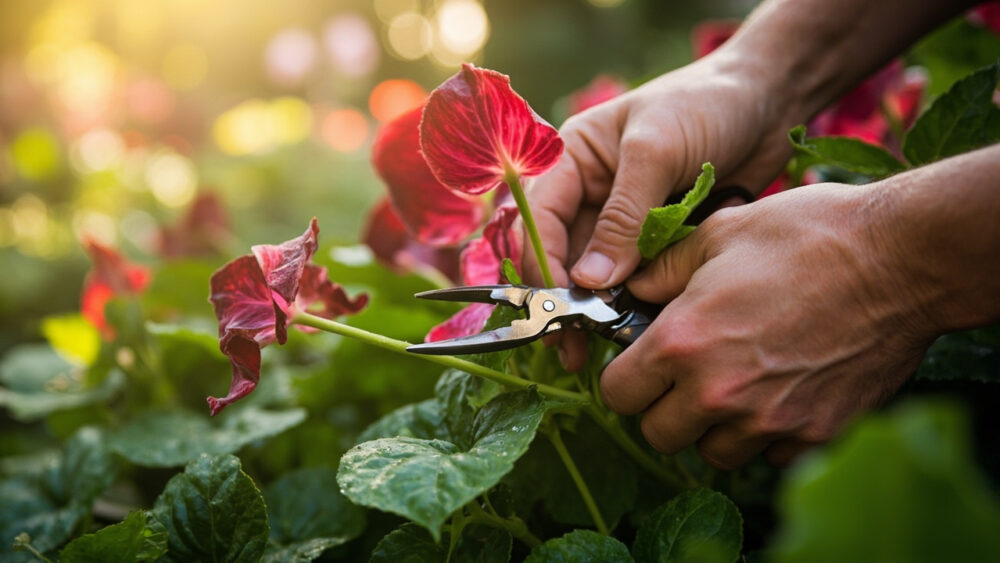
Snip about a quarter inch above a node, angled slightly if you like, though it matters far less than people assume on soft stems like these. This is different from woody shrub pruning where angle affects water shedding.
Step 3: Take a third to half the stem length
This is where most people freeze up and take a token snip off the tip. A light trim barely changes anything on a leggy plant. For real rebranching, cut back a third to half of the total stem length on the worst offenders.
On a plant that is uniformly leggy, you can shear the whole thing back by about a third all over. It looks brutal for a few days. It is not.
Step 4: Stagger your cuts across the plant
Do not flatten the whole mound to one exact height. Vary your cut points slightly stem to stem so the regrowth comes in with some natural shape instead of one uniform buzzcut line.
The cutting is the easy part, waiting through the ugly stage is what actually tests people.
What Happens After You Cut, and the Sign Everyone Misreads
If you assumed pruning stops the flowers, that guess is backwards. Pruning stops flowers for about one to two weeks while the plant redirects energy into new branching, then it comes back with noticeably more blooms than before because you now have two or three stems where there was one.
The sign everyone misreads is a slightly wilted, sparse look for the first three to five days. People see that and panic, thinking they killed it or cut too hard.
That temporary droop is normal recovery, not damage, as long as the cut stems are still green and firm, not brown or mushy. Keep soil evenly moist during this window, since a plant recovering from a cut and also drying out at the roots is a genuinely bad combination.
New growth buds usually show at the cut nodes within a week under normal warm-season conditions.
Once you see those fresh little leaf buds, you know the cut worked, and the next flush of flowers is only a couple weeks out.
The Mistakes That Cost You a Season of Bloom
Pruning too lightly is the single most common mistake. A quarter-inch trim off leggy stems changes nothing. You have to cut back into real stem length, a third to half, for the plant to bother branching.
Pruning the entire plant to the same height every time is the second mistake, since it eventually produces a flat, tabletop-shaped plant instead of a natural mound.
Cutting during peak afternoon heat stresses a plant that is already working hard to manage water loss through its soft leaves. Move the job to morning or evening.
Letting the plant get so leggy that you are cutting off more bare stem than leafy growth is the mistake that costs a full season. At that point you are removing most of the plant’s photosynthetic capacity at once, and recovery takes far longer.
- Too light a trim: barely changes shape or bloom count.
- Uneven cutting height every time: produces a flat, unnatural mound.
- Pruning in midday heat: adds unnecessary stress on top of the cut.
- Waiting too long to prune at all: means removing most of the plant’s leaves just to fix it.
Catch legginess early and every one of these mistakes becomes easy to avoid.
Impatiens at a Glance
- When to prune: once stems get leggy or bloom slows, usually six to ten weeks after planting, not on a fixed calendar date.
- How much to cut: a third to half the stem length, cut just above a leaf node.
- Best time of day: cool morning or evening, never during midday heat or drought stress.
- Tools needed: clean bypass pruners or sharp scissors, wiped with rubbing alcohol before use.
- Recovery window: expect a sparse, slightly wilted look for three to five days, new buds within about a week.
- Watering after cutting: keep soil evenly moist, never let a freshly cut plant dry out.
- Biggest mistake: trimming too lightly, which does nothing for legginess or bloom count.
Impatiens forgive a lot, but they only rebranch where you actually cut hard enough to matter.
Prune with that in mind and you will get a fuller, more floriferous plant every single time.