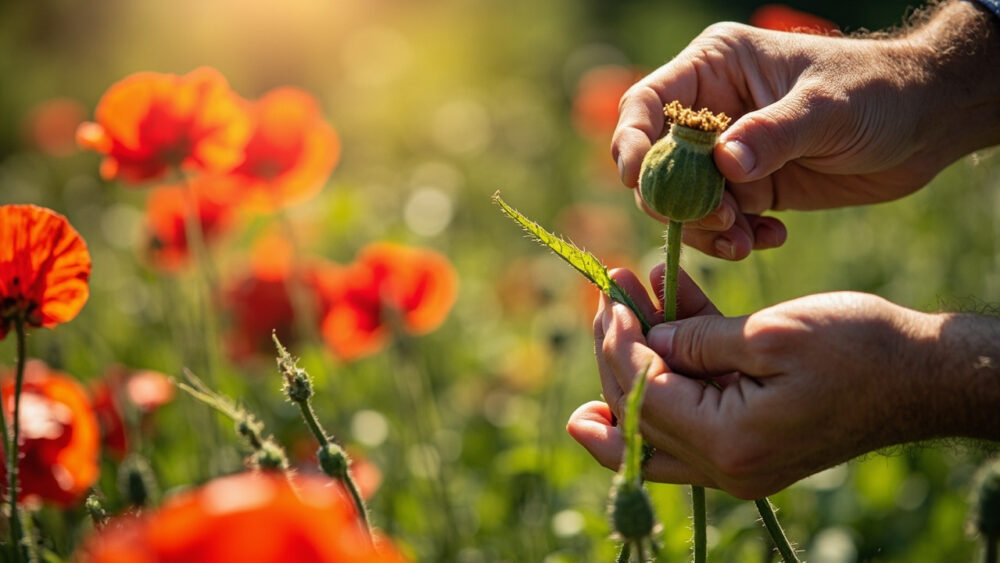
You deadhead poppies by snipping the flower stem down to the first full set of leaves or down to the base, as soon as the petals drop and before the seed pod behind them starts swelling and turning papery. Do it with clean, sharp snips, not a pinch, since poppy stems are hollow and bruise easily. That single habit, done every few days through the bloom flush, is how to deadhead poppies without stalling the plant or losing next year’s self-sown seedlings you actually wanted.
Here is where most people go wrong, and it is not the cutting itself. It is timing the cut against the seed pod, and guessing wrong about whether their poppy even wants to be deadheaded at all.
There is also a question right behind this one that almost nobody asks out loud: does deadheading actually mean fewer poppies next year. The honest answer depends on which poppy you are growing, and it surprises people. Stick with this to the end and you will find the save-able Poppies at a Glance card, the one worth screenshotting before you walk back out to the bed.
When to Deadhead, and When to Just Let It Go
The window is right after petal drop, while the swelling seed pod behind the old flower is still green and soft. Once that pod dries to tan or gray and starts to rattle, you have missed the deadheading window and you are now just harvesting seed instead.
Annual poppies like Shirley and California poppy rebloom fastest when cut promptly, often sending up a new bud within seven to ten days in warm weather. Perennial types like Oriental poppy bloom once hard in late spring to early summer and mostly will not rebloom no matter how fast you cut, so deadheading them is about tidiness and seed control, not more flowers.
Stop deadheading about four to six weeks before your average first fall frost if you want a last natural seed drop for next year’s volunteers.
The One Prep Step That Actually Matters
You do not need fancy tools. A pair of clean pruning snips or sharp scissors is enough, and pocketknife-sharp is better than dull, since a clean cut seals faster and bruises less stem tissue.
The prep step people skip is wiping the blades with rubbing alcohol between plants, especially if any leaves nearby show black spotting or a powdery coating. Poppies are not especially disease-prone, but hollow-stemmed plants are quick to rot from a dirty cut in humid weather.
Work in the morning after the dew has dried, when stems are turgid and easiest to cut cleanly, and never right after rain when everything is soft and more prone to tearing.
Get the blade right, and the cut itself takes ten seconds.
Where to Cut and How Much to Take
Follow the flower stem down past the spent bloom to the first junction with a full leaf or side stem, and cut there, not right under the flower head. Cutting too close to the old bloom leaves a bare, ugly stub that just sits there yellowing.
For most annual poppies, that means removing four to eight inches of stem along with the flower.
For clump-forming perennial types, you can cut the whole flowering stalk down to where it meets the basal foliage once every bloom on that stalk has finished, which cleans up the plant’s look for the rest of the season.
Take the stem, not just the petals, and the plant reads it as a clear signal to stop investing there.
Step by Step, Start to Finish
- Check each flower daily once buds start opening, since poppy blooms are fast and petals can drop within two to four days.
- The moment petals have dropped and the pod is still green, trace the stem down to the nearest leaf junction.
- Cut cleanly at an angle just above that junction.
- Drop the cut stems into a bucket rather than tossing them onto the bed, since a fallen pod can still ripen and shed seed where it lands.
- Repeat every three to five days through the main bloom period.
That five-step loop is the entire skill, repeated for as many weeks as the plant keeps flowering.
What Happens After You Cut
On annual poppies, expect a visible new bud within a week to ten days in warm conditions, a bit slower if nights are still cool. The plant redirects the energy it would have spent ripening seed into a fresh flush of buds instead.
If you assumed the plant would look better immediately after cutting, brace yourself, because for a day or two it often looks worse, with a bare stem and no flower where one used to be.
That gap closes fast. By the second week of consistent deadheading, most annual poppy plants are noticeably bushier and carrying more buds at once than they would if left to seed.
Perennial Oriental poppies respond differently: the foliage itself often yellows and dies back by midsummer regardless of deadheading, which is normal dormancy, not a sign you did something wrong.
Knowing which response to expect from your specific poppy is exactly what keeps you from panicking at the wrong moment, which is the mistake most people make next.
The Mistakes That Cost You Flowers, Seed, or Both
Deadheading every last bloom on a self-seeding annual poppy is the classic overcorrection. California poppy, Shirley poppy, and breadseed poppy all rely heavily on self-sown seed to fill the bed again next spring. If you deadhead one hundred percent of the flowers all season, you can genuinely deadhead yourself out of next year’s poppies.
The fix is simple: deadhead most blooms for a longer flowering season, but let the last flush of the year go to seed and drop naturally.
- Cutting too high, right under the flower head: leaves ugly bare stubs that never look better, only worse as they yellow.
- Pinching instead of cutting: tears the hollow stem and invites rot, especially in humid weather.
- Waiting until the pod has dried and rattles: at that point you are not deadheading anymore, you are harvesting seed, and the plant has already stopped putting energy into new blooms.
- Deadheading a perennial Oriental poppy expecting rebloom: it will not rebloom on the same stalk this season no matter how fast you cut, so do it for tidiness, not for more flowers.
- Tossing cut stems back onto the mulch: a pod that was more mature than it looked can still finish ripening on the ground and reseed exactly where you did not want it.
Avoid those five and deadheading poppies stops being a chore you second-guess and just becomes a quick pass through the bed every few days.
Poppies at a Glance
- When to deadhead: immediately after petals drop, while the seed pod behind the flower is still green and soft.
- Where to cut: down the stem to the first full leaf junction, four to eight inches below the spent bloom on most annuals.
- Tools needed: clean, sharp snips or scissors, wiped with rubbing alcohol between plants.
- Rebloom timing: new buds on annual poppies within about seven to ten days of a warm-weather cut.
- Perennial types like Oriental poppy: deadhead for tidiness only, expect no rebloom on that stalk, and expect normal midsummer foliage dieback.
- When to stop deadheading: four to six weeks before your first fall frost, so the last flush can seed naturally if you want volunteers.
- Biggest mistake to avoid: deadheading every single bloom all season on self-seeding annual types, which can eliminate next year’s poppies.
Cut clean, cut promptly, and leave the last flush of the season alone.
That one habit gets you more flowers this year and more poppies next year, without any guesswork in between.