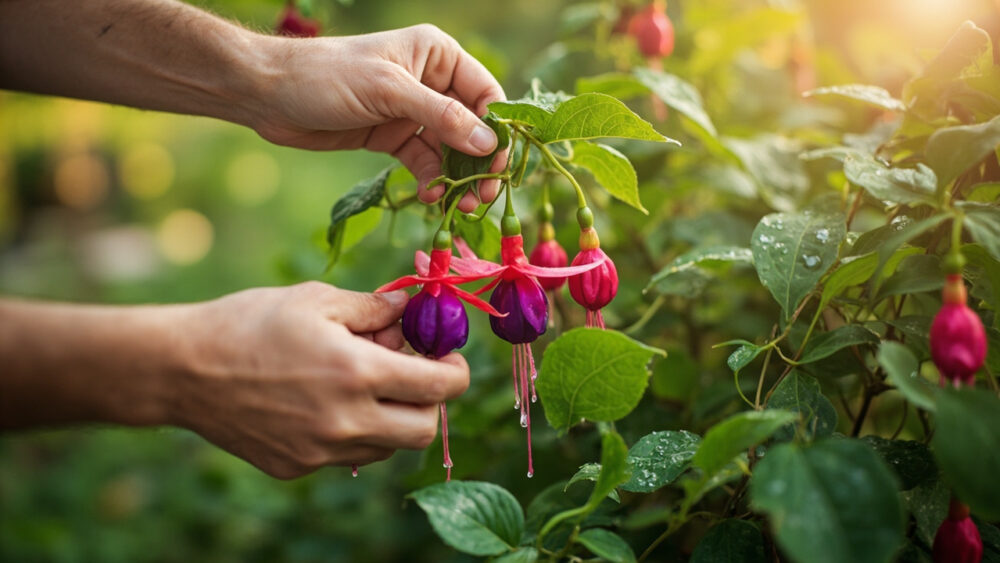
Care for fuchsias by giving them bright, indirect light instead of hot afternoon sun, keeping the soil consistently moist but never soggy, and feeding them regularly through the growing season since they bloom nonstop on new growth. Get those three things right and a fuchsia will flower from late spring until frost. Get any one of them wrong and you will spend the summer wondering why a plant that looked so good at the nursery is dropping buds on your porch.
Most people who kill a fuchsia make the same mistake, and it is not underwatering. It is sun and heat, usually delivered with the best of intentions by someone who set the hanging basket in a spot that looked sunny and cheerful in the store but turns into an oven by July.
There is also a sign almost everyone misreads: a fuchsia dropping its flower buds before they open looks like a disease or a pest, but it is almost always stress, and the real cause surprises people. Stick around, because the honest answer to “why does mine look leggy and sparse by midsummer” is down in the pruning section, and the full at-a-glance care card is waiting at the bottom for you to save to your phone.
Light, Placement, and Temperature
Fuchsias want bright light without direct, hot sun. Morning sun followed by afternoon shade is close to ideal. In genuinely hot climates, filtered light all day works better than any direct sun at all.
Temperature matters more than most flowering plants. Fuchsias sulk once daytime temperatures climb past 80 to 85°F, and they stop setting new buds almost entirely in real heat. They are happiest in the 60 to 75°F range, which is why they perform best in spring and fall and often stall out in the peak of summer.
If you live somewhere with hot summers, an east-facing porch or a spot under high, open tree shade will keep a fuchsia blooming far longer than a south or west exposure ever will.
Get the light right and the next question is almost always about the watering can.
Watering Fuchsias Without Drowning Them
Fuchsias have shallow, fibrous roots and thin leaves, and they wilt fast when the soil dries out. The honest rule is to water when the top inch of soil feels dry to the touch, not on a fixed schedule. In hot weather or a hanging basket in full sun, that can mean daily watering.
The mistake that trips people up is not underwatering, it is poor drainage. A fuchsia that sits in a saucer of standing water or a pot with no drainage hole will develop root rot long before it ever looks thirsty. Wilted leaves can mean too dry or too wet, and the only way to tell the difference is to actually check the soil with your finger before you reach for the can.
Water thoroughly until it runs from the drainage holes, then let the pot drain completely. Never let a fuchsia stand in water for more than a few minutes.
Once the water routine is dialed in, feeding is what decides how many flowers you actually get.
Soil and Feeding for Nonstop Bloom
Fuchsias need a light, well-draining potting mix, not garden soil. A standard peat or coir-based potting mix with some perlite added drains well enough while still holding the moisture fuchsias want.
Because they bloom continuously on new growth, fuchsias are hungry plants. Feed every one to two weeks during active growth with a balanced liquid fertilizer diluted to label strength, or use a slow-release fertilizer at potting time and supplement with a diluted liquid feed through summer. A fertilizer a little higher in phosphorus and potassium relative to nitrogen encourages more flowers and less leafy growth.
Skip feeding once a plant slows down in real heat or as it heads toward dormancy in fall. Feeding a stressed or dormant plant does not help and can burn the roots.
Feeding keeps the flowers coming, but pruning is what keeps the whole plant from falling apart by midseason.
Pruning, Repotting, and the Leggy Midsummer Problem
Here is the answer to that leggy, sparse look everyone blames on disease or bad luck: it is usually just an unpinched fuchsia. Left alone, fuchsias grow long single stems with flowers only at the tips, which is exactly the thin, leggy shape that shows up by midsummer.
The fix is regular pinching, not a rescue spray. Pinch out the growing tips of young stems every few weeks in spring, which forces the plant to branch and produces two or three times as many flowering shoots. Deadhead spent blooms and seed pods too, since a fuchsia that is allowed to set seed slows down its flower production noticeably.
Repot into a slightly larger container each spring as growth resumes, using fresh potting mix. If you overwinter a fuchsia indoors, cut it back by a third to a half in late winter before new growth starts, which resets the plant instead of letting it limp along on old, tired wood.
Even a well-pruned, well-fed fuchsia still runs into a short, predictable list of problems.
Common Fuchsia Problems and Honest Fixes
Bud drop, sudden and total, is almost always heat stress, a dry-out event, or a recent move to a new location. There is no fix for buds already lost, but consistent watering and better shade placement will bring new buds within a couple of weeks.
Fuchsia gall mite is a real and serious pest in many regions, causing thickened, distorted, reddish new growth that never opens normally. There is no reliable home cure once it takes hold, and badly affected plants are usually best discarded rather than nursed along, since the mites spread easily to nearby fuchsias.
Whitefly and aphids show up as sticky residue or a cloud of tiny insects when you brush the leaves, and are treated with insecticidal soap or a labeled insecticide, applied exactly as the product directs.
Yellowing lower leaves with the soil staying wet point to overwatering or poor drainage, not a nutrient problem, so check the roots before you reach for fertilizer.
- Bud or flower drop: heat stress, sudden dry-out, or recent relocation.
- Distorted, reddish new growth: fuchsia gall mite, often not curable, consider removing badly infected plants.
- Sticky leaves or visible insects: aphids or whitefly, treat with insecticidal soap per label.
- Yellow lower leaves, wet soil: overwatering or drainage problem, not a feeding issue.
Once you have ruled out these usual suspects, it helps to know what a genuinely happy fuchsia actually looks like.
Signs Your Fuchsia Is Actually Thriving
A thriving fuchsia is bushy, not stringy, with flowers along multiple branch tips rather than just one or two at the ends of long bare stems. New growth should be a healthy green, not reddish or curled.
Continuous budding is the real tell. A fuchsia that is happy will always have a mix of buds, open flowers, and spent blooms at once, cycling through rather than flowering in one big burst and stopping. That steady overlap means your light, water, and feeding are all landing in the right range.
If growth has slowed and flowering has mostly stopped with cooler weather, that is not failure, it is the plant heading toward its natural rest period.
Save this next part, because it is everything above in a form you can actually check while standing at the plant.
Fuchsias at a Glance
- Light: bright, indirect light or morning sun with afternoon shade, no hot direct afternoon sun.
- Temperature: best between 60 and 75°F, growth and blooming stall above about 85°F.
- Watering: water when the top inch of soil is dry, keep evenly moist, never let pots stand in water.
- Soil: light, well-draining potting mix with added perlite, never dense garden soil.
- Feeding: balanced liquid fertilizer every one to two weeks during active growth, stop in heat or dormancy.
- Pruning: pinch growing tips every few weeks in spring, deadhead spent blooms, cut back by a third to a half in late winter if overwintering.
- Watch for: bud drop from heat or dry-out, distorted red growth from gall mite, sticky leaves from aphids or whitefly.
If you remember one thing, remember that fuchsias fail from heat and neglectful pinching far more often than from underwatering.
Keep them cool, keep them pinched, and they will keep blooming for months.