The fastest, most reliable way to propagate angel wing begonia is a stem cutting with at least two nodes, set in water or damp potting mix, kept warm and out of direct sun until roots show, usually two to four weeks. Skip the rooting hormone worry, you rarely need it. What actually sinks most attempts has nothing to do with the cutting itself and everything to do with what you do to it in week two.
There’s a mistake almost everyone makes with the leaf-only cutting, thinking a single leaf will grow you a plant the way it does with a snake plant or succulent. It won’t, not with this begonia, and I’ll explain exactly why below. There’s also a sign people misread as failure when it’s actually the cutting doing exactly what it should.
Stick with me through the sections below on cutting selection, rooting method, potting up, and the mistakes that quietly kill cuttings that were doing fine a week earlier. At the bottom you’ll find the Angel Wing Begonia at a Glance card, save-able to your phone, with the numbers you’ll actually need this weekend.
Choosing and Taking the Right Cutting
Pick a stem that isn’t flowering and isn’t brand new growth, look for one that’s slightly firm, about pencil-thick, with two or three nodes visible along it. Cut it 4 to 6 inches long, just below a node, using clean scissors or a sharp knife.
Strip the lowest one or two leaves so you have bare nodes to submerge or bury. Leave the upper leaves intact, they’re feeding the cutting while it works on growing roots.
This is where the leaf-only guess falls apart: angel wing begonias root from stem nodes, not leaf tissue alone. A single leaf with no node might survive a while in water but it will not produce a new plant.
The cutting is ready, but where you put it next matters more than people think.
Water Rooting vs. Soil Rooting
Water rooting is the easiest way to watch progress, and it’s genuinely reliable for this plant. Submerge the bottom node or two in a jar, keep it in bright, indirect light, and change the water every four or five days so it doesn’t go cloudy or start to smell.
Roots usually show in 2 to 4 weeks. Once they’re an inch or two long, pot up into soil, roots grown in water need a short adjustment period in soil, so don’t expect zero transplant shock.
Soil rooting skips that adjustment. Dip the cut end in rooting hormone if you have it (optional, not essential), bury one node in a small pot of moist, well-draining mix, and cover loosely with a clear bag or dome to hold humidity.
Keep the mix damp, not wet, and check for resistance by tugging gently after three weeks, resistance means roots have formed.
Either method works, but what happens the next week decides whether the cutting actually makes it.
The Week-Two Mistake That Kills More Cuttings Than Rot Does
Here’s the sign everyone misreads: a rooting cutting often droops or yellows a lower leaf around day 10 to 14. Most people panic, assume rot, and yank it out to check, disturbing roots that were just getting started.
That droop is usually normal. The cutting is redirecting energy into root growth and shedding a leaf it can no longer support. Leave it alone.
The real killer is impatience with checking. Constantly lifting a soil cutting to inspect roots, or changing water daily out of anxiety, disturbs the fragile root hairs forming at the node.
Real rot smells sour and turns the stem soft and mushy at the cut end, not just a yellow leaf up top. If you see that, the cutting is done, start a fresh one rather than trying to save it.
Once true roots are an inch long and new leaf growth starts, you’re past the danger window.
Potting Up the Rooted Cutting
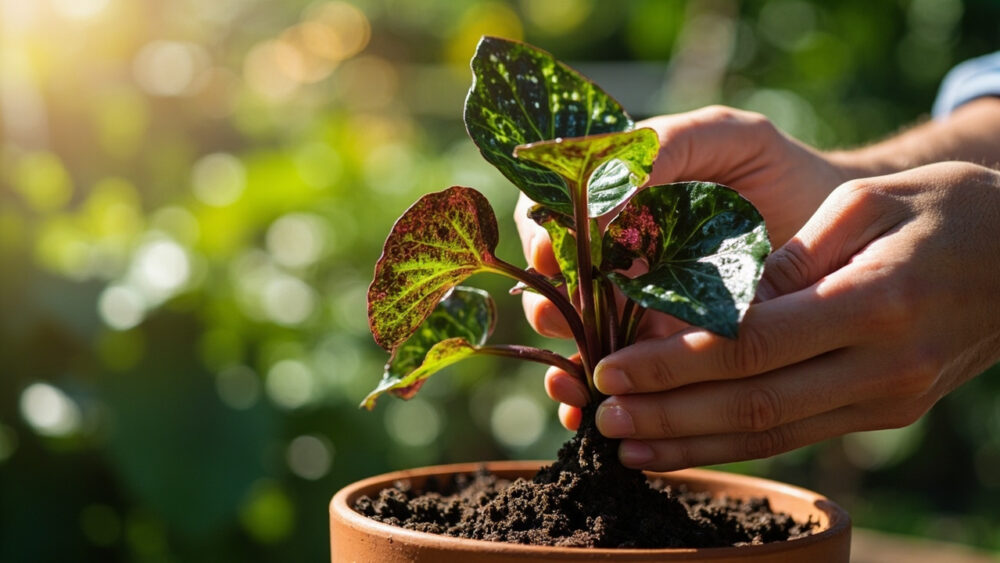
Move a rooted cutting into a pot only one size up from its rootball, angel wing begonias actually prefer being slightly snug in their pot. A 4 to 6 inch pot suits a fresh cutting fine.
Use a light, fast-draining mix, a standard potting soil cut with perlite works well. Water it in once, then let the top inch dry before watering again.
Give the new plant bright, indirect light, avoid direct sun for the first couple weeks while it settles in.
From here, the plant’s needs shift from rooting mode to steady growth, and that starts with light.
Light, Placement, and Temperature
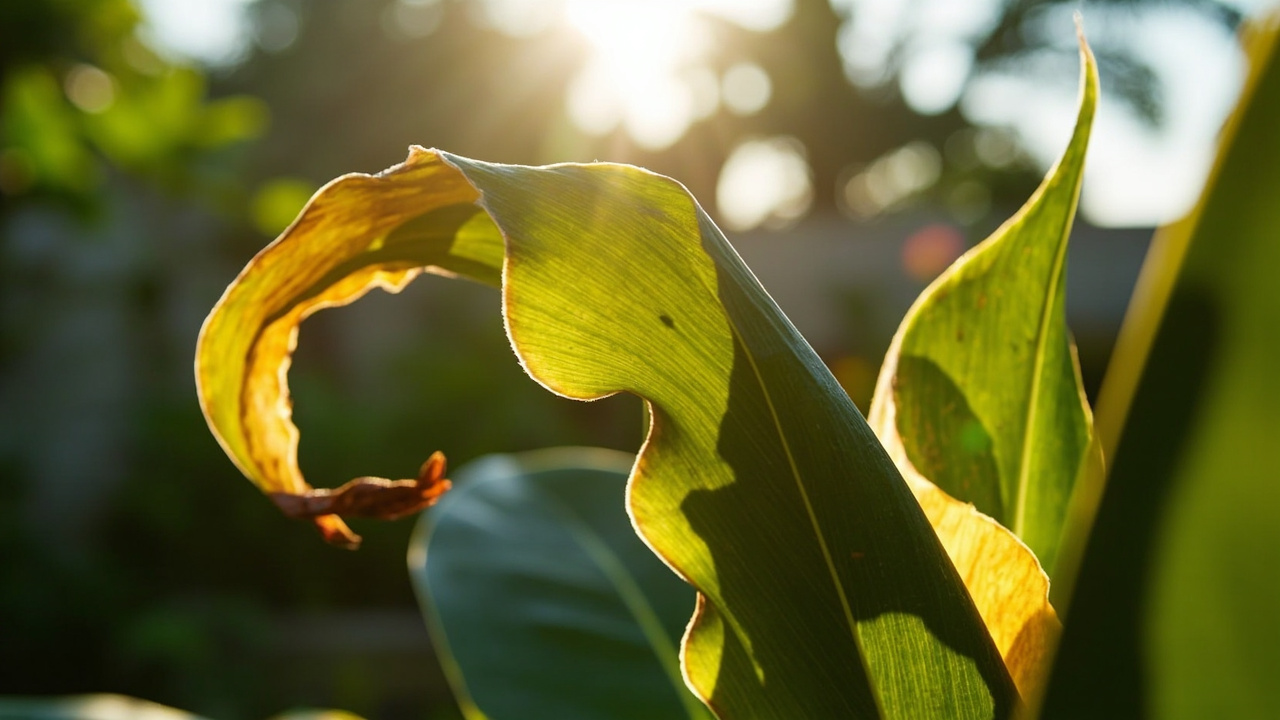
Angel wing begonias want bright, indirect light, an east or filtered south window is ideal. Direct afternoon sun scorches the leaves, showing up as bleached or brown patches.
Too little light and the plant tells you plainly, it stretches, leaf color fades, and the silver spotting many varieties show goes flat and dull.
Keep the room between 65 and 80°F. Below 55°F the plant sulks and stops growing, and it doesn’t tolerate frost or cold drafts near a winter windowsill.
Humidity above 40 percent keeps leaf edges from crisping, a bathroom or kitchen with steady moisture in the air works well.
Light sets the growth rate, but water is where most of the day-to-day decisions happen.
Watering: How Much, How Often, How to Tell
Water when the top 1 to 1.5 inches of soil feel dry, not on a fixed schedule. Depending on light and season that’s roughly every 7 to 10 days, longer in winter.
Angel wing begonias are more forgiving of underwatering than over. Soggy, constantly wet soil rots the rhizomatous base faster than almost anything else that goes wrong with this plant.
Check by pushing a finger to the first knuckle. Bone dry means water thoroughly until it runs from the drainage hole, damp still means wait.
Limp, soft stems near the soil line paired with yellowing lower leaves usually mean overwatering, not underwatering, even though the plant looks thirsty.
Get the water right and the next question is almost always about feeding.
Soil, Potting Mix, and Feeding
Use a loose, well-draining mix, standard potting soil with 20 to 30 percent perlite or orchid bark added prevents the compaction this plant hates.
Repot every 12 to 18 months, or when roots circle the pot’s edge, angel wing begonias don’t mind being a little pot-bound so don’t rush this.
Feed with a balanced, diluted liquid houseplant fertilizer every 3 to 4 weeks during spring and summer. Skip feeding in fall and winter when growth naturally slows.
Over-fertilizing shows up as crispy brown leaf edges even when watering is correct, so when in doubt, feed less.
Feeding keeps growth steady, but the plant also needs some regular hands-on upkeep to stay full and attractive.
Pruning, Repotting, and Routine Cleanup
Pinch or cut back leggy stems in spring, this is also your best source of fresh propagation material. Cutting just above a node encourages two new stems to branch out below the cut.
Remove yellow or spent leaves promptly, and wipe dust off leaves every few weeks with a damp cloth, dusty leaves take in less light.
Deadhead spent flower clusters to keep the plant tidy and focused on foliage and new stem growth rather than seed production.
A leggy, top-heavy plant isn’t dying, it just needs the pruning most people are hesitant to do.
Problems Most Likely to Strike
Powdery mildew shows as a white dusty coating on leaves, usually from poor air circulation and high humidity without airflow. Space plants apart and increase ventilation, a fungicide labeled for houseplants can help if it’s already spread, follow the product label exactly.
Bacterial leaf spot causes water-soaked brown spots, remove affected leaves and avoid wetting foliage when watering.
Mealybugs and spider mites are the most common pests, look for cottony white clusters in leaf joints or fine webbing under leaves. Wipe pests off with a damp cloth or treat with insecticidal soap, following the label.
Angel wing begonia is considered toxic to pets, particularly the underground parts, and can cause drooling, vomiting, or irritation if chewed or ingested. If you suspect a pet has eaten any part of it, contact your veterinarian rather than waiting to see what happens.
Most of these problems are preventable with the same routine, good airflow, correct watering, and a clean plant.
How to Tell It’s Actually Thriving
A thriving angel wing begonia pushes new leaves regularly through the growing season, each one slightly larger than the last, with clear, vivid color and silver spotting if the variety has it.
Stems stay upright without needing support, and the plant produces those drooping clusters of pink or white flowers on and off through spring and summer.
If growth has stalled and leaves look pale or small, it’s almost always light, not a mystery disease, check your window before you check anything else.
Once you’ve got a plant growing well, propagating from it becomes easy, and that loop closes right back to where we started.
Angel Wing Begonia at a Glance
- Best cutting to take: a 4 to 6 inch stem section with two or three nodes, not a single leaf.
- Rooting time: 2 to 4 weeks in water or damp soil, warm room, bright indirect light, no direct sun.
- Light needs: bright, indirect light, east or filtered south window, direct sun scorches leaves.
- Watering rule: water when the top 1 to 1.5 inches of soil are dry, roughly every 7 to 10 days.
- Temperature range: 65 to 80°F, no lower than 55°F, no cold drafts.
- Feeding schedule: diluted balanced fertilizer every 3 to 4 weeks in spring and summer, none in fall and winter.
- Pet safety: toxic to pets, especially underground parts, contact a veterinarian if ingestion is suspected.
Get the light and the watering right and everything else about this plant falls into place.
Take the cutting, be patient through that awkward second week, and you’ll have a new plant before you’ve stopped second-guessing yourself.