How to care for schefflera comes down to four things it will not compromise on: bright indirect light, a pot that drains fast, water only when the top two inches of soil have dried out, and warmth above 55°F at all times. Get those right and schefflera grows fast and forgives almost everything else. Get one wrong, usually the light or the watering, and it starts dropping leaves in a way that looks dramatic but is actually the plant telling you something specific.
Most schefflera “deaths” are not really deaths. They are the plant reacting to one habit, and the fix is almost always smaller than people think. There is also a leaf-drop pattern nearly everyone misreads as a watering problem when it is actually something else entirely, and a leggy, bare-stemmed look that people assume means the plant is old or dying when it just means it got moved once too often or under-pruned for years.
I will get to all of it, including the one mistake that takes down more schefflera than any pest ever has. Stick with me through the sections below and you will hit the full Schefflera at a Glance card at the bottom, the kind of thing worth saving to your phone before you walk away from this plant today.
Light, Placement, and Temperature
Schefflera wants bright, indirect light, several feet back from an unobstructed south or west window, or right up close to an east one. Direct afternoon sun through glass will scorch the leaves into pale, papery patches. Too little light does something sneakier: the plant survives for months, then starts thinning out and reaching, and by the time you notice it is already leggy.
Keep it away from cold drafts, single-pane winter windows, and air conditioning vents. Schefflera holds steady between 65°F and 80°F and starts sulking below 55°F, dropping leaves in protest within a week or two of a cold snap.
Rotate the pot a quarter turn every couple of weeks so growth does not lean permanently toward the light source.
That leaning habit is exactly why so many scheffleras end up looking lopsided by the time people ask about pruning.
Watering: The Habit That Actually Kills It
Here is the mistake that takes down more schefflera than anything else: watering on a schedule instead of checking the soil. This plant would rather run slightly dry than sit wet, and root rot from overwatering is responsible for the vast majority of schefflera failures, not underwatering.
Check the top two inches of soil with a finger before every watering. If it is still damp, wait. Water thoroughly when it has dried out, letting water run through the drainage hole, then empty the saucer so the roots are never standing in it.
In most homes that works out to roughly every 7 to 10 days in spring and summer, stretching to every 2 to 3 weeks in winter when growth slows down. Those numbers shift with pot size, light, and how dry your house runs, so the finger test always overrides the calendar.
If you assumed sudden leaf drop always means the plant is thirsty, that guess is exactly backwards here, and it is the loop worth resolving properly.
The Leaf Drop Everyone Misreads
Yellowing, dropping lower leaves on a schefflera almost always mean overwatering and early root rot, not underwatering. The instinct is to water more because the plant “looks thirsty.” That instinct is what finishes the job.
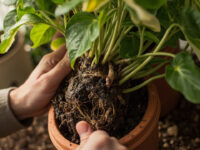
Pull the plant and check the roots if you catch this early: healthy roots are white to tan and firm, rotted roots are brown, mushy, and smell sour. Trim any rot, repot into fresh dry mix, and hold off watering for a week or so afterward.
Once you know what the roots are actually telling you, the rest of care is mostly about soil and food.
Soil and Feeding
Use a well-draining potting mix, a standard indoor potting soil with perlite or bark mixed in works fine, and always plant in a pot with a drainage hole. Schefflera in a dense, water-holding mix is a rot problem waiting to happen no matter how careful you are with the watering can.
Feed monthly during spring and summer with a balanced liquid houseplant fertilizer diluted to about half strength, and skip feeding entirely in fall and winter when the plant is not actively growing. Feeding a dormant plant just builds up salts in the soil and can burn the roots.
New leaves that come in smaller and paler than the older ones are usually a light problem first, a feeding problem second.
Good soil and steady light get you most of the way, but this plant also needs regular upkeep to stay full and shapely.
Pruning, Repotting, and Cleaning: The Routine That Prevents the Leggy Look
That bare-stemmed, leggy shape people blame on age is really a pruning problem. Schefflera branches where you cut it, so pinching or cutting stem tips back in spring encourages bushier, fuller growth instead of long single stems reaching for the window.
Prune anytime spring through summer, cutting just above a leaf node, and do not be shy about taking off up to a third of the plant on an overgrown specimen. It bounces back fast.
Repot every 2 to 3 years, or sooner if roots are circling the drainage hole or the plant dries out within days of watering. Go up one pot size, not two.
Wipe the broad leaves down with a damp cloth every month or so, both to keep them dusting-free and because that is often the first moment you spot pests before they spread.
Speaking of pests, schefflera has a short, predictable list of things that actually go wrong with it.
The Problems That Actually Show Up
Spider mites and scale are the two pests worth watching for. Spider mites show up as fine webbing and stippled, dull leaves, usually in dry winter air. Scale looks like small brown bumps stuck to stems and leaf undersides, often with a sticky residue on nearby surfaces.
Wipe leaves with a damp cloth regularly and treat outbreaks with an insecticidal soap or horticultural oil, following the product label exactly for timing and reapplication.
- Brown, crispy leaf edges: air too dry or a salt buildup from fertilizer, flush the soil thoroughly and raise humidity.
- Sudden leaf drop: usually a temperature shock or overwatering, check the roots and the thermostat before anything else.
- Leggy, bare stems: not enough light or not enough pruning, move it brighter and cut it back.
Schefflera is mildly toxic to cats and dogs and to people if chewed or swallowed, causing mouth and throat irritation, drooling, and vomiting. If you suspect a pet or a child has eaten any part of it, call a veterinarian or poison control and let them guide you, do not try to treat it at home.
Once the pest and light issues are handled, the plant tends to settle into a very obvious rhythm of good health.
How to Tell It Is Actually Thriving
A thriving schefflera pushes out new leaves that unfurl glossy and evenly colored, not pale or curled. You will see one every few weeks during spring and summer, sometimes faster in very bright rooms.
Sturdy, upright stems that do not need staking, and leaflets that sit flat and full rather than drooping by afternoon, are the other tell. A happy plant also tolerates a missed watering day without dramatics.
If yours is doing all of that, you are past the fussy stage, and what is left is mostly maintenance.
That maintenance routine is short enough to fit on one card, so here it is.
Schefflera at a Glance
- Light: bright, indirect light year round, a few feet back from a south or west window or close to an east one, no direct afternoon sun through glass.
- Watering: check the top two inches of soil first, water thoroughly when dry, roughly every 7 to 10 days in active growth and every 2 to 3 weeks in winter.
- Temperature: keep it between 65°F and 80°F, protect it from drafts and anything below 55°F.
- Soil: a well-draining potting mix with perlite or bark, always in a pot with a drainage hole.
- Feeding: balanced liquid fertilizer at half strength once a month in spring and summer, none in fall and winter.
- Pruning and repotting: prune spring through summer to encourage bushiness, repot every 2 to 3 years into one pot size up.
- Watch for: spider mites and scale, brown crispy edges from dry air or salt buildup, leaf drop from cold or overwatering.
If you remember one thing, remember this: check the soil with your finger before you water, every time.
That single habit prevents the one problem that ends most schefflera for good.