Bright, indirect light, water when the top two to three inches of soil dry out, and something for it to climb. That is monstera care in one sentence. Get those three things right and the rest, feeding, humidity, pruning, is just maintenance around the edges.
But there are a few things that trip up almost everyone who buys one of these. The mistake that stalls out most monsteras has nothing to do with light or water, it is a pot problem nobody thinks to check. There is also a sign of a happy monstera that looks, to a new owner, exactly like a sign of a sick one. And there is an honest answer to the question every monstera owner eventually asks: why won’t mine split its leaves like the ones in photos.
I will answer all of that as we go, and at the bottom there is a save-able Monstera at a Glance card with the numbers you’ll want to check again in three weeks when you’ve forgotten them.
Light, Placement, and Temperature
Monstera wants bright, indirect lightthe kind you get a few feet back from an east or west window, or right in front of a north window in a sunny climate. Direct south sun through unfiltered glass will scorch the leaves into brown, papery patches. Too little light and the plant survives but never produces the split leaves it’s famous for.
Rotate the pot a quarter turn every couple of weeks so it doesn’t grow lopsided toward the window. Keep it away from cold drafts, heating vents, and any spot that dips below 55°F. Ideal daytime temps run 65 to 85°F, which is to say, if you’re comfortable, so is the plant.
Now about the pot problem that stalls growth before light even matters.
Watering: The Mistake That Ruins Most Attempts
Here’s the guess almost everyone makes: monstera is a big, leafy tropical plant, so it must want a lot of water on a strict schedule. That guess is what kills them. Overwatering, not underwatering, is the number one reason monsteras decline.
Check the soil, not the calendar. Stick a finger two to three inches down. If it’s still damp, wait. If it’s dry, water thoroughly until it runs from the drainage holes, then dump the saucer.
Depending on light, pot size, and season, that usually lands somewhere between every 7 and 14 days, less in winter when growth slows way down. Drooping, yellowing lower leaves usually mean too much water sitting at the roots, not too little. A plant that’s genuinely thirsty droops but perks right back up within hours of a drink; one that’s overwatered stays limp and the yellow spreads.
The pot itself matters as much as your watering habit.
Soil, Drainage, and Feeding
Use a chunky, fast-draining mixa standard indoor potting soil amended with perlite, orchid bark, or coarse coco chunks so water moves through instead of pooling around the roots. Straight dense potting soil in a pot with no drainage hole is the quiet killer behind most “overwatering” cases, because the water never had anywhere to go.
Always use a pot with a drainage hole.
Feed monthly during spring and summer with a balanced liquid houseplant fertilizer diluted to about half strength, and skip feeding entirely in fall and winter when the plant is barely growing. Fertilizer won’t fix a light problem, and it can burn roots on a plant that’s already stressed from bad drainage.
Good soil and steady light set up the next stage: giving the plant something to actually do.
Pruning, Repotting, Cleaning, and the Climbing Question
Give it a moss pole or stake to climb once it has three or four mature leaves. This is the part everyone underestimates: monstera is a vining, climbing plant in the wild, and a plant left to sprawl unsupported puts out smaller leaves with less dramatic splits, even in good light. Tie the stem loosely to the pole as it grows and let the aerial roots grab on.
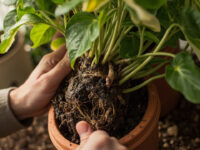
Repot every 1 to 2 years, or whenever roots are circling the drainage holes or poking out the top of the soil, sizing up one pot diameter (2 inches or so) at a time. Spring and early summer are the best windows, while the plant is actively growing and can recover fast.
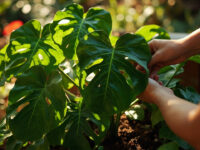
Wipe the leaves down with a damp cloth every few weeks. It’s not just cosmetic, dust blocks light and slows photosynthesis, and it’s the easiest way to spot pests early.
Snip off any fully yellowed or brown leaves at the base of the petiole; they won’t turn green again.
Even with all of this right, a few problems show up on almost every monstera eventually.
Problems You’ll Probably See, and What They Actually Mean
Yellow lower leaves almost always mean overwatering or poor drainage, not age. Check the soil moisture and the pot’s drainage before assuming the plant is just shedding old growth.
Brown, crispy edges usually point to low humidity or a buildup of fertilizer salts in the soil. Ease up on feeding and flush the pot with plain water occasionally.
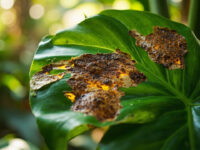
Small brown or yellow spots with a halo can be bacterial or fungal leaf spot, usually from water sitting on leaves or poor air circulation. Remove affected leaves and avoid overhead watering.
- Spider mites: fine webbing and stippled, dusty-looking leaves. Wipe leaves down and treat per the label on an insecticidal soap if it persists.
- Mealybugs and scale: small white cottony clumps or brown bumps along stems. Treat the same way, and isolate the plant while you deal with it.
None of these are usually fatal if you catch them early, but a plant riddled with root rot from months of soggy soil is a harder comeback, sometimes it means starting over from a healthy cutting.
So what does it look like when none of this is going wrong?
Signs Your Monstera Is Actually Thriving
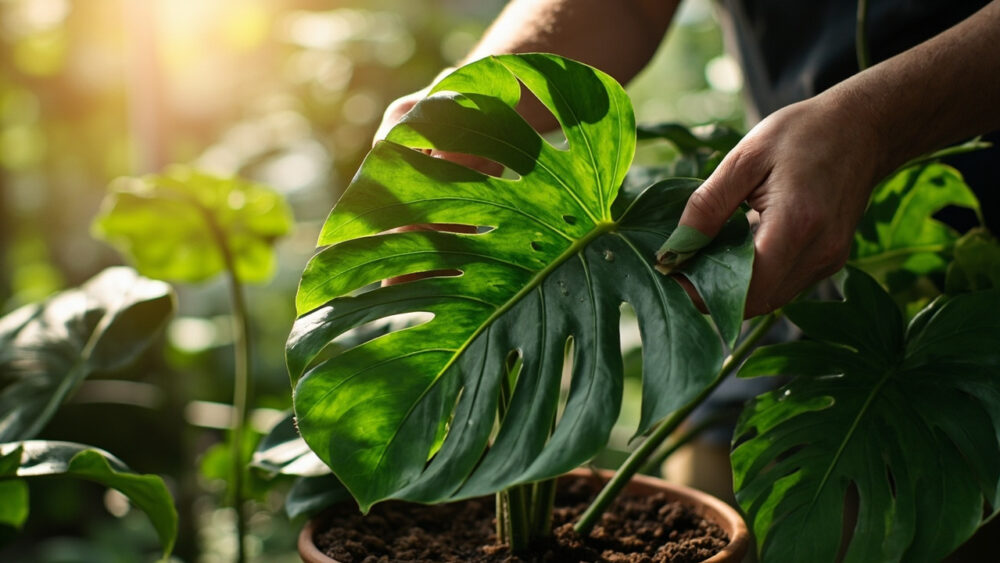
New leaves are the real report card. A happy monstera pushes out a new leaf every 4 to 6 weeks during spring and summer, each one a little bigger than the last, with more pronounced splits (fenestration) as the plant matures.
No split leaves yet isn’t automatically a problem. Young plants and any plant under about 3 feet tall often produce solid, unsplit leaves no matter how good your care is. Fenestration comes with maturity and a plant that’s genuinely established, not from a fertilizer trick or a light hack. If your plant is small and healthy otherwise, the splits are coming, just not yet.
Firm, upright stems, glossy deep-green leaf color, and aerial roots reaching for the pole are all good signs. A little seasonal droop before a scheduled watering is normal, not a crisis.
Keep those signs in mind, and keep the numbers below where you can find them again.
Monstera at a Glance
- Light: bright, indirect light, a few feet from an east or west window or in front of a bright north window, no direct scorching sun.
- Water: water thoroughly when the top 2 to 3 inches of soil are dry, roughly every 7 to 14 days depending on season and light, less in winter.
- Soil: chunky, fast-draining potting mix with perlite or bark, always in a pot with a drainage hole.
- Temperature: 65 to 85°F, keep away from drafts and anything below 55°F.
- Feeding: balanced liquid fertilizer at half strength, monthly in spring and summer, none in fall and winter.
- Repotting: every 1 to 2 years in spring or early summer, one pot size up, or sooner if roots are circling.
- Support: add a moss pole or stake once the plant has 3 to 4 mature leaves for better growth and fuller leaf splits.
If you only remember one thing, check the soil with your finger before you water, not the day on the calendar.
Everything else, the splits, the height, the new leaf every few weeks, follows from getting that one habit right.