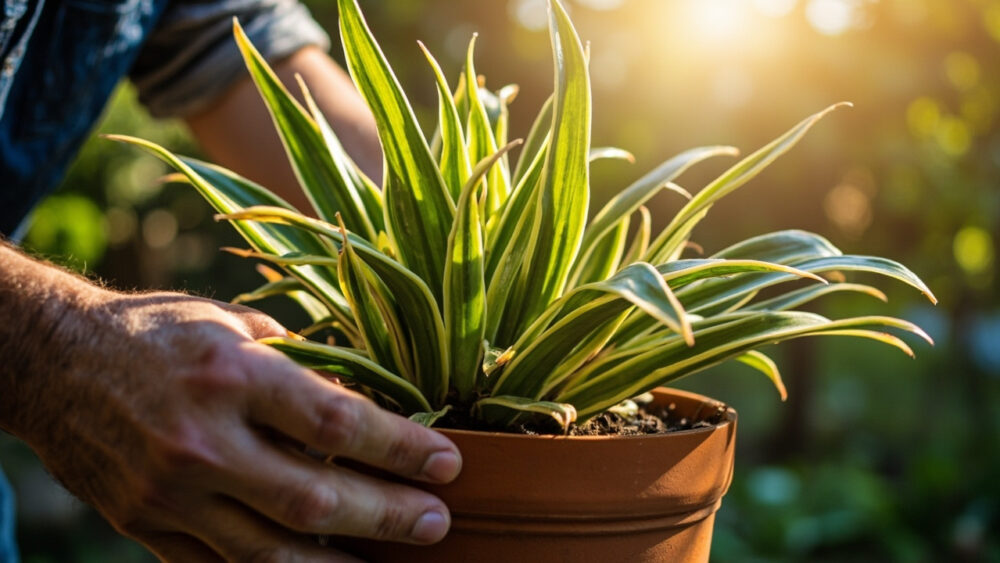
Dracaena wants bright, indirect light, the kind of light you’d get sitting a few feet back from an east or west window. It survives in lower light for months, sometimes years, but it will not look good doing it. That gap between surviving and thriving is where most dracaena owners go wrong, and it’s the first loop I want to close for you.
The second problem nobody warns you about: dracaena’s light tolerance actually shrinks as the plant matures and as seasons change, so the spot that worked fine last spring can quietly become the wrong spot by winter. And the sunburn everyone blames on “too much sun” is very often something else entirely, which trips up even people who’ve kept these plants for years.
Stick with me through the sections below and I’ll walk through what good light actually looks like in a real room, the early signs of too little and too much, how the seasons shift things, and the fixes that don’t involve buying a greenhouse. The saveable Dracaena at a Glance card is at the bottom, screenshot it once you’re done.
The Plain Answer: Bright, Indirect Light
Dracaena (whether it’s a corn plant type, a ‘Janet Craig’, a ‘Lemon Lime’, or a marginata) evolved as an understory plant in tropical forests. It’s used to dappled, filtered sun, not open sky.
Bright indirect light means a spot where you’d comfortably read a book without a lamp, but nothing is casting a hard, sharp shadow. Most dracaena varieties do best with several hours of that kind of brightness a day.
Variegated types like ‘Lemon Lime’ and ‘Warneckii’ want more light than solid green varieties like ‘Janet Craig’ to hold their color. Solid dark green types are the most shade tolerant houseplant you can buy, full stop.
That tolerance is a survival trait, not a growth preference, and that distinction matters more than people think.
What Good Light Actually Looks Like In Your Room
Forget the vague language for a second and look at your actual window. An east-facing window is close to ideal, gentle morning sun, bright the rest of the day, safe to place the plant right on the sill or a few feet back.
A south-facing window in most of the US gets strong, direct sun for hours. Dracaena there should sit 3 to 6 feet back, or be filtered by a sheer curtain.
West-facing windows deliver hot, intense afternoon light. Same rule, several feet of distance or a diffusing curtain.
North-facing windows are the trickiest. They’re fine for the shade tolerant solid green types, but variegated dracaena will slowly fade and stretch there.
A simple gut check: if you can see your plant’s shadow on the wall with a soft, blurry edge, that’s the sweet spot. A crisp, dark-edged shadow means the light is too intense for a plant sitting that close.
Once you know what the light in your room is actually doing, the plant’s own leaves will start telling you if it’s enough.
The Signs of Too Little Light
If you assumed a struggling dracaena just needs more water, that guess kills more plants than low light does on its own. Low light problems show up in growth, not moisture.
Too little light looks like: new leaves coming in smaller and paler than the old ones, long gaps of bare stem between leaf clusters, the plant leaning hard toward whatever light source it can find, and variegated types slowly turning solid green.
Growth doesn’t stop dead in low light, it just slows to a crawl and gets thin and leggy. A dracaena that hasn’t pushed a new leaf in four or five months in winter is not necessarily struggling, but one that’s been stretched and pale for a full year in a bright season needs to move.
The fix is rarely dramatic. Moving the pot 3 feet closer to a window, or into a brighter room altogether, is usually enough.
Too much light causes a different, more alarming set of symptoms, and that’s the one most people misdiagnose.
The Signs of Too Much Light (And the Mistake Everyone Makes)
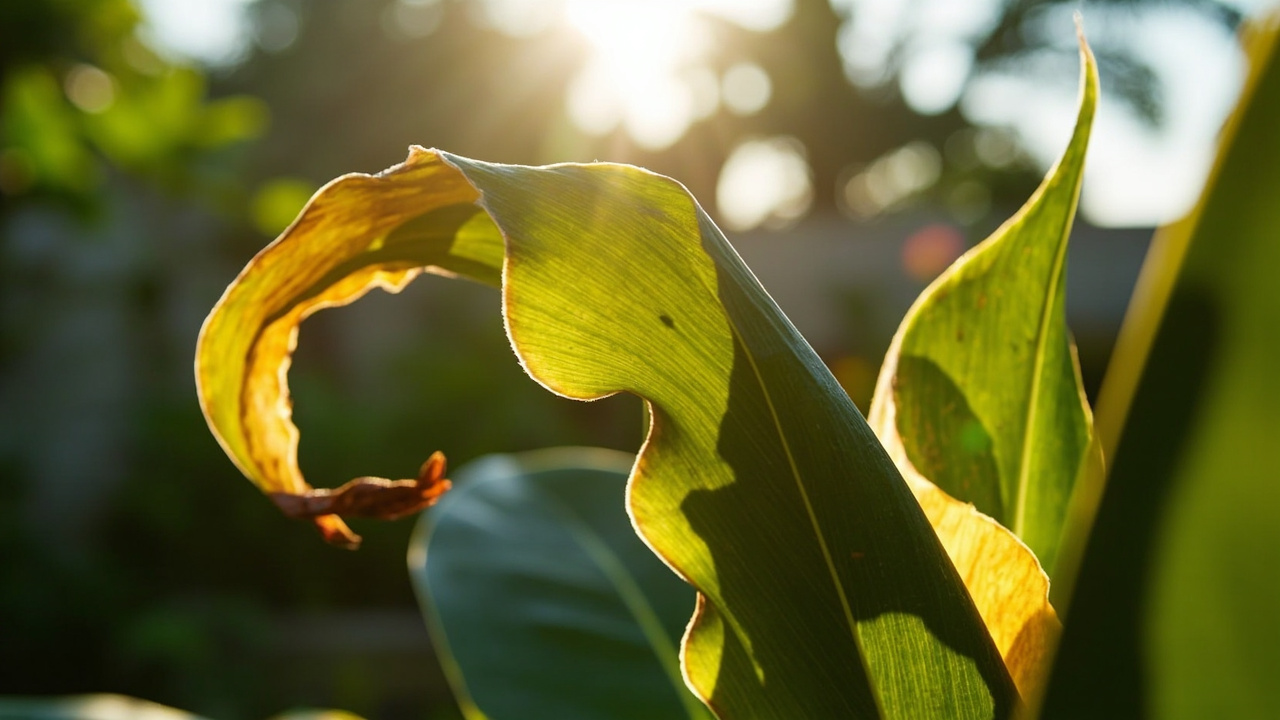
Here’s the subversion: most of what people call “sunburn” on a dracaena is actually a fluoride or salt buildup issue from tap water, showing up as brown, crispy leaf tips and edges. True light scorch looks different.
Actual sun scorch shows up as bleached, papery, tan or white patches on the parts of the leaf that face the sun directly, especially on leaves that were fine until you moved the plant to a brighter spot too fast. It looks washed out, not just brown at the tip.
If you moved your dracaena outside for the summer or into direct sun, and you see pale, sun-struck patches within a week or two, that’s genuine light stress. Move it back a few feet or add a sheer curtain.
If instead you’re seeing brown crispy tips with otherwise green, healthy-looking leaves, that’s much more likely a water quality issue than a light issue, and more light won’t fix it.
Knowing which symptom belongs to which cause saves you from making the wrong fix and losing another season of growth.
Why the Same Spot Stops Working Season to Season
The window that was perfect in June can underlight your dracaena by December. The sun’s angle drops, days shorten, and the actual light intensity reaching an east or south window can fall by half or more in winter, even with clear skies.
Dust on the leaves makes this worse. A dusty leaf surface can block a meaningful amount of usable light, and it’s the single easiest fix nobody bothers to do.
In winter, plants that sat comfortably 5 or 6 feet from a bright window in summer often need to move to 2 or 3 feet, or shift to a south or west window if you have one.
Growth naturally slows in winter regardless of light, so don’t panic if the plant seems to pause. Panic is for leaves that are actively yellowing or dropping, not for a plant that’s simply resting.
Come spring, plan on shifting it back or trimming nearby trees and shrubs that have leafed out and started stealing your light.
None of this requires a greenhouse, and the fixes below are things you can do with furniture you already own.
Placement Fixes That Actually Work
You don’t need a sunroom. You need a few honest habits.
- Rotate the pot a quarter turn every couple of weeks so growth doesn’t lean permanently toward one side.
- Wipe the leaves down with a damp cloth every month or so, dust blocks more light than most people realize.
- Use a sheer curtain as a cheap, permanent fix for a too-intense south or west window instead of constantly moving the pot.
- Add a plant light if your only option is a north window or an interior room with no natural light, a basic full-spectrum grow bulb on a timer for 10 to 12 hours covers the gap.
- Group plants near your brightest window and put the dracaena at the back of that group instead of pushing it into a dim corner elsewhere in the room.
Small, boring adjustments beat buying a second plant to replace the one you lost.
Dracaena at a Glance
- Light needs: bright, indirect light most of the day, tolerates lower light but won’t grow well or hold variegation there.
- Best windows: east facing ideal, south or west facing fine from 3 to 6 feet back or behind a sheer curtain.
- Lowest tolerable light: north facing windows or a few feet from any window, best suited to solid green varieties like ‘Janet Craig’.
- Signs of too little light: pale, small new leaves, long bare stem gaps, leaning toward the light, loss of variegation.
- Signs of true sun scorch: bleached or papery tan patches on sun-facing leaf surfaces, usually after a sudden move into direct sun.
- Common misdiagnosis: brown, crispy leaf tips on otherwise healthy green leaves are usually water quality, not light.
- Seasonal adjustment: move the pot closer to the window, or to a brighter window, from late fall through winter.
If you remember one thing, remember this: bright and indirect beats dim, and it beats scorching direct sun too.
Get the light right and the rest of dracaena care gets a lot more forgiving.