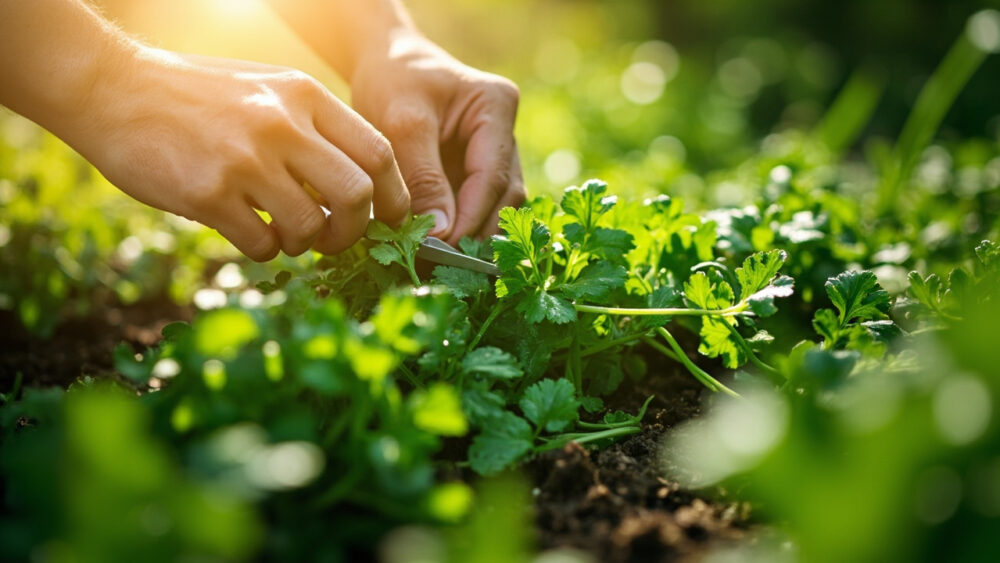
Once cilantro sends up that tall central stalk with feathery leaves and flower buds, you cannot stop it, but you can slow the next round way down. The number one cause is heat, cilantro bolts when soil and air temperatures push past the mid 70s Fahrenheit for several days running, and the fix going forward is shade, cooler timing, and picking a slow-bolt variety. If your plant has already thrown a flower stalk, the leaves on it will taste soapy and thin from here on out, so the real question is what to do next, not how to reverse it.
Everyone blames the pot size or the water schedule first, and sometimes that is part of it, but those are rarely the trigger that actually flips the switch. There is one detail on the plant itself, where the flower stalk emerges and what the leaves around it look like, that tells you exactly which cause you are dealing with. And the honest answer about recovery surprises a lot of people: the plant is not dying, it is just done being a leaf crop.
Stick with this and you will get the full list of causes ranked by how often they actually happen, a side-by-side way to tell them apart, and a save-able two-minute diagnosis checklist at the very bottom of the page.
Most Likely Causes, Ranked
1. Heat stress
Confirm it: check whether daytime temps have been sitting above 75 to 80°F for a week or more, especially if nights have not been dropping below 60°F either. Cilantro reads sustained warmth as a signal to reproduce fast before it dies.
Fix: nothing brings back this batch, but for the next planting, give it afternoon shade, grow it under taller companions, or shift your planting window two to three weeks earlier or later.
Heat is the top trigger, but it is rarely acting alone.
2. Plant age and natural life cycle
Confirm it: count back to when you planted or when the seedling first had two true leaves. Cilantro’s natural lifespan from seed to bolt is often just 40 to 65 days even under decent conditions, faster in heat, slower in cool weather.
Fix: there is no fix for age, only management. Sow new seed every 2 to 3 weeks so a fresh batch is always coming up behind the one that is finishing.
If the plant is simply old, the calendar told you this was coming long before the flower stalk did.
3. Long daylight hours
Confirm it: this shows up most in late spring and early summer when days stretch past 14 hours of light. Cilantro is sensitive to day length, not just temperature, and long days push it toward flowering even if it is not especially hot yet.
Fix: for late-spring and summer growing, choose a slow-bolt or heat-tolerant variety and expect a shorter harvest window regardless of what you do.
This is the cause most people never suspect, because they are watching the thermometer, not the daylight.
4. Root stress from a cramped or dry container
Confirm it: pull the plant slightly and look at the pot size, cilantro has a long taproot and struggles in anything under 8 to 10 inches deep. Feel the soil an inch down, if it swings hard between soggy and bone dry, that stress reads as a threat to the plant.
Fix: transplant is risky since cilantro hates root disturbance, but going forward use deeper containers and keep moisture even, not wet, not dry, just consistently damp.
Root stress rarely bolts a plant on its own, but it speeds up whichever other cause is already in play.
5. Nutrient deficiency, particularly nitrogen
Confirm it: look at the older, lower leaves first, if they are pale green to yellow while the plant is also throwing a flower stalk, thin soil is adding pressure. This is a minor player compared to heat and day length, but it stacks.
Fix: a balanced feeding on a four to six week schedule during the growing period helps the next batch grow leafier for longer, though it will not stop bolting once heat or day length has already triggered it.
Weak soil does not cause bolting by itself, it just removes the plant’s ability to stall it.
How to Tell the Causes Apart
Heat and day length both push the stalk up from the center, fast, with buds appearing within days of the trigger, and older leaves still look decent even as the stalk shoots up.
Age-related bolting looks the same but arrives on schedule regardless of weather, you will notice it happened right around that 6 to 9 week mark from sowing.
Root and nutrient stress show up differently: the plant looks generally unhappy first, pale or stunted, and the bolt comes slower and often paired with leggy, sparse foliage rather than a sudden strong stalk.
Next, the part everyone actually wants to know.
Will It Recover?
Once a true flower stalk with buds has formed, no. The plant has committed its energy to seed production, and leaf quality only gets more bitter and sparse from here. This is not a disease or a mistake you can nurse it out of, it is the plant doing exactly what it is built to do.
You do have options besides pulling it. Let it flower and go to seed, and you get two things: coriander seed for cooking or replanting, and pollinator flowers that beneficial insects genuinely love.
If you want fresh leaf, cut your losses on this plant and start a new sowing now, cilantro from seed to usable leaf takes as little as three to four weeks in decent conditions.
Cutting losses early feels wasteful, but it is faster than waiting on a plant that has already decided its season is over.
How to Keep It From Happening Again
Timing matters more than any other single factor. Sow in cool weather, soil temperatures around 50 to 65°F, which usually means early spring or, in many zones, again in early fall.
Choose a slow-bolt cultivar if you are growing through warmer stretches, they buy you extra weeks before flowering starts.
Give afternoon shade once temperatures climb, even light dappled shade from a taller neighboring plant delays the trigger.
Succession sow every 2 to 3 weeks so you are never dependent on one planting lasting all season.
Keep soil evenly moist and use a deep container from the start, since cilantro resents transplanting once its taproot is established.
None of this stops bolting forever, it just buys you a longer harvest window before it happens.
Diagnosis Checklist
- Look at the center of the plant: if a tall stalk with feathery leaves and small buds is rising above the rest, bolting has already started.
- Check recent daytime temperatures: if they have been above 75°F for a week or more, heat is the likely trigger.
- Check day length: if you are past mid spring with more than 14 hours of daylight, long days are pushing it even without extreme heat.
- Count the weeks since sowing: if you are past 6 to 9 weeks, natural age is a major factor regardless of weather.
- Check the pot or bed depth: if roots are cramped in less than 8 inches of soil, root stress is adding pressure.
- Feel the soil an inch down: if it swings between soaked and dry, inconsistent watering is compounding the bolt.
- Look at the older leaves: if they are pale yellow before the bolt started, nutrient deficiency is likely stacking on top of the main cause.
- Decide your move: if buds have formed, harvest what leaf remains now, let it flower for seed and pollinators, or pull it and sow fresh seed today.
Cilantro is not a plant that forgives heat or long days, it just tells you fast and clearly when it is done.
Work with that instead of against it, and you will always have a fresh batch coming up behind the one that bolted.