Spanish lavender care comes down to three things this plant will not compromise on: full sun, sharp drainage, and a light hand with water. Give it six or more hours of direct sun, a gritty soil that dries out fast, and irrigation that skips a beat, and it will bloom on and off most of the year in mild climates. Mess with any one of those three and you get a leggy, sulking plant that looks nothing like the tidy rabbit-eared bloomer on the plant tag.
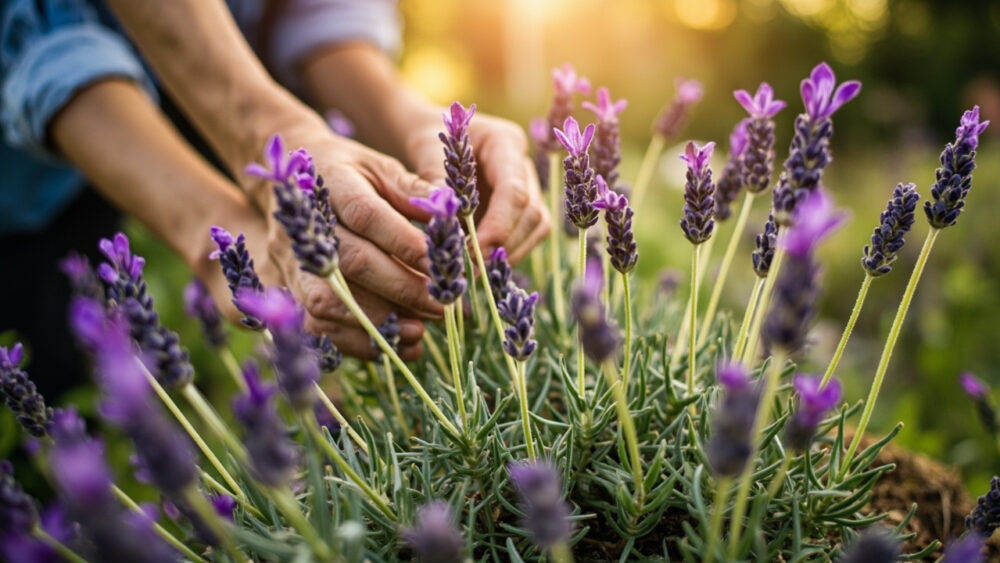
That rabbit-ear look, by the way, is the tell for Spanish lavender specifically. The flower spike has two upright petal “ears” on top, which is how you tell it apart from English or French lavender at the nursery.
Here is what most people get wrong before they even plant it, the pruning mistake that turns a full shrub into a bare, woody skeleton within two years, and the honest answer to whether this lavender comes back after a hard freeze. Stick around for the Spanish Lavender at a Glance card at the bottom, it is built to save to your phone before you head back out to the garden.
Light, Placement, and Temperature
Spanish lavender (Lavandula stoechas) wants full sun, six to eight hours minimum. In part shade it survives but stretches thin, flowers less, and gets floppy stems that flop further after rain.
It is hardy roughly in USDA zones 7 through 9, sometimes 6 with a protected spot and good drainage, but it is noticeably less cold-tolerant than English lavender. A hard freeze below about 15 to 20°F can kill it outright, especially if the soil was wet going into winter.
If you garden colder than zone 7, treat it as a container plant you bring into an unheated garage or cool, bright room for winter. Morning sun with light afternoon shade is fine in the hottest inland climates, but everywhere else, more sun means more bloom.
Cold snaps are survivable, soggy roots during a cold snap usually are not.
Watering: How Much, How Often, How to Tell
Spanish lavender is genuinely drought-tolerant once established, and overwatering is the single fastest way to kill it. Water deeply but infrequently, once the top 2 inches of soil are completely dry.
In the ground, established plants often need nothing beyond rainfall except during real dry spells, maybe once every 10 to 14 days in summer heat. In containers, check more often, pots dry out fast, but still let the soil dry before you water again.
If you assumed wilting leaves mean the plant is thirsty, that guess kills more lavender than drought ever does. Wilting combined with yellowing lower leaves and a soil that is still damp an inch down means root rot, not thirst, and more water makes it worse, not better.
The fix at that point is often to stop watering entirely and let the soil dry out for a week before you touch it again.
Get the water right and the soil question mostly answers itself.
Soil, Potting Mix, and Feeding
Spanish lavender needs soil that drains fast, gritty, sandy, or rocky, with a neutral to slightly alkaline pH around 6.5 to 7.5. Heavy clay that holds water is the number one reason garden-planted lavender fails in its first year.
If your soil is dense, either amend a wide planting area heavily with coarse sand and grit, or better, plant on a raised mound or in a container. In pots, use a cactus or succulent mix, or a standard potting mix cut with extra perlite or coarse sand at roughly one part grit to two parts mix.
Skip the rich compost and skip regular feeding. This plant evolved in lean, rocky Mediterranean soil, and heavy fertilizer produces soft, leggy growth with fewer flowers.
A light dose of balanced fertilizer once in spring is plenty, more than that works against you.
Get the soil right at planting time and you will spend a lot less time troubleshooting later.
Pruning, Repotting, and Routine Upkeep
This is where most established Spanish lavender plants actually die, not from cold or drought, but from a pair of pruning shears used wrong. The plant blooms on new growth, and it needs a hard shape-up every year to keep from turning into a woody, bare-centered mess.
Here is the mistake: waiting until the plant is already woody and leggy, then cutting hard into old bare wood hoping it resprouts. Spanish lavender, unlike some perennials, often will not resprout from bare wood, and a too-hard cut into leafless stems can kill that branch outright.
The fix is to prune lightly and often, starting the first year:
- Right after the first big flower flush fades, shear off spent flower stalks and about the top third of the plant, cutting into leafy green growth, never into bare wood.
- Repeat after each rebloom through the growing season, this plant often reblooms two or three times a year in mild climates.
- In early spring, do a light shaping cut to encourage bushy new growth, still staying in green wood.
Repot container plants every 1 to 2 years, sizing up one pot size and refreshing the gritty mix, since old potting mix compacts and drains worse over time. There is no real cleaning task beyond snipping spent blooms, this is a low-maintenance plant as long as the pruning happens on schedule.
Skip that yearly haircut two years running and you often cannot cut your way back to a full shrub.
Problems Most Likely to Strike
Root rot from overwatering or poor drainage is by far the most common killer, showing up as yellowing lower leaves, blackened stem bases, and a musty smell at the soil line. Cut back watering immediately and improve drainage, and if it is in a container, consider repotting into fresh, drier mix.
Leggy, sparse growth with few flowers almost always traces back to too little sun or too much nitrogen fertilizer, not a disease. Move the pot to a sunnier spot or stop feeding, and prune hard into green wood to force denser regrowth.
Spittlebugs occasionally show up as small foamy blobs on stems, they look alarming but rarely cause real damage, a strong water spray knocks them off. Fungal issues like root and crown rot are the real threat in humid or poorly drained conditions, and prevention through drainage and airflow works far better than any fungicide after the fact.
Spanish lavender is not toxic to dogs, cats, or horses, though large amounts of any plant material can cause mild stomach upset. If a pet eats a large quantity and seems unwell, call your veterinarian rather than waiting it out.
Most problems with this plant trace back to water, which means most of them are preventable.
How to Tell It Is Actually Thriving
A thriving Spanish lavender has silvery-green, aromatic foliage that stays dense down near the base, not just at the tips. The classic rabbit-eared purple, pink, or white blooms should appear in flushes, often starting in mid to late spring and repeating into fall in mild climates.
Healthy plants have a compact, rounded shape rather than sprawling, floppy stems, a sign the pruning routine is working. New silvery growth at the stem tips through the growing season means the plant is actively pushing on, not just holding steady.
If you brush the foliage and get that sharp, camphor-like lavender scent, the plant is healthy, stressed or dying lavender often smells faint or off. That single scent check is one of the fastest diagnostics you have in the whole garden.
Everything above adds up to one simple reference card, saved below.
Spanish Lavender at a Glance
- When to plant: after your last frost once soil has warmed and dried out, spring is ideal, fall works in mild-winter zones.
- Sun and hardiness: full sun, six or more hours daily, hardy roughly zones 7 to 9, grow in containers and overwinter indoors colder than that.
- Watering: deeply but infrequently, only once the top 2 inches of soil are fully dry, never water on a fixed schedule.
- Soil: fast-draining, gritty or sandy, neutral to slightly alkaline, cactus or succulent mix in containers.
- Spacing: 18 to 24 inches apart in the ground, one plant per container with room for the root ball plus 2 inches of mix on all sides.
- Pruning: shear off spent blooms and the top third of growth after each flush, always into green leafy wood, never into bare wood.
- Feeding: light, once in spring, skip it entirely if growth already looks vigorous.
If you remember one thing, remember this: water less than feels responsible, and prune every single year before the plant goes woody.
Get those two habits right and Spanish lavender more or less takes care of itself.