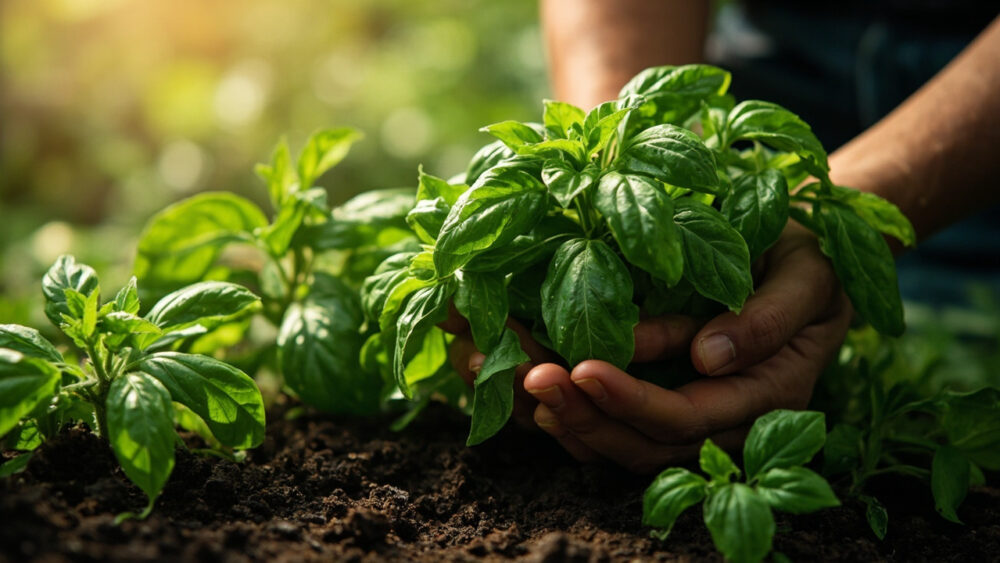
Growing basil comes down to three things: warm soil, full sun, and cutting it often enough that it never gets the chance to flower. Plant it after the soil holds steady heat, give it at least six hours of direct light, and pinch the top every couple of weeks. Get those right and one healthy plant will feed you all summer.
Most people who fail at basil make the same mistake, and it is not a watering problem. It is planting too early, into soil that is still cold from spring, and watching the plant just sit there sulking for a month before it ever takes off.
There is also a sign nearly every new grower misreads completely, a change in the plant that looks like trouble but is actually basil doing exactly what it is built to do if you let it. And there is a harvesting habit that determines whether your plant gives you two cups of leaves or twenty. Stick around for the Basil at a Glance card at the bottom, it is built to save straight to your phone for the rest of the season.
When to Plant Basil
Basil is a heat lover with zero frost tolerance, and it sulks in cold soil even without frost. Wait until nighttime temperatures reliably stay above 50°F and soil temperature is at least 60°F, ideally closer to 70°F. That is usually two to three weeks after your last spring frost date, not right on top of it.
If you plant into soil that is still in the 50s, the seedling will often just stall, sitting there pale and stunted while weeds around it take off. It may never fully recover its growth rate for the season.
In most of the country that means late spring, and in cooler zones (5 and lower) it might be early summer before soil is truly warm enough. There is no prize for planting basil early. A tomato tells you what it wants through its leaves, but basil tells you through pure stubbornness, it simply will not grow until it is warm enough, no matter how good your soil is.
Get the timing right and the next decision is where exactly that warmth and light need to land.
Choosing the Spot and Prepping the Soil
Basil wants full sun, six to eight hours minimum, and it wants it consistently, not dappled shade with a couple bright hours. Less light gives you a leggy, sparse plant reaching for the sun instead of a bushy one.
Soil should be loose, well-drained, and moderately fertile. Basil is not a hungry crop the way tomatoes are, but it does not want to sit in heavy clay that stays wet either.
Work a couple inches of compost into the top 6 to 8 inches of soil before planting. If you are in containers, use a quality potting mix, not garden soil, which compacts fast in a pot and drowns the roots.
A pot needs to be at least 8 to 12 inches wide for a single plant to really fill out. Once the bed or pot is ready, it is time to actually get it in the ground.
Planting Basil Step by Step
Starting from seed indoors
Sow seed about 6 weeks before your last frost date, a quarter inch deep, in trays kept at 70 to 75°F. Basil germinates fast, usually 5 to 10 days, and needs bright light immediately once it sprouts or it gets leggy in a hurry.
Direct sowing outdoors
Once soil is warm enough, sow seed a quarter inch deep, 2 to 3 seeds per spot, thinning to the strongest seedling once they have a couple true leaves.
Transplanting seedlings or nursery starts
- Harden off indoor-started seedlings over 5 to 7 days before transplanting, giving them increasing outdoor time each day.
- Space plants 10 to 12 inches apart for bushy types, closer for compact varieties like dwarf or Greek basil.
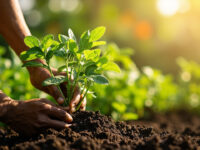
- Plant at the same depth it was growing in the pot, and water it in well immediately.
- Pinch off the top set of leaves right after transplanting to force branching from the start.
That first pinch feels wrong on a small plant, but it is the single habit that decides how bushy this plant becomes.
Watering and Feeding Through the Season
Basil wants consistent moisture, not constant wetness. Water when the top inch of soil feels dry to the touch, which in hot weather might mean every day for container plants, and every few days for in-ground beds.
Underwatered basil wilts dramatically and looks half dead by afternoon, then perks back up fast once watered, so do not panic at the first droop. What you actually want to avoid is soil that stays soggy, which invites root rot and the fungal problems basil is most prone to.
Feed lightly. A balanced fertilizer or a side-dressing of compost every 4 to 6 weeks is plenty. Overfeeding, especially with high-nitrogen fertilizer, pushes soft, fast growth that has weaker flavor and is more attractive to pests.
Mulch lightly around the base to even out soil moisture and keep leaves clean from splashback. Water and feeding keep the plant alive, but what actually threatens a basil patch tends to come from somewhere else entirely.
The Problems Most Likely to Hit Your Basil
The biggest threat to basil is not a pest at all, it is the plant’s own drive to flower, called bolting. Once basil sets flower buds, leaf production slows and flavor turns bitter and grassy.
If you assumed flower buds are a sign your plant is thriving, that guess is backward. Flowering means the plant thinks its job is nearly done and it is switching over to making seed, not more leaves for you.
The fix is simple and non-negotiable: pinch off flower buds and growing tips the moment you see them, every week or two through the whole season.
Beyond bolting, watch for a few common culprits:
- Downy mildew and fungal leaf spot: gray-yellow patches on leaves, usually from overhead watering and poor airflow. Water at the base and space plants for air movement.
- Aphids and Japanese beetles: handpick or treat with an insecticidal soap, always following the product label exactly.
- Slugs: ragged holes in low leaves, especially in damp mulch, controlled with basic slug bait or by keeping mulch from staying constantly wet.
Basil is toxic to no one in normal cooking use, it is a kitchen herb after all, though as with any plant, a pet eating a large unusual quantity is worth a call to your veterinarian rather than guessing.
Keep the plant pinched back and airy, and most of these problems never get a foothold, which brings you to the actual reward for all that maintenance.
When and How to Harvest Basil
Start harvesting once the plant has at least 6 to 8 true leaves and stands roughly 6 to 8 inches tall, usually 4 to 6 weeks after transplanting. Basil matures fast in warm weather.
Cut just above a leaf node, where two smaller leaves are sprouting from the stem, not just individual leaves off the top. This forces the plant to branch into two stems where there was one, which compounds your harvest all season.
Never take more than about a third of the plant at once. Harvest in the morning, when leaf oils and flavor are strongest, before afternoon heat starts burning them off.
Regular cutting is what keeps a basil plant productive for months instead of bolting to flower and fading by midsummer. That habit alone is worth more to your total harvest than any fertilizer schedule.
Basil at a Glance
- When to plant: two to three weeks after last frost, once soil is reliably 60 to 70°F.
- Sun needs: full sun, six to eight hours a day minimum.
- Spacing: 10 to 12 inches apart for standard varieties, closer for dwarf types.
- Planting depth: a quarter inch for seed, same depth as the pot for transplants.
- Watering: when the top inch of soil feels dry, avoiding constantly soggy roots.
- Biggest threat: bolting to flower, prevented by pinching buds and tips every week or two.
- First harvest: 4 to 6 weeks after transplanting, cutting above a leaf node, never more than a third of the plant at once.
Keep the flowers pinched and the scissors moving and basil will outproduce almost anything else in the herb bed.
Skip that one habit, and even perfect soil will not save your harvest.