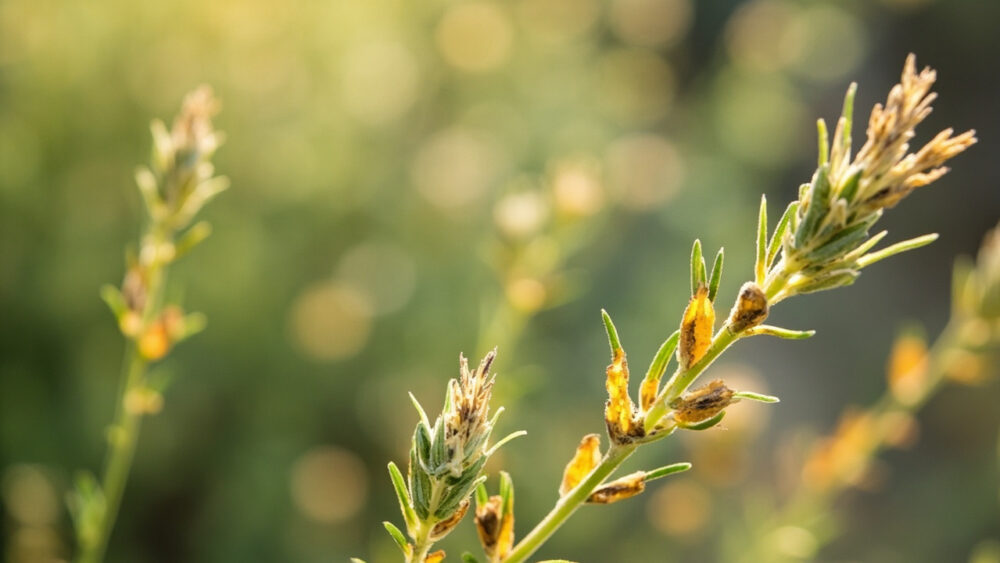
Nine times out of ten, lavender turning yellow means the roots are sitting in water they can’t use, either from heavy soil, overwatering, or a pot with nowhere for water to go. The fix is almost always the same: back off the water and get the roots into faster-draining conditions before rot sets in for good. But that’s not the only cause, and guessing wrong here wastes weeks you don’t have.
Most people blame the sun first, since lavender looks like a plant that gets scorched. It’s usually the opposite problem. The detail that actually tells you which cause you’re dealing with is exactly where the yellow starts on the plant, and that single clue does more diagnostic work than anything else here.
Whether your lavender bounces back depends entirely on which cause you’ve got and how far it’s gone, and I’ll give you the honest answer for each one. Stick with me through the causes and the tell-apart guide, and save the two-minute diagnosis checklist at the very bottom for the next time this happens.
Most Likely Causes, Ranked
1. Overwatering or Poor Drainage
Confirm it: push a finger 2 inches into the soil. If it’s damp or cool a full day or more after your last watering, or the pot has no drainage hole, this is your problem. Yellowing usually starts low on the plant and the base can look grayish or feel soft.
Fix it: stop watering until the top 2 to 3 inches are bone dry. Repot into a container with a real drainage hole and a mix that’s at least half coarse sand, perlite, or grit. In the ground, lavender wants soil that drains fast; if yours stays soggy, raise the bed or move the plant.
That soggy-soil problem has a partner cause that looks almost identical, and it’s the one that ends the plant.
2. Root Rot
Confirm it: gently tip the plant from its pot, or dig a bit at the base in-ground. Healthy lavender roots are firm and pale tan. Rotted roots are brown to black, mushy, and often smell sour or swampy.
Fix it: trim away every rotted root back to firm tissue with clean shears. Repot in fresh, fast-draining mix and water sparingly for the next several weeks. If more than half the root mass is gone, be honest with yourself about the odds.
If the roots check out firm and pale, the cause is somewhere else entirely.
3. Natural Old-Growth Shedding
Confirm it: the yellow leaves are only on the lower, interior, woody parts of the plant, while new growth at the tips stays green and healthy. This is often mistaken for disease when it’s just lavender doing what lavender does.
Fix it: nothing to fix. Snip off the yellowed leaves or stems if you want tidier appearance, and give the plant a light shaping prune after bloom to encourage fresh growth instead of leggy old wood.
If the yellow is spreading upward or showing up on new growth too, keep reading.
4. Nitrogen-Rich Soil or Overfeeding
Confirm it: you’ve fertilized recently, especially with a lawn feed, compost, or a “balanced” fertilizer, and the whole plant looks unusually lush, floppy, and pale yellow-green rather than crisp gray-green. Lavender evolved in lean, rocky soil and does not want rich feeding.
Fix it: stop feeding entirely. Flush a potted plant with plain water a few times to move excess nutrients through, and let the plant sit in poor soil going forward. It genuinely prefers to be a little starved.
There’s one more soil issue that causes the same pale look for the opposite reason.
5. Nutrient Lockout from Wrong Soil pH
Confirm it: your soil is acidic (common in areas with heavy rainfall, pine cover, or peat-heavy potting mix) and the yellowing shows up as an overall pale, washed-out color rather than distinct spots or a bottom-up pattern. Lavender wants slightly alkaline to neutral soil, roughly pH 6.5 to 8.
Fix it: work in garden lime to raise pH in-ground, following the product label rate for your soil volume. In pots, repot into a mix without peat, using compost, grit, and a handful of crushed eggshell or dolomite lime instead.
If the soil and water both check out fine, look at what’s actually feeding on the plant.
6. Pests: Spittlebugs, Whiteflies, or Spider Mites
Confirm it: check the undersides of leaves and stem joints for tiny insects, sticky residue, fine webbing, or the foamy “spittle” masses spittlebugs leave behind. Yellowing here tends to be patchy and scattered rather than following a clean top-to-bottom pattern.
Fix it: hose off light infestations with a strong water spray. For anything persistent, use an insecticidal soap or horticultural oil labeled for the pest, following the product label exactly for mixing and timing.
Sometimes none of the usual suspects are even the real target, and it’s about placement instead.
7. Too Much Shade or Poor Air Circulation
Confirm it: the plant gets fewer than 6 hours of direct sun a day, or it’s crowded against other plants or a wall with little airflow. Growth is often stretched, thin, and pale rather than crisp and gray-green, with yellowing scattered through weaker interior stems.
Fix it: move potted lavender to your sunniest spot, ideally 6 to 8 hours of direct sun. For in-ground plants, thin out crowding neighbors and prune nearby growth back to open up airflow.
Once you’ve got a suspect, here’s how to make sure you’ve got the right one.
How to Tell the Causes Apart
Where it starts matters most. Bottom-up yellowing with soggy soil points to water and rot. Yellowing only on old interior wood with green healthy tips is normal aging, not a problem at all.
Whole-plant pale, washed-out color usually means feeding, pH, or light, not water or pests.
Patchy, scattered yellowing with visible bugs, webbing, or sticky residue is a pest issue, not a soil issue.
A sour or swampy smell at the base, combined with mushy stems, means rot has already started and time matters now.
Once you know which one you’re facing, the next question is how bad it really is.
Will It Recover?
Overwatering caught early recovers well, usually within 2 to 4 weeks of correcting drainage and watering habits. You’ll see new green growth at the tips as the first good sign.
Root rot is a coin flip. Catch it while most roots are still firm and the plant often pulls through after trimming and repotting. If the rot has taken over half the root system or the main stem is soft at the base, cut your losses and start a new plant from a cutting or nursery start instead.
Natural old-growth yellowing needs no recovery because nothing is actually wrong.
Overfeeding and pH issues resolve over a full growing season as the soil balances out, not overnight.
Pest damage reverses once the pest is gone, though heavily chewed or sucked leaves themselves won’t turn green again; new growth will be clean.
Light and airflow issues improve within several weeks of a move, as the plant pushes out sturdier, greener growth in its new spot.
Knowing the odds is one thing, avoiding the repeat is another.
How to Keep It From Happening Again
Water only when the top 2 to 3 inches of soil are dryand never let a pot or garden bed stay wet for days at a stretch. Lavender would rather be underwatered than overwatered, every time.
Plant or pot it in fast-draining soil from the start: sandy, gritty, lean. Skip the rich compost and skip the fertilizer almost entirely. An established lavender rarely needs feeding at all.
Give it full sun, 6 hours minimum, and space plants far enough apart that air moves freely between them.
Check soil pH once a season if your area runs acidic, and adjust before symptoms show up rather than after.
Get those five things right and yellowing becomes a rare event instead of a recurring one.
Diagnosis Checklist
- Check the soil 2 inches down: if it’s damp or cool, suspect overwatering before anything else.
- Note where the yellow started: bottom and interior only, with green healthy tips, means normal aging, not a problem.
- Tip the plant or dig at the base: firm pale roots are fine, brown mushy roots mean rot, act today.
- Smell the base: sour or swampy odor confirms rot in progress.
- Look at the whole plant’s color: uniform pale washed-out green points to overfeeding or wrong soil pH, not water.
- Flip a few leaves and check stem joints: bugs, webbing, or sticky residue mean pests, treat locally rather than changing watering.
- Count daily sun hours: under 6 hours means light is likely part of the problem, plan a move.
- Match your findings to the fix above and apply just that one change, then wait 2 to 3 weeks before judging results.
Run through that list once and you’ll know exactly what you’re dealing with, not just what you’re guessing at.
Fix the right cause and most lavender plants forgive you fast.