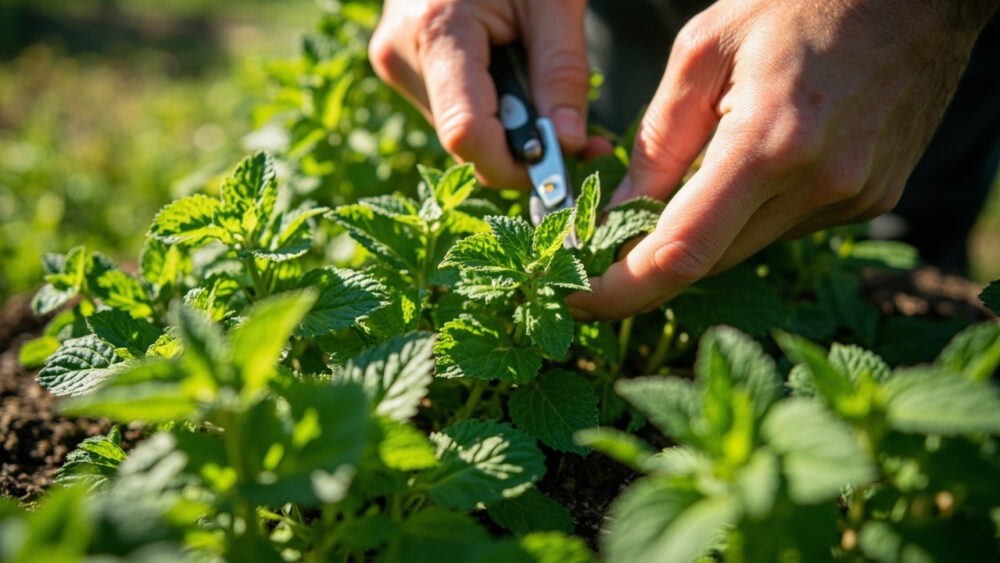
The short answer: harvest peppermint right before it flowers, cutting stems in the morning after the dew dries, taking no more than the top third to half of each stem. The oil that gives peppermint its punch is strongest right before bloom, and cutting correctly means you get two or three more harvests off the same plants before frost. Do it wrong and you either get watery, weak-flavored mint or a plant that sulks for weeks.
Most people ruin their first harvest one of two ways. They wait for flowers because they assume that’s when herbs peak, or they hack the plant down to the dirt because more mint always grows back anyway.
Both mistakes are understandable and both cost you flavor, or a slow recovery you didn’t need to deal with. Stick around, because the exact cut point, the timing window, and a save-able Peppermint at a Glance card are all coming up below.
The Real Ready Signs
Forget counting days from planting. Peppermint tells you it’s ready through its growth stage, not the calendar.
Stem height
Once stems reach 6 to 8 inches tall, they’re old enough to cut. A first-year plant may take 6 to 8 weeks after transplanting to get there; an established patch hits that height again just 3 to 4 weeks after each cutting.
Leaf feel and smell
Grab a leaf and rub it between your fingers. Ready mint releases a sharp, cool, unmistakable scent immediately.
If the smell is faint or grassy, the oils haven’t built up yet. Give it another week.
The flower buds, not the flowers
If you assumed you should wait for flowers, that guess is the single biggest reason home-harvested mint tastes thin. By the time flowers open, the plant has redirected its energy into seed production and the leaves lose potency. The window you actually want is when buds are forming but haven’t opened, tiny green nubs clustered near the stem tips.
That bud stage is your green light, and it’s shorter than most people expect.
The Timing Window, and What Happens If You Miss It
Peppermint is ready for its first cut roughly 60 to 90 days after planting, but after that it’s about growth stage, not dates. The real trigger is the pre-flower bud stage described above, which typically shows up once daytime temperatures are reliably above 70°F and the plant has had a few solid weeks of growth.
Harvest too early and the leaves are fine to eat but noticeably milder, since oil concentration builds as the stem matures. Harvest too late, after flowering starts, and you get a bitter edge along with weaker aroma, because the plant has shifted its energy budget toward seeds instead of leaves.
There’s a second, less obvious late-harvest problem: once mint flowers, stems get woody near the base and are harder to cut cleanly. That woodiness doesn’t reverse itself this season.
Miss the bud window once and you haven’t lost the plant, only that one cutting’s peak flavor.
Get the timing right and the next question is how to actually make the cut.
How to Harvest Without Setting the Plant Back
Cut in the morning, after dew has dried but before the heat of the day. Oils are at their most concentrated then, and cutting wet foliage invites fungal problems in the pile you’re carrying to the kitchen.
Use clean, sharp scissors or garden snips, not a dull pinch that crushes the stem.
- Find a leaf node, the point where a pair of leaves meets the stem, about two-thirds of the way up.
- Cut just above that node at a slight angle.
- Take no more than the top third to half of each stem’s length.
- Leave at least two sets of leaves on every stem you cut.
That last point is the one people skip, and it’s the difference between a plant that bounces back in three weeks and one that limps along all season. Cutting a stem down to bare dirt removes the leaf nodes the plant needs to regrow from, so it has to push new growth from the roots instead, which takes far longer.
Peppermint spreads aggressively by runners, so an established bed can take a harder cut than a young plant can. First-year mint gets the gentler top-third treatment; year two and beyond can handle up to half the stem without complaint.
Once the cutting’s in your hand, what you do in the next ten minutes matters almost as much as the cut itself.
Right After You Cut: The Part Everyone Rushes
Get cut mint out of direct sun immediately. Leaves left in a hot garden basket for even 20 minutes start losing moisture and aroma.
Rinse stems gently in cool water if they’re dusty, then shake off excess water rather than rubbing leaves dry, which bruises them and darkens the cut edges.
If you’re not using it today, stand the stems in a jar with an inch of water like cut flowers, loosely cover with a produce bag, and refrigerate. That keeps peppermint fresh for 7 to 10 days.
Fresh mint is forgiving for a few days, but once you’re past that window, drying or freezing is what actually preserves the harvest.
Keeping the Harvest Coming All Season
Peppermint rewards regular cutting. Harvesting every 3 to 4 weeks through the growing season encourages bushier, denser growth instead of tall, leggy stems.
Pinch off any flower buds you’re not planning to harvest as leaves, since letting even a few stems bloom signals the whole patch to slow leaf production.
In most zones you can take 3 to 5 cuttings between late spring and the first hard frost. Stop harvesting heavily about 4 to 6 weeks before your average first frost date so the plant can store energy in its roots for winter.
Drying and storing basics
Bundle 4 to 6 stems with a rubber band and hang them upside down somewhere dark, dry, and airy for 1 to 2 weeks, until leaves crumble easily. Strip leaves off the stems and store whole in an airtight jar out of direct light, where they’ll hold good flavor for 6 to 12 months.
Freezing works too: chop leaves, pack into ice cube trays with a little water, and freeze for use in drinks and cooking later.
One more thing before you head out to the patch, the quick-reference card that pulls all of this together.
Peppermint at a Glance
- Best time to harvest: morning, after dew dries, once stems are 6 to 8 inches tall and buds are forming but not yet open.
- How much to cut: the top third to half of each stem, always leaving at least two leaf nodes behind.
- First harvest timing: roughly 60 to 90 days after planting, then every 3 to 4 weeks after that.
- Signs it’s ready: strong sharp scent when leaves are rubbed, firm green stems, buds visible but not open into flowers.
- What to avoid: waiting for flowers, or cutting stems down to bare soil.
- After cutting: keep out of direct sun, stand stems in water and refrigerate for up to 7 to 10 days if not using immediately.
- Preserving it: air-dry hanging bundles for 1 to 2 weeks, or chop and freeze in water for long-term storage.
Cut at the bud stage, leave two leaf sets behind, and peppermint will keep feeding you cuttings until frost.
Get those two things right and everything else about growing this plant takes care of itself.