Here is the honest truth before you go cut anything: growing cilantro from cuttings works for roots, not for a full second life. You root a stem in water or moist soil in 7 to 14 days, pot it up, and get a modest bonus harvest of leaves for a few weeks. What you cannot do is stop cilantro from bolting to seed on its own schedule, and that single fact is what trips up almost everyone trying this method.
Most people take a cutting expecting a plant that lasts all summer, and then feel like they failed when it flowers three weeks later anyway. It did not fail. Cilantro is built to bolt once the weather warms or the plant matures, cuttings included, and that is the mistake that ruins most attempts before they even start.
There is also a sign almost everyone misreads: roots forming in water look like success, but if you leave the cutting floating too long, those roots are weak and shed the second you plant them in soil. Stick with me and I will walk you through the exact steps, the week by week timeline, and the mistakes that cost people their whole batch. Save-able specifics, spacing, timing, and the full Cilantro at a Glance card, are waiting at the bottom.
Why Cuttings Work (and What They Can’t Do)
Cilantro has a taproot system, which is exactly why most herb-propagation advice does not translate cleanly. Basil and mint root from cuttings and go on to live full plants for months. Cilantro roots just as easily from a stem cutting, often within a week, but the plant behind those new roots is still the same age underneath.
If it was close to bolting before you cut it, it is still close to bolting after you root it. That is the honest answer nobody puts on the seed packet. Cuttings are best used as a fast, free way to multiply a healthy young plant, or to rescue a stem before a hard trim, not as a way to keep an aging plant going forever.
Used with that expectation, the method genuinely works and is worth doing.
Step by Step: Taking and Rooting the Cutting
Choose and Take the Cutting
Pick a stem 4 to 6 inches long from a plant that has not flowered yet, still leafy and green with no seed heads forming. Cut just below a leaf node with clean scissors or snips.
Strip the bottom 1 to 2 inches of leaves so you have bare stem to submerge.
Root It in Water
Set the cutting in a small glass with 1 to 2 inches of room-temperature water, bare stem submerged, leaves clear of the surface. Place it somewhere with bright, indirect light, not full sun, since direct sun on a glass of water cooks tender new roots fast.
Change the water every 2 to 3 days. This is the step people skip, and it is the difference between clean white roots and a slimy stem that rots before it ever roots.
Once roots reach the guessable part, timing gets specific fast.
Week by Week: What to Actually Expect
Week 1: Little visible change above the waterline, but small white root nubs start forming at the submerged nodes by day 5 to 7.
Week 2: Roots lengthen to half an inch to an inch. This is the window to pot up, not later.
Week 3 to 4: Potted cuttings show new leaf growth if conditions are right. No new growth by week 4 usually means the roots were too weak going in.
That week 2 window is the misread sign everyone gets wrong: longer roots do not mean better odds.
Roots left in water past 2 weeks turn thin, tangled, and brittle, and they snap or stall the moment you move them into soil. Pot up right when roots hit that half-inch to one-inch mark, not when they look impressively long.
Getting the timing right only matters if the potting step itself is done correctly.
Potting Up and Planting Out
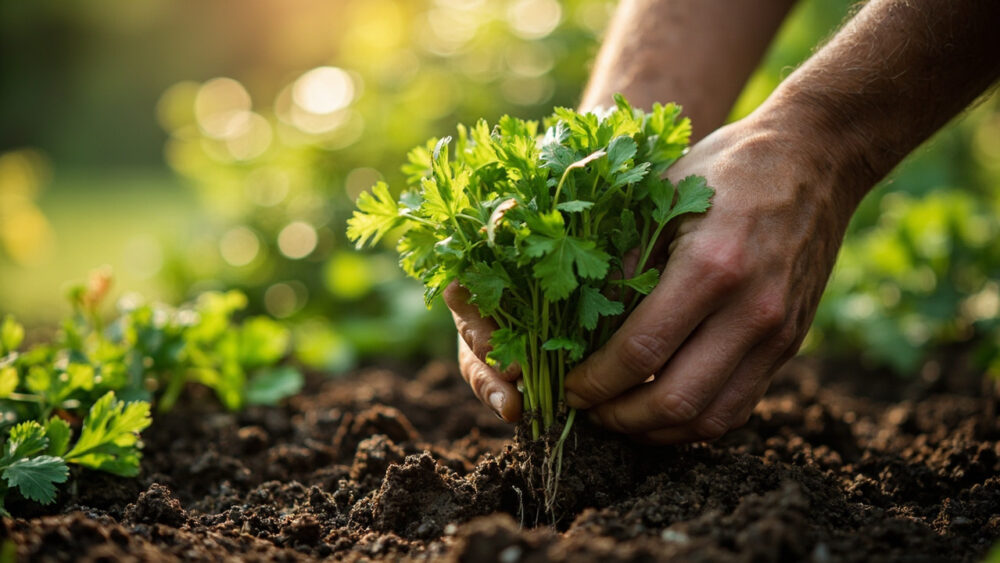
Use a small pot, 3 to 4 inches, filled with a light, well-draining potting mix. Plant the rooted cutting about 1 inch deep, firming soil gently around the stem so it stands upright on its own.
Water it in right away, then keep the soil evenly moist, not soggy, for the first week while roots adjust from water to soil. Bright indirect light for the first few days, then a spot with 4 to 6 hours of sun once new growth starts.
Moving to the garden or an outdoor container: wait until nighttime temperatures are reliably above 40°F and soil has warmed past 45 to 50°F, which for most gardeners lines up with 2 to 3 weeks before your last frost through a few weeks after. Cilantro tolerates light frost better than heat, so err early rather than late.
Space plants 6 to 8 inches apart, harden off over 3 to 4 days before full outdoor exposure.
Get the transition right and you will still lose some cuttings, and that is worth talking about honestly.
Why These Attempts Fail, Really
The number one cause of failure is not disease or bad luck, it is heat. Cilantro bolts to seed once daytime temperatures push consistently past 75 to 80°F, cuttings and seed-grown plants alike, and once it bolts the leaf flavor turns bitter and production stops.
The second cause is rot from stagnant water, which shows up as a slimy, discolored stem instead of clean white roots. Fresh water every 2 to 3 days prevents nearly all of it.
Third: taking cuttings from a plant that was already stressed, bolting, or root-bound. A cutting can only be as healthy as its source, so start with vigorous, non-flowering growth.
Fourth: transplant shock from too much direct sun immediately after potting. Shade the first 2 to 3 days after moving from water to soil, even indoors.
Avoid those four and your success rate goes way up, but the plant is still short-lived by nature, which is exactly why the reference card below matters.
Cilantro at a Glance
- When to plant: root cuttings any time indoors, move outdoors 2 to 3 weeks before your last frost through a few weeks after, once soil is at least 45 to 50°F.
- Cutting length: 4 to 6 inches of leafy, non-flowering stem, cut below a leaf node.
- Rooting time: 7 to 14 days in water, changed every 2 to 3 days, roots ready to pot at a half-inch to one inch long.
- Potting depth: about 1 inch deep in light, well-draining potting mix.
- Spacing outdoors: 6 to 8 inches apart, full sun in cool weather, part shade once temperatures climb past 75°F.
- Harvest window: light snipping can start within 2 to 3 weeks of potting, before the plant sends up a flower stalk.
- Biggest risk: heat-triggered bolting and stagnant water rot, both preventable with cool timing and fresh water.
Cuttings buy you a fast, free head start, not a longer-lived plant. Keep succession-starting new cuttings or seeds every few weeks and you will always have young, non-bolted cilantro coming up behind the last batch.