Growing a yucca plant comes down to three things it will not compromise on: sharp drainage, as much direct sun as you can give it, and a hand that stays off the watering can more often than it reaches for it. Plant it in loose, gritty soil after your last frost, water it deeply but rarely, and a yucca will reward you with years of dramatic, spiky growth and almost zero fuss. Get the drainage wrong, though, and you can do everything else right and still lose the plant to rot within a season.
Most people who kill a yucca do it with kindness, watering on a schedule instead of by feel. Others plant it in a pot or bed that looks sunny but is not sunny enough, and wonder why the leaves go floppy and pale instead of standing up stiff. And almost everyone asks the same follow-up question once the plant settles in: will mine actually bloom, and if it does not, is something wrong.
All of that gets answered below, including the honest truth about blooming indoors. Stick around for the Yucca Plant at a Glance card at the bottom, it is built to save to your phone so you have the depth, spacing, and watering rhythm on hand next time you are standing in front of the plant with dirt on your hands and no idea if you should water it today.
When to Plant a Yucca
Timing matters less for yucca than for almost anything else you growbut there is still a right window. Outdoors, plant after all frost danger has passed and soil has warmed into the 60s Fahrenheit, which for most gardeners lands a couple weeks past the last spring frost. Yucca handles heat fine, so a late start in early summer will not set it back the way it would a leafy vegetable.
If you garden in zone 8 or warmer, many yucca species are hardy enough to plant almost any time the ground is workable. In zone 7 and colder, stick to spring planting so the roots have a full season to establish before winter cold tests them.
Indoor and container yuccas can go in any time of year, since you control the conditions. Spring and summer still give the fastest rooting because the plant is actively growing.
Next, the spot you pick matters as much as the calendar date.
Choosing the Spot and Prepping the Soil
Yucca wants full sunat least six hours of direct light a day, and it wants soil that drains fast. This is the single biggest make-or-break factor in growing yucca successfully, more important than fertilizer, more important than exact watering schedule. A yucca in rich, moisture-holding garden soil is a yucca on a slow path to root rot.
If your native soil is heavy clay, do not fight it with amendments alone. Either plant on a raised mound six to eight inches high, or mix in coarse sand and small gravel until the soil crumbles loosely in your hand instead of forming a dense ball.
For containers, use a cactus or succulent potting mix, or make your own with regular potting soil cut roughly half and half with coarse sand or perlite. Always choose a pot with a drainage hole, no exceptions.
Once the spot is right, the mistake that ruins most attempts is easy to avoid.
Planting a Yucca Step by Step
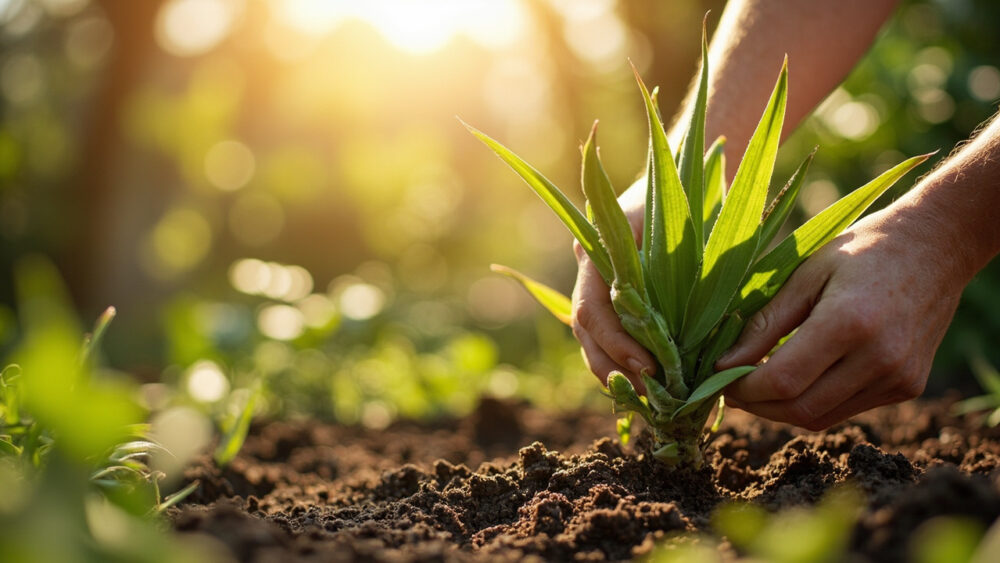
If you assumed yucca wants a deep, generous hole packed with compost like a tomato or a rose, that instinct is exactly what causes the rot problems people blame on watering. The real fix is planting it shallow, lean, and loose.
Steps for planting yucca
- Dig a hole only as deep as the root ball and about twice as wide, so roots can spread without sitting in a soggy pocket.
- Loosen the soil at the bottom and sides rather than piling in compost or rich amendments.
- Set the plant so the base sits at, or very slightly above, the surrounding soil line, never below it.
- Backfill with your gritty soil mix, firming gently, and skip the fertilizer at planting time.
- Space multiple yuccas 3 to 6 feet apart depending on the mature size of the species, since some varieties spread wide with age.
- Water once at planting to settle the soil, then hold off for a week or two before watering again.
That first watering is generous, everything after it should not be.
Watering and Feeding Through the Season
Water yucca deeply but infrequentlyletting the top 2 to 3 inches of soil go completely dry between waterings. In the ground, established yuccas often need nothing beyond rainfall except during long dry stretches in peak summer. In containers, that usually means watering every 2 to 4 weeks, less in winter.
Check by feel, not by date. Push a finger or a wooden skewer into the soil; if it comes out with damp soil clinging past the first inch, wait.
Skip heavy feeding. A light dose of balanced fertilizer once in spring is plenty for a plant this tolerant of poor soil.
Yucca actually prefers to be slightly underfed and thirsty over pampered, which is the opposite of how most houseplants behave.
Problems That Actually Strike Yucca
The mistake that ends most yuccas is overwatering leading to root or crown rotvisible as a soft, mushy, discolored base or leaves that yellow and collapse from the bottom up. There is no rescuing badly rotted crown tissue; if the center of the plant is soft and foul-smelling, the plant is not coming back and starting a new one from a healthy offset is the honest move.
Caught early, though, rot is fixable. Stop watering entirely, pull the plant to inspect roots, trim away anything black or mushy with a clean blade, let the wound dry a day or two, then repot in fresh, drier mix.
Watch also for scale insects and mealybugs, which show up as small waxy bumps or cottony clusters along the leaves. Treat by wiping them off and following the label directions on an insecticidal soap if the infestation is heavy. Brown leaf tips are usually just fluoride or salt buildup from tap water or over-fertilizing, not a disease, and are mostly cosmetic.
Once the plant is healthy and settled, the next question is whether it will ever bloom.
When Yucca Blooms, and the Honest Truth About Harvest
Yucca is not a food crop for most gardeners, it is grown for its structural, spiky form, though the flower stalks and even the fleshy seed pods of some species are edible and have a history of use in the Southwest. This guide is not enough on its own to safely identify or eat wild yucca parts, since look-alike plants exist, so treat any harvest-for-food idea as a project for an experienced forager, not a guess from a photo.
For bloom timing: outdoor, established yuccas typically send up a tall flower stalk, often 3 to 8 feet, in late spring to summer once the plant is mature, usually after 2 to 5 years of growth. Indoor yuccas rarely bloom at all, since they almost never get the intense, sustained sun levels that trigger flowering.
If yours has never flowered, that is not a sign of failure. It is a sign it is a houseplant doing exactly what houseplant yuccas do, which is stay green, architectural, and bloom-free for its whole life indoors.
Everything you need to keep it thriving either way is in the card below.
Yucca Plant at a Glance
- When to plant: after last frost once soil hits the 60s Fahrenheit, or any time indoors in a container.
- Light and spot: full sun, at least six hours of direct light daily, in fast-draining soil or gritty potting mix.
- Depth and spacing: plant at the same soil level as the root ball, never deeper, spacing plants 3 to 6 feet apart outdoors.
- Watering: deep but infrequent, letting the top 2 to 3 inches of soil dry out completely between waterings.
- Feeding: light, balanced fertilizer once in spring only, skip feeding at planting time.
- Biggest risk: root and crown rot from overwatering or planting too deep, with no recovery once the crown turns mushy.
- Bloom timing: outdoor plants may flower in late spring to summer after 2 to 5 years, indoor plants rarely bloom at all.
Keep the soil dry, the light strong, and your hands off the watering can more than feels natural, that combination is what separates a thriving yucca from a rotting one.
Everything else about this plant is forgiving. Drainage and sun are not.