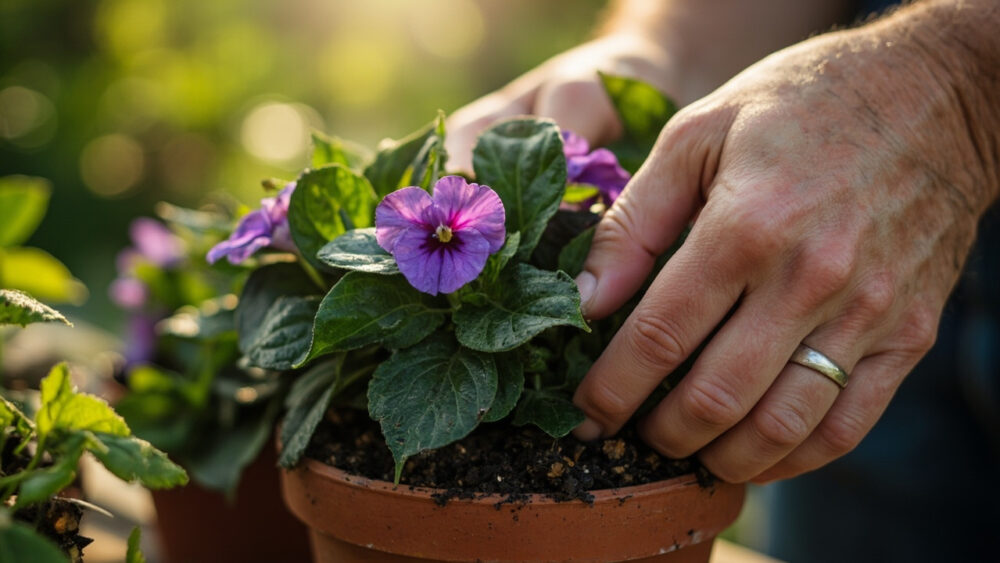
Repot your African violet when the leaves start looking oversized for the pot, the crown has pushed up above the soil line, or it has been more than a year since the last repot. Move it into a pot only one size up (a 4-inch plant goes into a 5-inch pot, not a 6 or 8), using a light, well-draining African violet mix, and set the crown right at soil level, not buried and not perched above it. Do this and most plants barely sulk for more than a few days.
Here is the part almost nobody gets right the first time: bigger is not better with these plants. Go up too far in pot size and you will get a gorgeous plant that refuses to bloom for a year, sometimes longer. There is also a specific way to unbury a crown that has sunk too low, a mistake that quietly kills more violets than any pest ever will, and an honest answer to the question you are probably about to ask next, which is why your violet’s leaves look fine but it just will not flower.
Stick with me through the sections below and you will get all of that, plus a save-able African Violet at a Glance card at the very bottom with the numbers you actually need pinned to your phone.
Repotting African Violet Step by Step
Pick a pot only one size larger than the current one. African violets bloom best when slightly root-bound, and a pot that is too roomy grows roots instead of flowers.
Turn the plant out of its old pot and knock off about a third of the old soil, gently, with your fingers. Check the root ball for firm white or tan roots. Dark, mushy roots mean root rot and you should trim those away with a clean snip before repotting.
Set fresh, moist African violet mix in the bottom of the new pot. Place the plant so the crown, the point where the leaves meet the stem, sits right at the surface.
Fill in around the roots, firm gently, and water lightly from the bottom. Skip fertilizer for about four weeks while roots settle.
Get that crown depth wrong and nothing else you do will matter, which is exactly what the next section covers.
The Crown Depth Mistake That Ruins Most Repots
If you guessed that burying the crown a little deeper gives the plant more stability, that guess causes more crown rot than anything a pest or fungus does on its own. A buried crown stays damp against soil and rots from the inside, often without an obvious warning before the whole center of the plant goes soft and brown.
The fix is to keep the crown exposed, sitting just above or exactly at the soil surface, even if that leaves the plant looking a little loose or top-heavy right after repotting. It firms up within a week or two as roots grip the new mix.
If a crown has already sunk from years of top-dressing or overpotting, you can carefully lift the whole plant and reset it higher rather than piling more soil around it.
Get the depth right and the next thing that determines success is where you actually put the pot.
Light, Placement, and Temperature
African violets want bright, indirect light, the kind you get a few feet back from an east or north-facing window. Direct south or west sun through glass scorches the fuzzy leaves and leaves pale, bleached patches.
No good window nearby is not a dealbreaker. These plants do very well under a simple grow light or fluorescent fixture run for 10 to 12 hours a day, kept about 8 to 12 inches above the leaves.
Temperature matters more than most people expect. Aim for 65 to 75 degrees Fahrenheit, and keep plants away from cold drafts, heating vents, and glass in winter. Below 60 degrees for any stretch stalls growth and blooming.
Light and warmth get the plant growing, but water is where most people accidentally undo all that good work.
Watering, and How to Tell When It Is Time
Water when the top inch of soil feels dry to the touch, generally every 7 to 10 days, less in winter. Check by pressing a finger into the mix rather than watering on a fixed schedule.
Use room-temperature water and avoid splashing the fuzzy leaves, since cold water or wet leaves in bright light cause permanent yellow-brown spots. Bottom watering, setting the pot in a shallow tray of water for 20 to 30 minutes, sidesteps this entirely.
Let the pot drain fully and never let it sit in standing water, which suffocates roots faster than underwatering ever will.
A wilted, droopy violet is not always thirsty, and that is the follow-up question worth answering next.
Why a Wilted Violet Might Mean the Opposite of What You Think
If you assumed a limp, drooping violet needs more water, that guess is right about half the time and dead wrong the other half. Overwatered violets wilt too, because rotted roots can no longer pull up moisture at all, so the plant droops exactly like a thirsty one even sitting in soaked soil.
The tell is the soil itself. Dry and crumbly with a wilted plant means water it. Damp or wet with a wilted plant means stop watering, pull it from the pot, and check the roots for rot.
Healthy roots are pale and firm. Rotted roots are brown, soft, and often smell sour.
Get the water right and feeding is the next lever that controls how much this plant actually blooms.
Soil and Feeding
Use a light, well-draining mix made for African violets, or blend regular potting soil with perlite and peat or coconut coir to loosen it. Dense, heavy soil holds too much water around the crown and roots.
Feed with a balanced fertilizer diluted to about half strength, or a fertilizer labeled specifically for African violets, roughly every two to four weeks during active growth.
Skip feeding for the first month after repotting, and skip it entirely in the depths of winter when growth naturally slows down.
Overfeeding causes more problems than underfeeding here, showing up as crusty white salt buildup on the soil surface and pot rim.
Feeding keeps the plant fueled, but a few routine chores are what actually keep it tidy and blooming.
Pruning, Cleaning, and Repotting on a Schedule
Pinch off spent flower stalks and yellowing outer leaves as they appear, using clean fingers or small scissors close to the stem. This redirects energy into new blooms instead of dying tissue.
Dust builds up fast on those fuzzy leaves and blocks light, so wipe leaves gently with a soft, dry brush or let them get a light rinse and full dry, never left wet in low light.
Repot every 6 to 12 months, even if you keep the same pot size, since the mix breaks down and compacts over time and stops draining the way it should.
Rotate the pot a quarter turn every week or so, since violets grow toward light and lopsided growth is almost always a sign one side has been shaded too long.
Keep up with that routine and most problems never get the chance to start, but a few show up anyway.
Problems That Show Up Even When You Do Everything Right
Crown and root rot come from overwatering or a buried crown, and the fix is less water, better drainage, and resetting the crown at the correct depth as covered above.
Powdery mildew shows up as a white, dusty coating on leaves in stagnant, humid air. Improve airflow and remove badly affected leaves, and use a fungicide labeled for powdery mildew on houseplants only if it persists, following the label exactly.
Cyclamen mites cause distorted, stunted new growth in the center of the plant and are hard to see with the naked eye. Isolate the plant immediately, since these spread fast to neighboring pots, and badly infested plants often need to be discarded.
Mealybugs and aphids show up as small white fuzz or clusters near leaf joints, treatable with insecticidal soap applied per the label.
None of this is toxic to worry about with pets nibbling a leaf; African violets are considered non-toxic to cats and dogs. If a pet ever eats a large amount of any houseplant and seems unwell, call your veterinarian rather than waiting it out.
Once pests and rot are handled, the real question is how you know the plant is actually happy.
Signs Your African Violet Is Genuinely Thriving
A thriving violet blooms in flushes nearly year-round, with flowers opening every few weeks rather than once and stopping. Leaves sit in a flat, symmetrical rosette, deep green, with no long bare stem visible between soil and leaves.
No flowers for months despite healthy-looking leaves almost always traces back to a pot that is too large, not enough light, or a room that is too cold at night, not a lack of fertilizer like most people assume first.
New leaves emerging from the center at a steady pace, roughly one every couple of weeks in the growing season, is the clearest sign the roots and crown are both in good shape.
Everything above adds up to the numbers worth keeping, so here they are in one place.
African Violet at a Glance
- When to repot: every 6 to 12 months, or when the crown pushes above soil level or leaves outgrow the pot.
- Pot size: go up only one size at a time, never more, since a too-large pot stalls blooming.
- Crown depth: set at or just above the soil surface, never buried.
- Light: bright, indirect light from an east or north window, or a grow light 8 to 12 inches above the leaves for 10 to 12 hours a day.
- Temperature: 65 to 75 degrees Fahrenheit, protected from cold drafts and glass in winter.
- Watering: when the top inch of soil is dry, roughly every 7 to 10 days, with room-temperature water kept off the leaves.
- Feeding: half-strength balanced or violet-specific fertilizer every 2 to 4 weeks in the growing season, skipped in winter and for the first month after repotting.
Get the crown depth and pot size right and this plant forgives almost everything else.
Everything else here is just fine-tuning around that one decision.